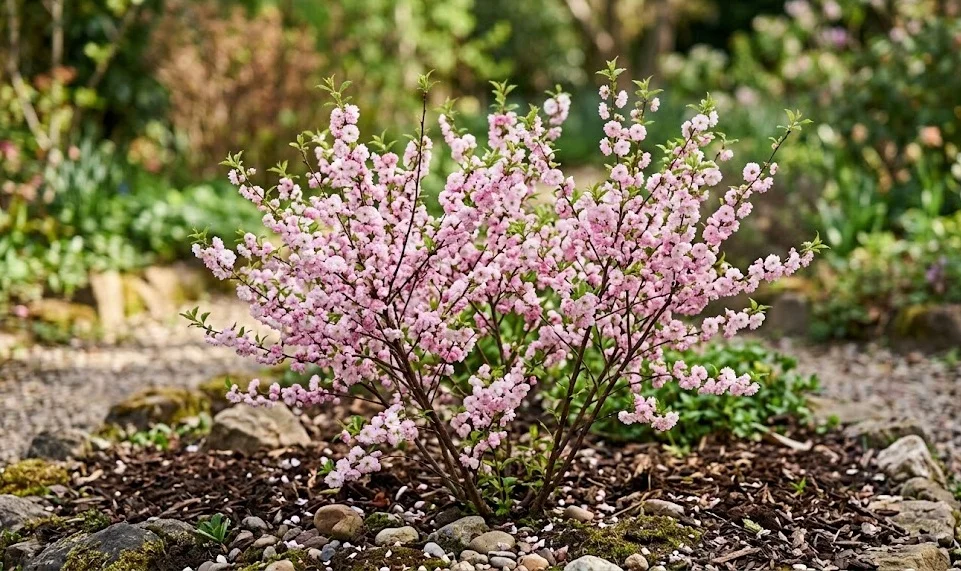

Proper hydration and nutrition are the twin pillars of maintaining a healthy and floriferous Japanese dwarf cherry throughout its lifespan. While this shrub is relatively resilient, its performance in terms of growth and blossom quality is directly linked to the availability of water and essential minerals. Understanding the specific physiological needs of the plant allows gardeners to create a management plan that prevents both deficiency and excess. By mastering these two fundamental aspects of care, you ensure that your ornamental specimens remain a vibrant part of your garden for many years.
Establishing a consistent watering routine
The key to watering the Japanese dwarf cherry effectively lies in maintaining a balance between moisture and drainage. You should aim to keep the soil consistently damp but never saturated, as this species is particularly sensitive to stagnant water. During the initial establishment phase after planting, the shrub will require more frequent attention to ensure the root ball does not dry out. A deep soaking once or twice a week is generally more effective than daily light sprinkles, as it encourages roots to grow deeper into the soil.
As the plant matures, its watering needs will fluctuate based on the prevailing weather conditions and the season. You should check the moisture level of the soil by inserting your finger a few inches below the surface before deciding to water. If the soil feels dry at that depth, it is time for a thorough irrigation. During the peak of summer, you may find that the plant needs more frequent watering to combat the high rates of evaporation.
The method of delivery is just as important as the frequency and amount of water provided to the shrub. Whenever possible, apply water directly to the base of the plant to keep the foliage dry and reduce the risk of fungal infections. Drip irrigation or soaker hoses are excellent tools for this purpose, as they deliver moisture slowly and efficiently to the root zone. Watering in the early morning is ideal because it allows any accidental moisture on the leaves to dry quickly in the sun.
During the autumn months, you should gradually reduce the frequency of watering to signal the plant to begin its transition into dormancy. However, it is a mistake to stop watering entirely before the ground freezes, especially in areas with dry winters. A final deep watering in late autumn ensures that the roots have enough moisture to survive the cold months when the ground might be inaccessible. Consistent observation of your plant’s response to water will help you fine-tune this routine over time.
More articles on this topic
Seasonal nutritional requirements and timing
Fertilizing the Japanese dwarf cherry is most effective when it is timed to coincide with the plant’s natural growth cycles. In the early spring, just as the buds begin to swell, the shrub benefits from a boost of nutrients to support its upcoming bloom and new foliage. You should use a balanced, slow-release fertilizer that provides a steady supply of nitrogen, phosphorus, and potassium over several weeks. This prevents the “flush” of weak growth that can occur with high-nitrogen, fast-acting fertilizers.
Once the initial flowering period has finished, a second, lighter application of fertilizer can help the plant build strength for the following year. This mid-summer feeding focuses on root health and the development of next year’s flower buds, which are formed during the current growing season. However, you must be careful not to fertilize too late in the summer or early autumn. Late feeding can stimulate new, tender growth that will not have enough time to harden off before the first frost, leading to winter damage.
The choice between organic and synthetic fertilizers often depends on your personal gardening philosophy and the specific needs of your soil. Organic options, like compost or fish emulsion, improve soil structure and provide a broad spectrum of micronutrients that benefit the entire garden ecosystem. Synthetic fertilizers offer precise control over nutrient ratios and are often easier to apply in specific amounts. Many professional gardeners find that a combination of both methods yields the best long-term results for ornamental shrubs.
Always follow the manufacturer’s instructions regarding the amount of fertilizer to apply, as over-fertilization can be more harmful than under-fertilization. Excess nitrogen, in particular, can lead to an overabundance of leaves at the expense of flowers and can make the plant more attractive to certain pests. You should apply the fertilizer to the drip line of the shrub, which is the area directly under the outer edge of the branches. Watering the area thoroughly after application helps to wash the nutrients down to the root level where they are needed.
More articles on this topic
Signs of water and nutrient stress
Being able to recognize the early warning signs of stress is an essential skill for any gardener caring for the Japanese dwarf cherry. When the plant is underwatered, the most common symptom is wilting or drooping of the leaves, which often lose their vibrant green color. If the drought persists, the edges of the leaves may turn brown and crispy, a condition known as leaf scorch. In extreme cases, the shrub may even drop its leaves prematurely as a survival mechanism to conserve moisture.
Conversely, overwatering can be just as damaging and often presents more subtle symptoms until the problem is advanced. Yellowing of the lower leaves is a classic sign that the roots are struggling in overly wet soil and may be experiencing the onset of rot. You might also notice that the plant seems generally stunted or that the new growth is soft and pale. If you suspect overwatering, it is vital to stop irrigation immediately and check the drainage of the site to prevent permanent root damage.
Nutrient deficiencies also manifest in specific ways that can guide your fertilization strategy. A lack of nitrogen usually results in a general yellowing of the entire plant and a lack of vigor in new growth. If the leaves are turning yellow but the veins remain green, this often indicates an iron or magnesium deficiency, which can be caused by improper soil pH. Phosphorus deficiency is sometimes signaled by a purplish tint on the undersides of the leaves and a poor floral display in the spring.
Regularly inspecting your Japanese dwarf cherry allows you to catch these issues before they compromise the health of the entire specimen. Keeping a simple gardening journal can help you track when these symptoms appear and how the plant responds to your corrective actions. Remember that environmental factors like extreme heat or wind can sometimes mimic the signs of nutrient deficiency. A holistic approach to diagnosis is always more accurate than looking at a single symptom in isolation.
Optimizing soil health for nutrient uptake
The ability of your Japanese dwarf cherry to access the nutrients you provide is heavily dependent on the health and structure of the soil. Soil pH is a critical factor because it determines the chemical availability of various minerals to the plant’s roots. If the soil is too alkaline, the shrub may struggle to take up iron, leading to chlorosis even if the mineral is present in the ground. Periodic soil testing is the only way to accurately determine if you need to adjust the pH with sulfur or lime.
Maintaining a high level of organic matter in the soil is one of the best ways to ensure long-term fertility. Organic matter acts like a sponge, holding onto both water and nutrients and releasing them slowly as the plant needs them. You can achieve this by regularly top-dressing the area around the shrub with high-quality compost or well-aged manure. This practice also supports a healthy population of earthworms and beneficial microbes that break down nutrients into forms the plant can use.
Soil compaction is another common hurdle that can limit the effectiveness of your watering and fertilizing efforts. When the soil becomes too dense, air and water cannot reach the roots, and the roots themselves struggle to expand. You should avoid walking near the base of the shrub and consider aerating the area if the soil seems particularly hard. Mulching not only helps with moisture retention but also prevents the surface of the soil from crusting over and becoming impermeable.
Finally, consider the impact of competing plants on the resource availability for your Japanese dwarf cherry. Large trees or aggressive groundcovers can quickly strip the soil of moisture and nutrients, leaving the ornamental shrub with very little. Maintaining a clear, mulched circle around the base of the plant reduces this competition and makes it easier to manage. By focusing on the “living” quality of your soil, you create a self-sustaining environment where your plants can truly flourish.
Advanced techniques for hydration and nutrition
For the most dedicated gardeners, advanced methods can push the performance of the Japanese dwarf cherry to its absolute peak. Foliar feeding, which involves spraying a diluted liquid fertilizer directly onto the leaves, can provide a rapid nutrient boost during critical growth periods. This technique is especially useful for correcting minor micronutrient deficiencies that might not be easily addressed through the soil. However, it should only be done in the early morning or evening to avoid leaf burn from the sun.
Another advanced approach is the use of mycorrhizal inoculants during the planting or maintenance phases. These beneficial fungi form a symbiotic relationship with the plant’s roots, effectively extending their reach and improving water and nutrient absorption. Many professional landscapers now include these biological supplements as a standard part of their planting protocol. This “hidden” support system can make a significant difference in the resilience of the shrub during periods of environmental stress.
Implementing a smart irrigation system can also take the guesswork out of watering your ornamental specimens. Modern controllers use local weather data and soil moisture sensors to provide exactly the right amount of water at the optimal time. This not only saves water but also ensures that the Japanese dwarf cherry never experiences the peaks and valleys of moisture stress. Technology, when used correctly, can enhance the traditional skills of the gardener and lead to superior results.
Lastly, consider the benefits of “fertigation,” which is the process of delivering liquid fertilizers through your irrigation system. This method ensures that the nutrients are evenly distributed and delivered directly to the root zone in a highly available form. It allows for more precise control over the timing and concentration of the nutrients provided to the shrub. While more complex to set up, it can result in exceptional growth and a floral display that is truly world-class.