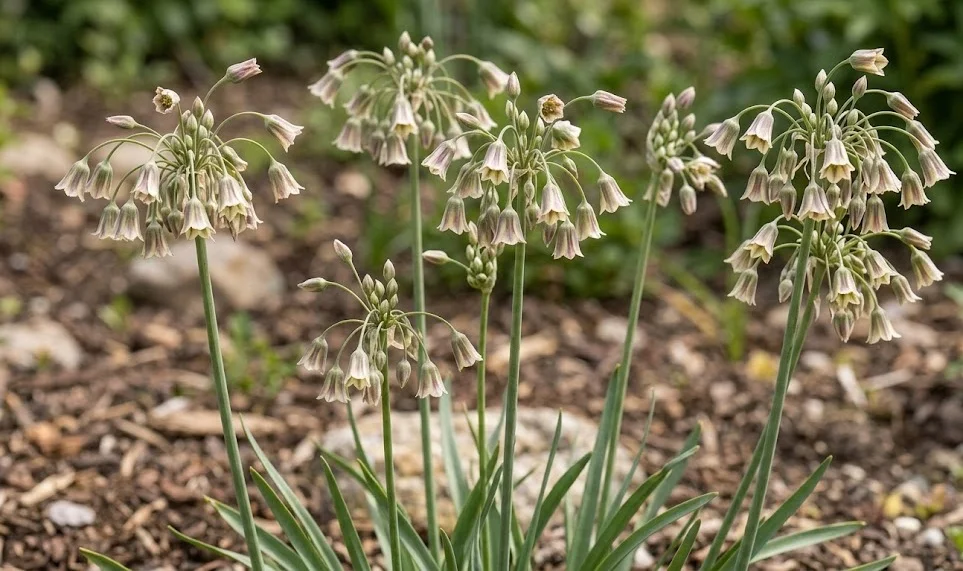

Watering and fertilization are the two pillars of nutritional management that determine the success of Bulgarian honey garlic in the landscape. While these plants are relatively low-maintenance, providing the right amount of moisture and nutrients at the correct times is essential. Understanding the specific needs of these bulbs during their active growth and dormant phases prevents common issues such as bulb rot or nutrient deficiencies. A professional approach to these tasks ensures that your garden remains vibrant and that the plants return strongly each year.
The watering needs of Bulgarian honey garlic vary significantly depending on the current stage of its annual life cycle. During the spring, when the leaves and flower stalks are actively growing, the plant requires consistent moisture to support its rapid development. If the soil is allowed to dry out completely during this time, the flower buds may fail to open or the stems may become stunted. However, you must always ensure that the water can drain away freely to prevent the bulbs from sitting in saturated ground.
As the weather warms up in late spring and early summer, the water requirements remain steady until the flowering concludes. You should check the soil moisture levels regularly, especially during unseasonably dry or windy periods that can dehydrate the foliage. A deep watering once a week is usually more effective than frequent shallow sprinkles. This encourages the roots to grow deeper into the soil, making the plant more resilient to future drought conditions.
Once the foliage begins to yellow and die back after flowering, the plant’s need for water decreases dramatically. This transition marks the beginning of the summer dormant period, during which excessive moisture is the greatest threat to bulb health. In many climates, natural rainfall provides sufficient moisture for the dormant bulbs without any additional irrigation. Overwatering during the late summer can lead to fungal infections that rot the bulb from the inside out.
Establishing a watering routine
Creating a successful watering routine starts with observing the specific conditions of your garden’s microclimate and soil type. Sandy soils will lose moisture much faster than heavy loamy soils, requiring more frequent attention from the gardener. You can use your finger to check the moisture level an inch or two below the soil surface before deciding to water. This hands-on approach is the most reliable way to avoid both under-watering and over-watering.
More articles on this topic
Early morning is the ideal time to water your Bulgarian honey garlic, as it allows the foliage to dry before the evening. Wet leaves during the night can create a perfect environment for the growth of unwanted mold or mildew. If you must water in the evening, try to apply the water directly to the base of the plant rather than over the leaves. Using a soaker hose or a watering can with a long spout can help direct the moisture exactly where it is needed.
During periods of extreme heat, the soil can sometimes become hydrophobic and repel water rather than absorbing it. If you notice water running off the surface, apply a small amount first to break the surface tension and then return a few minutes later for a deeper soak. Mulching around the plants with organic matter can also help to retain moisture and keep the root zone cool. This layer of protection is especially beneficial in regions with intense summer sun.
Winter watering is rarely necessary for bulbs planted in the ground, as they are well-protected by the surrounding soil. The natural moisture from snow and rain is usually more than enough to keep the bulbs hydrated during their rest. Only in cases of extreme, prolonged winter drought in very dry climates would a light watering be considered. For most gardeners, the winter is a time to step back and let nature take care of the irrigation needs.
Nutrient requirements and fertilization
The nutrient needs of Bulgarian honey garlic are modest compared to many heavy-feeding garden perennials. In most cases, a soil that has been well-prepared with organic matter will provide all the necessary elements for several years. However, a targeted fertilization program can help to maximize the size and number of the flower bells. The goal is to provide a balanced supply of nitrogen, phosphorus, and potassium to support all parts of the plant.
More articles on this topic
Nitrogen is important for the early development of healthy green foliage, but it should be used with caution. Too much nitrogen can lead to excessive leaf growth that is soft and susceptible to pests or diseases. It can also cause the flower stems to become weak and prone to flopping over under the weight of the blooms. A balanced fertilizer with a slightly lower nitrogen count is often the best choice for bulbous plants like these.
Phosphorus and potassium are the two most important nutrients for bulb health and flower production. Phosphorus encourages strong root development and the formation of flower buds within the bulb. Potassium, often referred to as potash, helps the plant to regulate water use and improves its overall resistance to stress. Applying a fertilizer that is rich in these two elements in the early spring will pay dividends when the flowers emerge.
Micronutrients such as magnesium and calcium also play a supportive role in the physiological processes of the plant. While these are usually present in the soil, a high-quality organic fertilizer will often include them as a safeguard. Avoiding synthetic fertilizers that are too concentrated can prevent the risk of “burning” the delicate roots. A slow-release organic option provides a steady stream of nutrients throughout the entire growing season.
Application techniques for fertilizers
The timing of fertilizer application is just as important as the type of product you choose to use. The first application should occur in early spring as soon as the green shoots begin to emerge from the soil. This provides the plant with a boost of energy right when it is entering its most active phase of growth. You can simply scatter a granular fertilizer around the base of the plants and lightly scratch it into the soil.
A second, lighter application can be beneficial just as the flower spikes are beginning to form but before they open. This ensures that the plant has enough resources to support the demanding process of flowering. After the flowers have faded, you should stop applying nitrogen-heavy fertilizers entirely. Instead, a final application of a potassium-rich feed can help the bulb prepare for its upcoming dormant period.
When applying any type of fertilizer, it is essential to ensure that the soil is already moist before you begin. Applying fertilizer to dry soil can cause a high concentration of salts to accumulate around the roots, leading to dehydration and damage. After applying the nutrients, give the area a thorough watering to help wash the fertilizer down into the root zone. This practice ensures that the nutrients are immediately available to the plant’s vascular system.
For those who prefer a more natural approach, top-dressing the soil with well-rotted compost or leaf mold is an excellent alternative. This method improves the soil structure over time while slowly releasing nutrients as the organic matter breaks down. You can apply a two-inch layer of compost around the plants in the autumn or early spring. This mimics the natural replenishment of nutrients that occurs in the wild habitats of these fascinating bulbs.
Signs of nutrient and water imbalance
Recognizing the signs of an imbalance in water or nutrients allows you to make adjustments before the plant’s health is compromised. Yellowing leaves during the height of the growing season can be a sign of either too much water or a nitrogen deficiency. If the soil feels soggy, you should immediately reduce your watering frequency and check for drainage issues. If the soil is dry, a light application of a balanced liquid fertilizer may resolve the yellowing.
Stunted growth and a failure to produce flowers often indicate that the bulb is lacking in phosphorus or is being crowded by other plants. If you have provided adequate water and light, the issue is likely a lack of nutrients in the soil. In this case, a soil test can provide specific information about what elements are missing from your garden. Addressing these deficiencies in the autumn will help the plant to recover and bloom the following year.
Wilting foliage despite moist soil is a serious warning sign that the roots may be damaged or rotting. This is usually caused by over-watering or planting the bulbs in heavy, poorly drained clay. If you suspect root rot, you may need to lift the bulbs and move them to a more suitable location with better drainage. Healthy roots should be firm and white, while rotting roots will appear brown and mushy to the touch.
Finally, if the flower stems are very tall but thin and unable to support themselves, the plant may be getting too much nitrogen. You should avoid using high-nitrogen lawn fertilizers near your Bulgarian honey garlic beds. Balancing your fertilization routine will result in sturdy, upright stems that display their flowers proudly. Monitoring your plants closely throughout the season is the best way to become an expert in their specific needs.