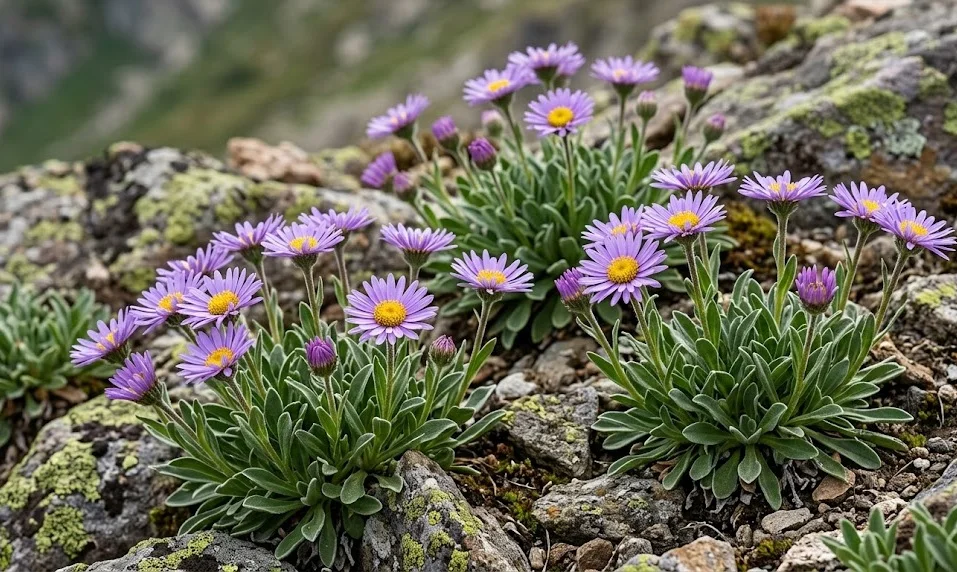

Watering alpine aster requires a delicate balance that reflects its high-altitude origins where drainage is rapid. You should aim to keep the soil consistently moist but never waterlogged, especially during the active growing season in spring. Overwatering is often more dangerous than underwatering for these plants, as they are prone to root rot in heavy, wet soil. Understanding the specific moisture needs of the plant will help you maintain its health throughout the year.
During the hottest parts of the summer, you might need to adjust your watering schedule to account for increased evaporation. While established plants are quite drought-resistant, they will flower better if they do not experience extreme water stress. You should water the plants in the early morning or late evening to reduce water loss and prevent leaf scorch. Directing the water at the base of the plant rather than over the foliage helps keep the leaves dry and healthy.
The frequency of irrigation will depend largely on your local climate and the type of soil in your garden. If you have very sandy or rocky soil, you may find that you need to water more often than in heavier soils. You can check the moisture level by sticking your finger into the soil near the plant; if it feels dry an inch down, it is time to water. Consistency is key to preventing the plant from entering a premature state of dormancy.
In the autumn, as the plant begins to slow down its growth, you should gradually reduce the amount of water you provide. This helps the plant prepare for the winter months and prevents the crown from being too wet as temperatures drop. Natural rainfall is often sufficient during the dormant period unless there is an extended drought. Monitoring the weather patterns ensures that you are providing the right amount of support without overdoing it.
Nutrient requirements and soil fertility
Alpine aster is not a heavy feeder and generally prefers soil that is relatively lean in terms of nutrients. In their natural mountain habitats, these plants grow in mineral-rich but organic-poor environments. You should avoid using high-nitrogen fertilizers that can lead to excessive, weak leaf growth at the expense of flowers. A balanced approach to soil fertility will result in a more compact and authentic-looking plant.
More articles on this topic
The best way to provide nutrients is through the long-term improvement of soil structure and health. Adding a small amount of well-composted organic matter to the planting hole can provide a slow-release source of minerals. You should ensure that the compost is fully broken down to avoid introducing pathogens or attracting pests. This modest boost is usually all the plant needs to establish itself and grow successfully for several years.
If your soil is particularly poor, you might consider a light application of a balanced, slow-release fertilizer in early spring. You should apply the fertilizer around the base of the plant, being careful not to let the granules touch the foliage. Following the application with a light watering will help move the nutrients into the root zone where they are needed. This single application is typically sufficient for the entire growing season.
You should also pay attention to the mineral content of your soil, specifically calcium and magnesium. Since these plants often grow in limestone areas, they benefit from a soil that is not overly acidic. If a soil test reveals a very low pH, a light dusting of dolomitic lime can be beneficial. Providing the correct chemical environment for the roots is often more important than the actual amount of fertilizer applied.
Fertilizer types and application methods
When choosing a fertilizer for your alpine asters, look for products designed for perennials or rock garden plants. Liquid fertilizers can be useful for a quick boost, but they often leach out of well-drained soil very quickly. Granular, slow-release options are generally better because they provide a steady supply of nutrients over several months. This mimics the natural, slow decomposition of minerals in the wild.
More articles on this topic
The timing of fertilizer application is crucial to ensure the plant can use the nutrients effectively. You should avoid fertilizing in late summer or autumn, as this can encourage new growth that won’t have time to harden off before winter. The best time is in the early spring, just as the first green shoots appear from the ground. This gives the plant the energy it needs for the upcoming flowering period without disrupting its natural cycle.
Organic options like seaweed extract or fish emulsion can be used as a gentle alternative to synthetic fertilizers. These products often contain a wide range of micronutrients that are beneficial for overall plant health. You should dilute these liquids according to the package instructions to avoid burning the delicate roots. Organic fertilizers also help support the beneficial microbial life in the soil, which is vital for long-term sustainability.
Applying fertilizer correctly means distributing it evenly around the drip line of the plant rather than right against the stem. The drip line is where the majority of the active feeding roots are located. You should also avoid fertilizing plants that are already stressed by drought or disease. Wait until the plant has been watered and is in good condition before adding any supplemental nutrients.
Irrigation techniques for efficiency
Using the right irrigation techniques can save water and improve the health of your alpine aster collection. Drip irrigation or soaker hoses are excellent choices because they deliver water directly to the soil surface. This method minimizes evaporation and keeps the foliage dry, which reduces the risk of fungal diseases. You can set these systems on a timer to ensure consistent moisture levels without much manual effort.
If you prefer to water by hand, using a watering can with a fine rose or a gentle hose attachment is best. You should aim the flow at the base of the plant and move slowly to allow the water to soak in properly. Fast, heavy watering can lead to runoff, especially in the gritty soil that these plants prefer. Taking your time ensures that the moisture actually reaches the root zone where it can be used.
Mulching with a layer of fine gravel or stone chips is an effective way to improve irrigation efficiency. The mulch acts as a barrier that slows down evaporation from the soil surface during hot, sunny days. It also prevents the soil from crusting over, which can make it difficult for water to penetrate. A mineral mulch is much better for alpine plants than wood chips, which can hold too much moisture against the crown.
You should also consider the orientation of your garden and how it affects the water needs of your plants. Plants on a south-facing slope will dry out much faster than those in a more sheltered or flat location. You may need to water the plants at the top of a slope more frequently than those at the bottom. Understanding these microclimates within your own garden allows for much more precise and effective watering.
Monitoring for nutrient and water stress
Being able to recognize the signs of water or nutrient stress is an important skill for any gardener. When an alpine aster is thirsty, its leaves may begin to lose their luster and look slightly limp or greyish. You might also notice that the lower leaves start to turn yellow and drop off prematurely. Addressing these issues early with a thorough watering can usually revive the plant quickly.
Overwatering presents a different set of symptoms that can be much more difficult to correct. You may see the entire plant turning yellow, or the stems might become soft and mushy at the base. This often indicates that the roots are struggling to breathe in saturated soil and may be starting to rot. If you suspect overwatering, you should stop irrigation immediately and check the drainage of the planting site.
Nutrient deficiencies often show up as specific patterns of discoloration on the leaves. For example, a lack of nitrogen might cause the entire plant to look pale and stunted. If the veins remain green while the rest of the leaf turns yellow, it could indicate an iron or magnesium deficiency. While rare in well-maintained gardens, these signs tell you that the soil chemistry needs some adjustment.
On the other hand, too much fertilizer can cause the plant to grow very quickly but with thin, weak cell walls. These plants are much more attractive to aphids and other pests and may collapse under their own weight. If you see unusually large, dark green leaves but no flowers, you have likely over-fertilized. Maintaining a “tough” environment for your alpine asters will usually result in the healthiest and most beautiful specimens.