
Understanding the fundamental nature of the pathogens responsible for fruit rot is the first step toward effective management in modern apple orchards. These fungal agents thrive in humid environments where they can easily colonize the developing fruit during the growing season. The infection process often begins much earlier than the visible symptoms suggest, making it a silent threat to the harvest. Growers must stay vigilant throughout the year to ensure that their protective measures align with the biological cycle of the fungus.
The primary source of inoculum typically resides in the canopy within old cankers or mummified fruits from previous seasons. When rainfall occurs, spores are splashed onto healthy tissues, initiating the infection chain under favorable temperature conditions. High relative humidity and prolonged leaf wetness are the critical drivers that facilitate the germination of these spores on the apple skin. Without proper intervention, the fungus can remain dormant until the fruit reaches a certain level of maturity or enters storage.
Latent infections are particularly problematic because the fruit appears perfectly healthy at the time of picking and packing. It is only after several weeks in the cold room that the characteristic circular lesions begin to emerge and spread. This delayed expression of the disease can lead to significant economic losses for producers who are unaware of the hidden contamination. Understanding this timeline is essential for developing a spray program that targets the pathogen when it is most vulnerable.
Environmental factors such as wind and insects can also play a minor role in spreading the fungal spores across the orchard. While water is the main vector, physical damage to the fruit skin provides an easy entry point for the invading mycelium. Management strategies must therefore account for all possible avenues of infection to minimize the overall pressure on the crop. A comprehensive approach involves both monitoring the weather and maintaining strict orchard hygiene throughout the year.
Identifying symptoms in the orchard and storage
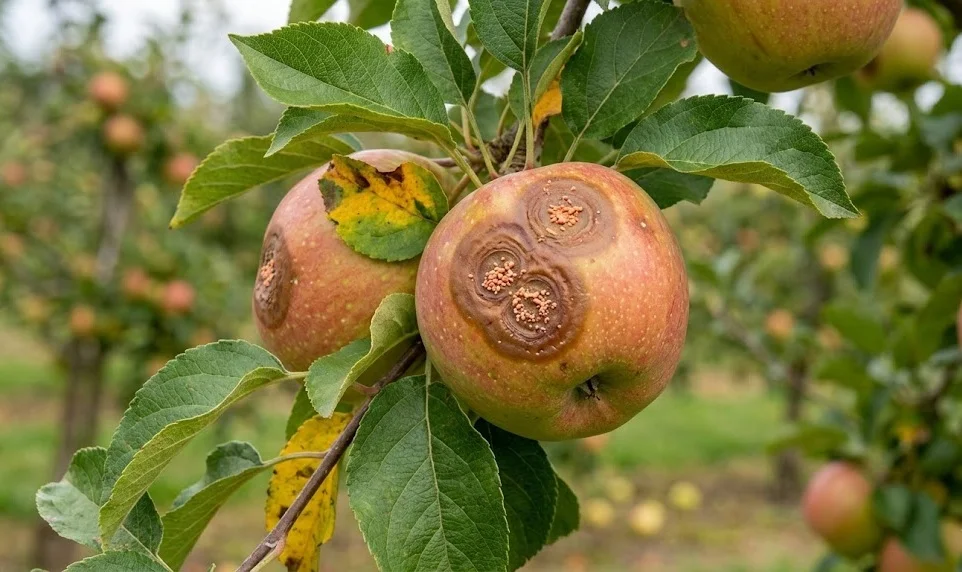
Identifying the specific signs of rot is crucial for differentiating it from other common post-harvest physiological disorders. The lesions typically appear as small, light brown spots that gradually expand into perfectly circular depressions on the fruit surface. These spots often develop a “bull’s eye” appearance with distinct concentric rings of different shades of brown. Recognizing these patterns early allows for a more accurate assessment of the storage potential of a specific lot.
As the decay progresses, the center of the lesion may become covered with pale orange or salmon-colored spore masses. These spores are produced in acervuli, which break through the epidermis of the apple in moist conditions. The flesh beneath the rot remains relatively firm but takes on a bitter flavor that ruins the eating quality of the fruit. This bitterness is a hallmark characteristic that helps distinguish this fungal infection from soft rots caused by other pathogens.
In the orchard, symptoms might be seen on overripe fruit or those damaged by hail and birds before the main harvest begins. However, the most significant damage is usually observed during the long-term storage phase in controlled atmosphere facilities. Even under low temperatures, the fungus can slowly colonize the fruit tissue and eventually jump to neighboring apples in the bin. Frequent inspections of stored fruit are necessary to catch these outbreaks before they compromise the entire inventory.
Secondary infections can occur when spores from an infected fruit are spread by condensation or handling during the packing process. This can lead to a rapid escalation of the problem, especially if the fruit was not treated with appropriate fungicides beforehand. The visual impact of the rot makes the apples unmarketable for fresh consumption, forcing producers to divert them to processing at a lower price. Accurate diagnosis remains the cornerstone of any successful quality control program in the apple industry.
Preventive cultural practices for disease management
Implementing strong cultural practices is the foundation of any sustainable strategy to reduce the incidence of fruit rot. Pruning plays a vital role in this process by removing dead wood and old cankers that serve as reservoirs for fungal spores. By opening up the canopy, growers can improve airflow and speed up the drying time of leaves and fruit after rain events. This reduction in moisture significantly limits the window of opportunity for the fungus to infect the apple skin.
Orchard sanitation is another critical element that requires consistent attention from the beginning of the season to the end. Removing fallen fruit and mummified apples from the ground prevents the buildup of inoculum that could infect the next crop. These materials should be destroyed or moved far away from the orchard to ensure that spores do not blow back into the trees. Keeping the orchard floor clean is a simple but highly effective way to break the life cycle of the pathogen.
Proper tree nutrition and irrigation management also contribute to the overall resilience of the fruit against fungal invasion. Trees that are stressed by drought or nutrient deficiencies often produce fruit with weaker cell walls and less effective natural defenses. Balanced nitrogen levels are particularly important, as excessive growth can lead to a denser canopy and softer fruit tissue. A well-nourished tree is much better equipped to withstand the pressure from various environmental pathogens throughout the summer.
Selecting the right planting density and row orientation can further enhance the microclimate within the orchard to discourage fungal growth. Rows that are aligned with the prevailing winds tend to dry faster, which is a major advantage in regions with high rainfall. Modern trellis systems also allow for better light penetration, which helps in the development of a robust cuticle on the fruit. These long-term structural decisions have a lasting impact on the health and productivity of the entire plantation.
Modern chemical control strategies and timing
Chemical interventions remain a necessary component of the protection plan when weather conditions favor high disease pressure. The timing of fungicide applications is critical, with the most important window occurring during the late summer months. Applying protective sprays before predicted rain events can prevent the spores from germinating on the fruit surface. Growers must choose products that offer both contact protection and some level of curative activity against latent infections.
Rotating different classes of fungicides is essential to prevent the development of resistance within the local fungal population. Relying on a single active ingredient for too long can lead to a decrease in efficacy and higher management costs. Modern integrated programs often combine broad-spectrum protectants with more targeted systemic products for maximum impact. Keeping detailed records of all applications helps in assessing the effectiveness of the strategy and planning for future seasons.
The late-season applications are especially important for varieties that are harvested in October or November. These long-season apples are exposed to the pathogen for a longer period, increasing the risk of significant infection before they reach the bin. Specialized fungicides designed for pre-harvest use can provide a protective barrier that lasts through the initial stages of cold storage. Careful attention to the pre-harvest interval is mandatory to ensure that the fruit meets all food safety regulations.
Calibration of the spraying equipment is another factor that can determine the success or failure of the chemical control program. Even the best fungicide will not work if it does not reach the inner parts of the canopy where humidity is highest. High-pressure air blast sprayers should be regularly checked to ensure uniform coverage of all fruit surfaces throughout the tree. Consistent and thorough application is the only way to guarantee that the entire crop is shielded from the invading spores.
Biological and organic alternatives for rot prevention
The increasing demand for organic produce has led to the development of several biological alternatives for managing fruit rot. Antagonistic microorganisms, such as certain yeasts and bacteria, can be applied to the fruit to compete with the pathogen for space and nutrients. These beneficial organisms create a biological shield that prevents the harmful fungal spores from establishing themselves. While they may require more frequent applications, they offer a residue-free solution for environmentally conscious producers.
Natural plant extracts and essential oils are also being explored for their antifungal properties in the orchard environment. Compounds derived from thyme, oregano, or citrus seeds have shown promise in inhibiting the growth of various rot-causing fungi. These organic treatments work by disrupting the cell membranes of the pathogen or stimulating the natural defenses of the apple. Integrating these natural solutions into a traditional spray program can help reduce the overall chemical load on the environment.
Copper and sulfur-based products remain staples in the organic grower’s toolkit, although their use must be carefully managed to avoid phytotoxicity. These minerals provide a broad-spectrum protective layer that is effective against a wide range of fungal and bacterial diseases. Timing is sensitive, as applications during certain growth stages can cause russeting on the skin of sensitive apple varieties. Despite these challenges, they remain a cost-effective and reliable option for those operating under strict organic certifications.
Enhancing the natural immunity of the fruit through the application of elicitors is another innovative approach gaining popularity. These substances do not kill the fungus directly but instead “prime” the plant’s own defense systems to respond more rapidly to an attack. This systemic acquired resistance can provide a broader and longer-lasting protection compared to traditional contact fungicides. As we learn more about plant physiology, these biological tools will become increasingly important in sustainable agriculture.
Post-harvest handling and storage optimization
The management of fruit rot does not end at the orchard gate; it continues through the entire post-harvest chain. Rapid cooling of the fruit immediately after harvest is essential to slow down the metabolism of both the apple and any latent fungi. Lowering the core temperature quickly significantly reduces the rate at which lesions can develop and spread. This first step in the cold chain is perhaps the most critical for maintaining the quality of the harvest over several months.
Controlled atmosphere storage provides an additional layer of protection by adjusting the levels of oxygen and carbon dioxide in the room. High levels of carbon dioxide can inhibit the growth of the fungus, while low oxygen levels slow down the ripening process of the fruit. Since the pathogen prefers mature fruit, delaying the softening of the apple indirectly helps in preventing the expansion of the rot. Managing these gas concentrations requires precise monitoring to avoid damaging the fruit with physiological disorders.
Sanitation of the packing house and storage bins is a simple yet often overlooked aspect of post-harvest disease control. Bins that have carried infected fruit in the past can harbor spores that contaminate the next batch of healthy apples. Regular cleaning with food-grade disinfectants helps to minimize this cross-contamination and ensures a sterile environment for the crop. Maintaining high standards of hygiene throughout the facility is a hallmark of a professional and successful operation.
Proper handling techniques during picking and packing are also vital to prevent physical injuries that serve as infection points. Even small bruises or punctures can allow the fungus to bypass the natural protection of the apple skin. Workers should be trained to handle the fruit gently and to discard any obviously damaged specimens before they enter the storage room. Reducing mechanical damage is one of the most cost-effective ways to lower the incidence of rot in the final product.
Integrated pest management and future outlook
A successful strategy for controlling fruit rot must be part of a larger integrated pest management program. This approach considers the entire ecosystem of the orchard and balances chemical, biological, and cultural tools for the best results. By monitoring local weather stations, growers can predict high-risk periods and adjust their intervention strategies accordingly. This data-driven decision-making process helps to optimize resources and reduce unnecessary treatments.
Plant breeding and the development of resistant varieties offer the most promising long-term solution to the problem of fungal rot. Some traditional and modern cultivars show a higher natural tolerance to the pathogen, requiring fewer interventions throughout the season. Researchers are working to identify the genetic markers associated with this resistance to speed up the creation of new, high-quality varieties. Planting these resilient trees can significantly lower the risk profile of a commercial orchard in the future.
New technologies, such as drone-based monitoring and precision spraying, are also changing the way we approach disease management. High-resolution imagery can detect early signs of stress or infection that are invisible to the naked eye from the ground. This allows for localized treatments that target specific areas of the orchard rather than the entire block. These advancements not only improve the efficacy of the treatments but also contribute to the overall sustainability of the farm.
Looking ahead, the combination of better biological knowledge and advanced technology will continue to refine our ability to protect the harvest. The industry is moving toward a more proactive rather than reactive stance when it comes to managing fungal pathogens. Through constant education and the adoption of best practices, apple producers can ensure a consistent supply of healthy and high-quality fruit for the market. The journey toward a rot-free orchard is an ongoing process that requires dedication and innovation from everyone involved.