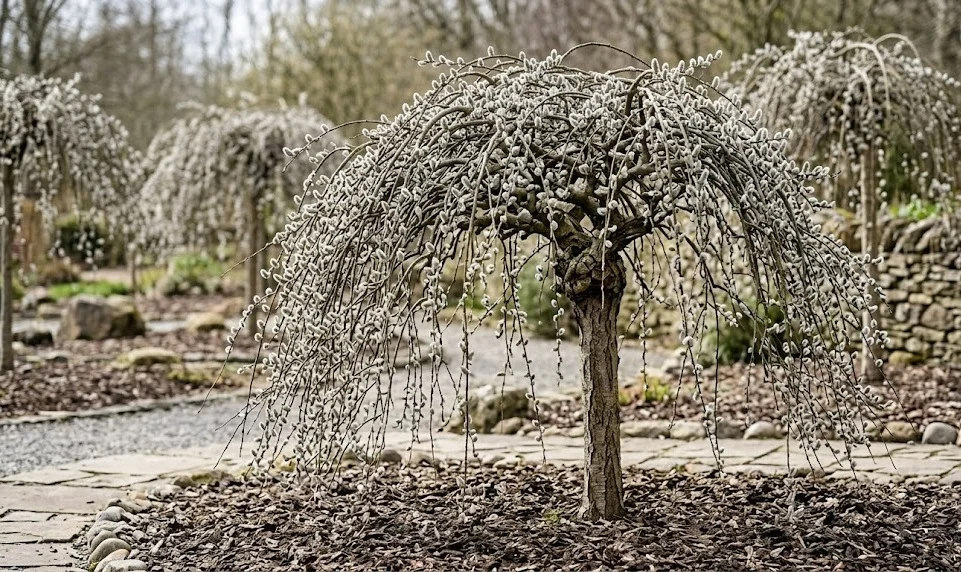

A weeping pussy willow is generally robust, but it can suffer from several common willow problems when conditions become stressful. Fungal leaf spots, cankers, rust, aphids, scale insects, and caterpillars may appear, especially where airflow is poor or watering is irregular. The best protection is preventive care: correct planting, balanced pruning, clean tools, and regular inspection. Early action usually prevents minor symptoms from developing into serious damage.
Recognizing early warning signs
The first signs of trouble often appear on leaves and young shoots. Yellowing, spotting, curling, sticky deposits, or premature leaf drop should not be ignored. Some symptoms develop quickly after wet weather, while others appear during hot, dry periods. Looking closely at the plant every week during active growth helps identify problems early.
The crown structure can also reveal plant health. Dieback at shoot tips may indicate drought, frost injury, canker disease, or damage from pruning. Sparse growth on one side of the canopy may point to root stress or localized branch disease. A healthy tree should produce flexible shoots and evenly distributed foliage.
The trunk and graft union deserve special attention. Cracks, sunken patches, oozing areas, or abnormal swelling may signal deeper issues. Since the tree depends on the grafted connection between stem and crown, damage in this area can be serious. Keeping mulch away from the trunk and avoiding mechanical injury are important preventive measures.
Correct diagnosis matters because different problems can look similar. A wilted plant may be too dry, too wet, root-bound, or affected by disease. A spotted leaf may reflect a minor seasonal issue or a more persistent fungal infection. Careful observation of weather, soil, and recent maintenance helps narrow the cause.
More articles on this topic
Common fungal diseases
Leaf spot diseases can affect willows during damp periods. They usually appear as brown, black, or irregular markings on the foliage. Mild infections may be mostly cosmetic, but repeated heavy infection can weaken the plant. Removing fallen leaves and improving airflow reduces the amount of disease material around the tree.
Willow rust can cause yellow, orange, or powdery-looking patches on leaves. It is often more noticeable in humid conditions and crowded plantings. Affected leaves may drop early if infection is severe. Good spacing, open pruning, and removal of infected fallen foliage help limit recurrence.
Canker diseases are more serious because they affect branches and stems. Sunken, cracked, or dead areas on bark may interrupt the flow of water and nutrients. Infected branches can die back beyond the visible wound. Pruning out affected wood during dry weather, using clean tools, is one of the most important control measures.
Powdery mildew may appear as a pale, dusty coating on leaves in certain conditions. It is often encouraged by poor airflow, dry roots, and humid air around the foliage. While it may not kill the plant, it reduces appearance and vigor. Balanced watering and careful thinning of the canopy can make the tree less vulnerable.
More articles on this topic
Insect pests and their control
Aphids are among the most common pests on willows. They cluster on tender shoots and undersides of leaves, feeding on sap and producing sticky honeydew. This sticky residue can attract sooty mold, which darkens leaf surfaces. Encouraging natural predators and washing small colonies away with water can be effective in mild cases.
Scale insects may appear as small, fixed bumps on stems or leaves. They can be difficult to notice until populations increase. Heavy infestations weaken growth and may also produce honeydew. Pruning out badly affected shoots and using appropriate horticultural oil at the correct season can help manage them.
Caterpillars and leaf-feeding larvae can chew holes in foliage. Light feeding damage is often tolerable on an otherwise healthy tree. Severe defoliation, however, reduces energy production and weakens the plant. Hand removal is practical on small trees, while broader control should be chosen carefully to avoid harming beneficial insects.
Sawfly larvae may also feed on willow leaves. They can consume foliage quickly when present in groups. Early detection makes control much easier, especially on a compact ornamental standard. Regular inspection of the underside of leaves is a simple but useful habit.
Preventive cultural care
Prevention begins with the correct site. A bright, airy position reduces the damp, stagnant conditions that favor many fungal diseases. The canopy should not be crowded by nearby plants or pressed against walls. Sunlight and airflow help leaves dry quickly after rain.
Pruning plays a major role in disease prevention. Removing dead, crossing, and congested branches allows better light penetration and air movement. Pruning should be done with sharp, clean tools, especially if disease is suspected. Tools can be disinfected between cuts when removing infected wood.
Watering should support the roots without wetting the foliage unnecessarily. Overhead watering late in the day can keep leaves damp overnight and encourage fungal problems. Water applied directly to the soil is more efficient and healthier for the plant. Mulch also helps maintain consistent moisture without splashing soil onto leaves.
Garden hygiene is important at the end of the season. Diseased fallen leaves should be collected and removed rather than left to decompose under the plant. Dead shoots should be pruned out and disposed of responsibly. These simple practices reduce the amount of pest and disease material available for the following year.
Treatment and recovery
When a problem is found, the first step is to reduce stress on the plant. Check soil moisture, drainage, mulch depth, and recent pruning history. Many pests and diseases take advantage of plants weakened by drought, waterlogging, or poor structure. Correcting these conditions often improves recovery.
Affected branches should be removed if they are dead, cankered, or badly infested. Cuts should be made back to healthy wood, and the removed material should not be composted if disease is present. Pruning during dry weather lowers the risk of spreading fungal spores. The canopy should be left balanced, open, and able to regrow.
Chemical or biological treatments should be used thoughtfully. Not every blemish requires spraying, and unnecessary treatment can harm beneficial insects or disrupt garden ecology. When intervention is needed, choose products labeled for the specific problem and plant type. Timing, coverage, and correct dosage are essential for effectiveness.
Recovery may take time, especially after heavy defoliation or branch dieback. The tree should be supported with steady watering, moderate feeding, and careful pruning rather than forced growth. A healthy root system is the basis of regrowth. With prompt attention and improved conditions, many weeping pussy willows regain their ornamental value.