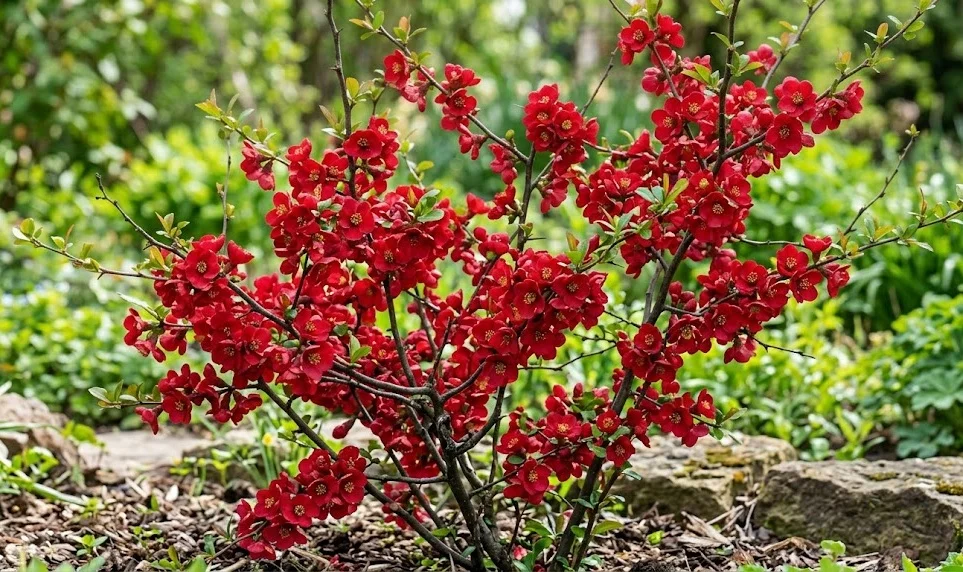

Successful establishment of the crimson flowering quince begins with a thoughtful approach to site selection and soil preparation. This robust shrub is known for its ability to adapt to various conditions, but it performs best when given a strong start in a well-considered environment. Planting is the most critical phase in the life of the shrub, as it sets the stage for decades of growth and flowering. By following professional standards for depth, spacing, and initial care, you can ensure that your new addition transitions smoothly into its permanent home.
Before you even dig a hole, it is essential to evaluate the drainage and sunlight of the chosen spot. The crimson flowering quince requires a location that stays moist but never becomes waterlogged, as stagnant water is the fastest way to kill a young plant. Sunlight is the primary driver of flower production, so a spot that receives at least six to eight hours of direct sun is highly recommended. If the site is prone to strong winds, consider placing the shrub near a fence or another structure that can provide a bit of a buffer during the first few growing seasons.
The timing of planting is another factor that can greatly influence the success rate of your new shrub. Most experts recommend planting in either the early spring or the mid-autumn when the temperatures are mild and the plant is not under the stress of extreme heat. Planting during these dormant or semi-dormant periods allows the roots to begin establishing themselves before the demands of summer foliage or winter freezes take over. If you must plant in the summer, be prepared to provide much more frequent watering to compensate for the rapid evaporation and high transpiration rates.
Preparing the planting hole involves more than just making a space large enough for the root ball. You should dig a hole that is twice as wide as the current root system but no deeper than the container the plant came in. Roughening the sides of the hole with a shovel helps the new roots penetrate the surrounding soil more easily rather than circling within the loose backfill. If your soil is particularly poor, mixing in a small amount of high-quality compost can provide an immediate nutrient boost without overwhelming the young root system with concentrated fertilizers.
Techniques for successful propagation
Propagating the crimson flowering quince allows you to expand your garden or share this beautiful species with fellow enthusiasts at very little cost. One of the most popular methods is taking semi-hardwood cuttings during the mid-summer months when the new growth has started to firm up. These cuttings should be about six inches long and taken from healthy, disease-free stems that have not produced flowers that season. Removing the lower leaves and dipping the cut end into a rooting hormone can significantly increase the chances of a successful root development.
More articles on this topic
Once the cuttings are prepared, they need to be placed in a rooting medium that provides both moisture and excellent aeration. A mixture of perlite and peat moss is often used by professionals to strike the right balance for sensitive new roots. You must keep the cuttings in a bright location but away from direct sunlight, which can quickly overheat and dehydrate the unrooted stems. Using a plastic dome or a simple clear bag to cover the pots helps maintain the high humidity levels that are essential for preventing the leaves from wilting before the roots can take over.
Layering is an alternative propagation method that is often more successful for home gardeners because it keeps the offspring attached to the parent plant. Find a flexible, low-growing branch and carefully nick the underside of the bark where it can easily reach the ground. Pin that section of the branch into the soil using a landscape staple and cover it with a few inches of moist earth and mulch. Over the course of a growing season, the wounded area will develop its own root system, at which point it can be safely cut away from the mother shrub and replanted.
For those who are not in a hurry, growing the crimson flowering quince from seed can be a fascinating and educational experience. The seeds are found inside the mature, yellow fruits and must be cleaned thoroughly to remove any pulp before they are stored or planted. Because these seeds have a built-in dormancy mechanism, they require a period of cold, moist stratification for about three months to simulate winter. Once they germinate in the spring, the seedlings will need careful attention and protection from slugs and harsh sun until they are strong enough to be moved outdoors.
Advanced planting strategies and spacing
When planting multiple shrubs to create a hedge or a large border, spacing is a crucial consideration that affects both aesthetics and plant health. You should research the specific mature width of the variety you are planting, as some can spread much wider than others. Generally, leaving three to five feet between individual plants allows for a dense screen without causing excessive competition for light and nutrients. If you want a more open, specimen-like appearance, you should increase that distance to at least six or seven feet.
More articles on this topic
The depth at which the shrub is planted can determine whether it thrives or struggles for the rest of its life. It is a common mistake to plant woody shrubs too deep, which can lead to stem rot and poor oxygen exchange for the upper roots. The “root flare,” where the main stem begins to widen into the roots, should be level with or slightly above the surrounding soil surface. Once the plant is in place, firm the soil gently with your hands rather than your feet to avoid over-compacting the earth and damaging delicate root hairs.
Watering immediately after planting is a non-negotiable step that helps settle the soil and eliminate air pockets around the root ball. You should give the plant a deep soaking, ensuring that the moisture reaches the very bottom of the planting hole. During the first year, the young crimson flowering quince will need regular monitoring to ensure the soil stays consistently moist but not saturated. A thick layer of organic mulch applied after the first watering will help maintain this moisture and keep the soil temperature stable.
If you are planting in a particularly windy or exposed area, you might consider using stakes to provide temporary support. However, these should be used sparingly and removed as soon as the shrub has established a firm anchor in the soil, usually after one full growing season. Allowing the plant to move slightly in the breeze actually encourages it to develop a stronger, more resilient trunk and root system. Always use soft ties that will not cut into the bark as the plant grows and the stems expand.
Post-planting care and establishment phase
The first two years after planting are known as the establishment phase, during which the shrub focuses most of its energy on root development. You might notice that the top growth is relatively slow during this time, but this is perfectly normal and even desirable. Resist the urge to apply heavy doses of nitrogen-rich fertilizer during this period, as you want to encourage a balanced plant rather than an explosion of weak, leafy growth. Instead, focus on providing consistent water and maintaining a weed-free zone around the base of the shrub.
Monitoring the foliage during the first summer will give you important clues about how well the plant is adapting to its new home. If the leaves begin to droop or turn brown at the edges, it is a clear sign that the roots are not yet able to keep up with the evaporation from the leaves. You may need to provide some temporary shade during the hottest part of the day if the plant appears to be struggling significantly. As the root system grows deeper and wider, the shrub will become much more self-sufficient and resistant to these environmental stresses.
Pruning during the establishment phase should be kept to an absolute minimum to allow the plant to retain as much leaf surface area as possible. Only remove branches that are clearly dead, diseased, or broken by accidental contact or weather events. Every leaf is a small factory producing the energy needed for root expansion, so stripping them away too early can stunt the plant’s overall progress. Once the shrub has completed its second full year in the ground, you can begin more intentional shaping and thinning to achieve your desired form.
Success in planting and propagation is ultimately measured by the long-term health and productivity of the shrub in your landscape. A well-planted crimson flowering quince can live for fifty years or more, becoming a permanent and beloved fixture of the garden. By taking the time to do it right at the beginning, you save yourself years of corrective maintenance and potential disappointment. The effort you put into the soil, the spacing, and the initial care will be repaid many times over by the spectacular crimson blooms every spring.