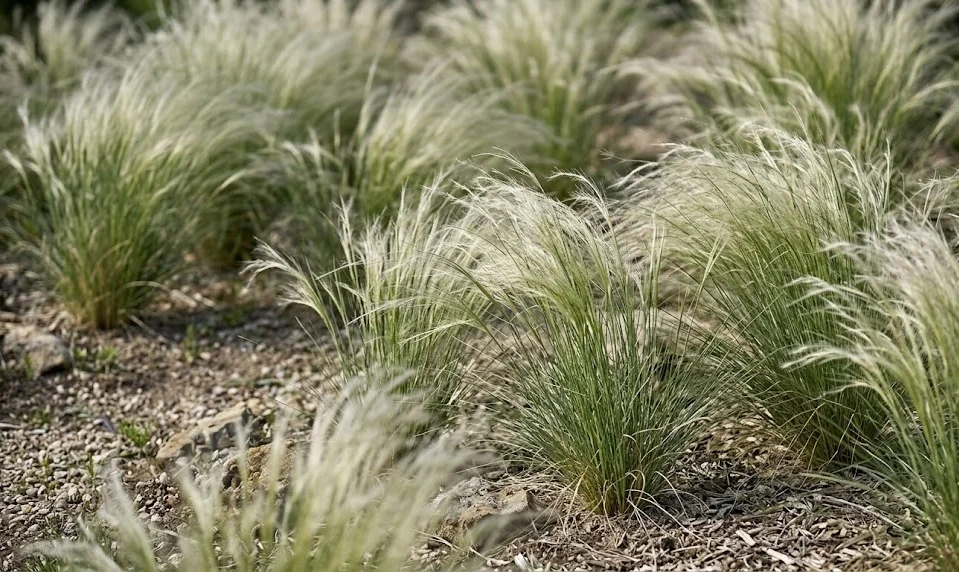

Mexican feather grass should be pruned with a light hand because its beauty depends on softness, movement, and natural texture. Heavy cutting at the wrong time can leave the clump looking blunt or damage the crown. Most maintenance involves combing out dead foliage, removing tired seed heads, and refreshing the plant before new spring growth takes over. The aim is to renew the clump while preserving its fine, flowing character.
When to prune
The best time to prune or clean Mexican feather grass is late winter to early spring. This timing allows the dry foliage to provide winter interest and some crown protection. It also avoids stimulating soft new growth before cold weather has passed. Wait until the harshest part of winter is over.
In mild climates, the plant may stay partly evergreen and need only light grooming. Removing too much living foliage can reduce its graceful appearance. Instead of cutting everything down, comb through the clump to pull out dead strands. This keeps the plant looking natural while clearing space for fresh growth.
In colder climates, more foliage may die back over winter. Even then, avoid cutting into the crown too aggressively. Leave a short layer of old growth if needed to protect emerging shoots. Cutting too close can slow recovery and create uneven regrowth.
Summer pruning is usually limited to tidying. Remove broken stems, wind-damaged leaves, or seed heads if they are no longer attractive. If self-seeding is a concern, cut seed heads before they mature and disperse. Do not shear the whole plant repeatedly during active growth.
More articles on this topic
How to cut and groom correctly
The gentlest method is hand-combing. Wear gloves because dry grass can irritate skin, then run your fingers or a small rake through the clump. Dead material will loosen and pull away while living growth remains anchored. This technique preserves the natural fountain form.
If cutting is necessary, use sharp shears and work above the crown. Cut the foliage back to a modest height rather than shaving it to the ground. A rounded cut usually looks more natural than a flat, blunt top. Avoid leaving a harsh dome that spoils the plant’s airy character.
Clean tools are important, especially when working on several plants. Dirty blades can spread fungal spores or bacteria between clumps. Wipe tools after cutting unhealthy material. Sharp tools also make cleaner cuts and reduce tearing.
After pruning, remove all debris from inside and around the clump. Dead material left at the base can trap moisture and encourage rot. This is particularly important in damp climates and heavy soils. A clean, airy crown regrows more evenly.
More articles on this topic
Managing old clumps and self-seeding
Older clumps may become less attractive even with regular pruning. The center can turn woody, sparse, or flattened, while fresh growth remains stronger around the edges. Pruning alone will not fully correct this problem. Division is often the better solution.
Lift and divide congested plants in spring when growth is active. Keep vigorous outer sections and discard exhausted central material. Replant divisions into well-drained soil at the correct depth. Water them carefully until they re-establish.
Seed head removal is another form of practical pruning. In regions where Mexican feather grass self-seeds readily, cutting before seed ripening helps reduce unwanted spread. This is especially important near natural areas or low-maintenance gravel plantings. Early removal saves considerable weeding later.
Even when managing seed heads, try not to remove the plant’s ornamental value too early. The feathery inflorescences are one of its finest features. Watch the timing closely and cut when the seed heads begin to mature but before they shed freely. This balances beauty with responsible garden management.