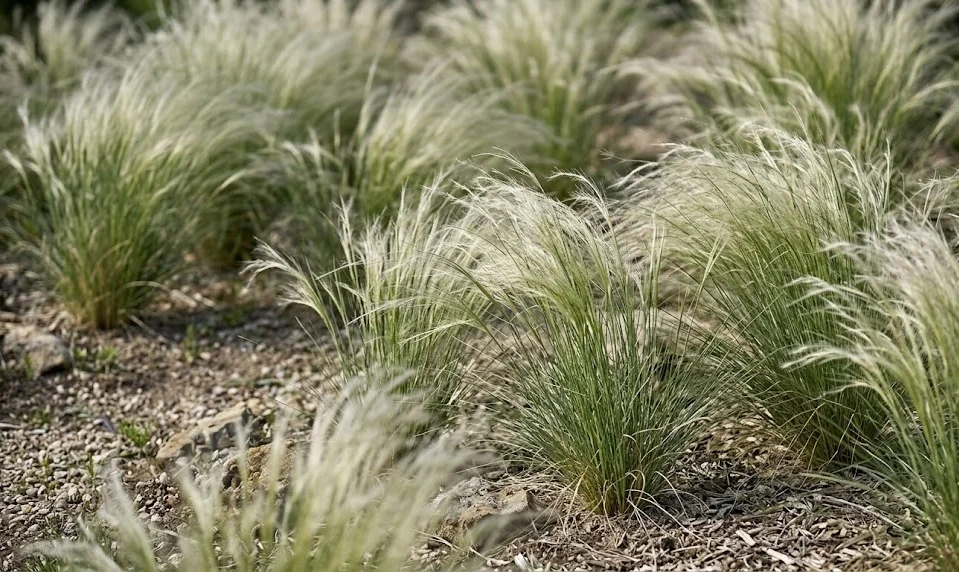

Mexican feather grass establishes best when planted in a sunny, well-drained position where its fine roots are not exposed to prolonged wetness. Although it is often sold as a small container plant, it quickly develops into a graceful clump when the planting site matches its natural preferences. Propagation is possible by division or seed, but each method requires a slightly different approach. The key is to protect the crown, avoid overly rich soil, and give young plants enough moisture to root without making the ground soggy.
Selecting planting material and timing
Healthy planting stock is the foundation of successful establishment. Choose plants with dense, fine foliage, a firm crown, and roots that are visible but not tightly circling the pot. Avoid specimens with blackened bases, sour-smelling compost, or foliage that pulls away easily from the crown. These signs may indicate root stress or crown rot.
Spring is usually the best planting season in cooler climates. The soil is warming, new roots are active, and the plant has a full growing season to settle before winter. Early autumn can also work in mild regions with well-drained soil. Avoid planting into cold, saturated ground because young roots are vulnerable in those conditions.
In hot climates, autumn planting may be preferable because it reduces heat stress during establishment. Cooler temperatures and seasonal rainfall help the roots develop before intense summer weather arrives. However, drainage must still be excellent because autumn and winter wetness can be harmful. The planting window should match both temperature and soil moisture.
Container-grown plants can technically be planted whenever the ground is workable, but practical timing matters. Planting during extreme heat, drought, frost, or prolonged rain increases stress. If planting cannot be delayed, provide temporary shade during heat or protect the root ball from drying before it enters the soil. Careful handling during the first day often determines how smoothly the plant establishes.
More articles on this topic
Preparing the site and planting correctly
Start by clearing the planting area of perennial weeds and compacted debris. Mexican feather grass does not compete well while young if weeds crowd its fine foliage. Loosen the soil over a wide area so roots can move outward easily. Good preparation reduces the need for later disturbance around the crown.
Drainage should be tested before planting in uncertain soils. After heavy rain, the site should not remain wet or sticky for long. If water lingers, consider planting on a slight mound, raised bed, or gravel-rich border. Raising the crown even a few centimeters can make a significant difference in winter and during wet spells.
Plant at the same depth the grass was growing in its nursery pot. Burying the crown too deeply can trap moisture around the base and increase disease risk. The top of the root ball should sit level with the surrounding soil or just slightly proud in heavy ground. Firm the soil gently around the roots without compacting it into a hard basin.
After planting, water thoroughly to settle soil around the root ball. This first watering is important even for drought-tolerant grasses because it removes air pockets and encourages root contact. Afterward, allow the surface to dry slightly before watering again. Establishment succeeds through even moisture, not constant wetness.
More articles on this topic
Propagation by division
Division is the most reliable way to produce plants that match the parent clump. It is especially useful when an older plant has become congested or hollow in the center. Divide during spring or early active growth when the plant can recover quickly. Avoid division in winter because cold, damp soil slows healing and encourages rot.
Lift the clump carefully with a fork, keeping as much root as possible. Shake or tease away loose soil so you can see the crown structure. Separate vigorous outer sections with healthy roots and fresh shoots. The oldest central portion is often woody and should usually be discarded.
Each division should be large enough to re-establish without excessive stress. Very tiny pieces may survive, but they take longer to form attractive clumps. Use a clean, sharp knife or spade if the crown is dense. Clean cuts reduce tearing and help the plant recover more efficiently.
Replant divisions immediately into prepared soil or containers with excellent drainage. Water once to settle them, then manage moisture carefully while roots resume growth. Keep divisions out of severe drought until new foliage appears. Once they are growing strongly, treat them like established plants and reduce watering gradually.
Propagation from seed and early care
Mexican feather grass can also be grown from seed, although seedlings may vary slightly in vigor and appearance. Sow seed in a fine, free-draining propagation mix and press it lightly onto the surface. Do not bury it deeply because small grass seeds need good contact with air and light. Keep the medium lightly moist until germination begins.
Warm conditions usually encourage faster germination. A bright, sheltered place with steady temperatures is ideal. Avoid strong direct sun on covered seed trays because heat can build quickly and dry the surface unevenly. Gentle air movement helps reduce fungal problems in young seedlings.
Once seedlings are large enough to handle, transplant them into small individual pots. Use a gritty, open mix that prevents water from collecting around the crown. Handle seedlings by the leaves rather than pulling on the delicate base. After transplanting, water carefully and allow the surface to dry slightly between applications.
Harden off young plants before moving them into the garden. Gradually expose them to outdoor light, wind, and temperature changes over several days. Plant them out only when they have formed a stable root system and the weather is suitable. Young seedlings may need more weed protection than divisions because they start smaller and develop more slowly.