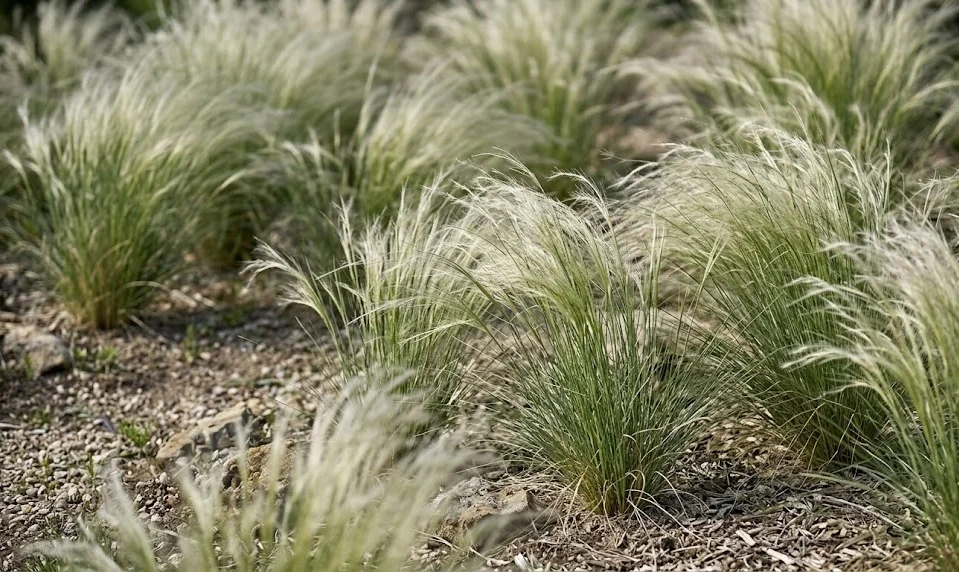

Mexican feather grass is one of the most graceful ornamental grasses for gardens that need movement, softness, and a naturalistic look without heavy maintenance. Its fine, threadlike foliage forms elegant clumps that shimmer in the wind and catch low sunlight beautifully. Although it appears delicate, it is a tough plant when placed in the right conditions and managed with restraint. Successful care depends on sharp drainage, abundant light, moderate watering, and a clear understanding of its seasonal rhythm.
Understanding growth habit and garden role
Mexican feather grass grows as a compact, fountain-shaped clump with extremely narrow leaves that create a silky appearance. The foliage is usually bright green in active growth and turns straw-gold as it matures or dries in summer heat. Its flower stems rise above the mound and carry fine, feathery seed heads that move with the slightest breeze. This makes the plant especially valuable in gravel gardens, prairie-style plantings, dry borders, and contemporary landscapes.
The plant is best appreciated when repeated in groups rather than used as a single isolated specimen. Several clumps planted at measured intervals can create rhythm along paths, terraces, or sunny borders. It also combines well with drought-tolerant perennials such as lavender, sage, yarrow, stonecrop, and coneflower. In these combinations, its soft texture balances bolder leaves and heavier flower forms.
Its beauty comes from looseness, so excessive tidying can reduce its natural charm. A perfectly clipped or overly controlled plant often looks less elegant than one allowed to sway freely. The goal is not to force it into a rigid shape, but to keep the clump healthy, open, and clean. Good care supports the plant’s natural form instead of fighting against it.
Gardeners should also understand that Mexican feather grass can self-seed in favorable climates. In some regions it behaves politely, while in others it can spread more freely than expected. Removing unwanted seedlings early is much easier than correcting a dense colony later. Responsible care includes observing how the plant behaves in the local garden and managing seed production where necessary.
More articles on this topic
Choosing the right position
A sunny position is essential for strong, dense, attractive growth. Mexican feather grass performs best where it receives at least six hours of direct sunlight per day. In full sun, the clumps stay more upright, the foliage remains finer, and flowering is usually more abundant. Shade often causes weak, floppy growth and a duller overall appearance.
The site should also be open and airy, because good air movement keeps the foliage dry and reduces the risk of crown problems. Avoid cramped corners where moisture lingers after rain or irrigation. The plant dislikes being pressed between large, wet-leaved perennials that shade its base. It is much happier in exposed, warm, free-draining locations.
Soil drainage is more important than high fertility. Mexican feather grass naturally suits lean, mineral soils that do not hold excess water around the crown. Heavy clay can be improved with grit, coarse sand, or raised planting beds, but drainage must be genuinely improved rather than merely loosened at the surface. If water sits around the roots for long periods, decline is likely.
Positioning also affects winter survival in colder or wetter climates. A raised slope, gravel mulch, or south-facing border can help keep the crown drier during cold months. Plants in low, soggy ground often suffer even when temperatures are not extremely low. Choosing the right site from the beginning is the most important care decision.
More articles on this topic
Soil preparation and mulching
Before planting, prepare the soil deeply enough for roots to establish without waterlogging. Remove compacted layers, perennial weeds, and large stones that interfere with root spread. If the native soil is heavy, create a broad improved area rather than a small amended pocket. A narrow pocket of loose material inside dense clay can trap water and create worse conditions.
Lean soil is generally better than rich soil for this grass. Excessive compost or manure may produce soft, lush growth that flops and ages poorly. A modest amount of well-rotted organic matter can help structure in very poor soil, but it should not dominate the planting medium. Mineral drainage materials are often more useful than fertility amendments.
Mulching should be handled carefully. Gravel, fine crushed stone, or other mineral mulches suit Mexican feather grass very well because they reflect heat and keep the crown relatively dry. Thick organic mulch pushed against the base can hold moisture and encourage rot. Leave a small breathing space around the crown so air can circulate.
In mixed borders, avoid using heavy bark mulch directly around the plant. Bark can be useful elsewhere, but it is not ideal when it remains damp through winter. A light mineral mulch gives a cleaner look and supports the dry-garden character of the grass. It also suppresses weed seedlings while allowing rainwater to drain quickly.
Watering through the seasons
Newly planted Mexican feather grass needs regular watering until it establishes a functioning root system. During the first few weeks, water deeply enough to moisten the root zone rather than sprinkling the surface every day. Allow the upper soil layer to begin drying between waterings. This encourages roots to explore downward instead of staying shallow.
Once established, the plant is drought tolerant and usually needs little additional irrigation in open ground. In normal garden soil, natural rainfall may be enough except during long dry spells. Overwatering is more damaging than short-term dryness because the plant’s crown and roots are sensitive to stagnant moisture. A slightly dry plant can recover, but a rotting crown often cannot.
During hot summers, some leaf tips may bleach or turn straw-colored, especially in exposed sites. This is not always a sign of failure, because the plant naturally develops golden tones as seed heads mature. Water only when the soil is dry below the surface and the clump shows genuine stress. Deep, occasional irrigation is better than frequent shallow watering.
Container-grown plants need closer attention because pots dry faster and heat up more quickly. Use a free-draining container mix and check moisture with a finger rather than following a fixed schedule. Water thoroughly, then allow excess water to drain completely. Never leave the pot standing in a saucer of water for long periods.
Feeding and fertility management
Mexican feather grass does not require heavy feeding. In fact, too much nitrogen can make the plant lush, floppy, and less durable. The finest texture often develops in moderately poor soil where growth is steady but not forced. A restrained fertility approach produces a more natural, elegant clump.
In garden beds, a light spring application of balanced, slow-release fertilizer may be enough if the soil is extremely poor. Many established plants need no annual fertilizer at all. If nearby perennials are fed heavily, keep fertilizer away from the crown of the grass. The aim is to support root health, not to push excessive top growth.
Compost should be used sparingly and only when soil structure genuinely needs improvement. A thin top-dressing around, but not against, the plant can help biological activity in sandy soils. In rich soils, compost may be unnecessary and even counterproductive. Observation is more useful than routine feeding.
Signs of overfertilizing include soft leaves, excessive height, weak stems, and clumps that collapse after rain. If this happens, reduce feeding and improve light and air exposure. Avoid quick-release lawn fertilizers near ornamental grasses. Mexican feather grass should look fine, light, and resilient, not swollen with forced growth.
Seasonal grooming and renewal
Seasonal grooming keeps the plant attractive without destroying its natural movement. In late winter or early spring, remove dead, tangled foliage before new growth becomes too advanced. The gentlest method is to comb through the clump with gloved hands or a small hand rake. This removes loose straw-like material while preserving the living base.
Hard cutting is sometimes used, but it must be done carefully. If the plant is cut too low into the crown, regrowth may be slow or uneven. Trim only when necessary and leave enough stubble to protect the growing point. In mild climates, light grooming is often preferable to severe cutting.
During the growing season, remove broken or weather-damaged stems if they spoil the appearance. Seed heads can be left for texture, especially in naturalistic plantings. However, in regions where self-seeding is a concern, cutting seed heads before they mature is a practical control measure. This reduces unwanted spread without removing the plant entirely.
Older clumps may become congested, woody, or open in the center. When this happens, lifting and dividing healthy outer sections can refresh the planting. Division is best done during active growth rather than in cold, wet weather. Replant only vigorous pieces with strong roots and discard tired central material.
Long-term health and design maintenance
Long-term success depends on keeping conditions lean, bright, and well-drained. Mexican feather grass usually declines when gardens become too fertile, too shaded, or too wet. As neighboring shrubs and perennials mature, they may cast more shade than they did at planting time. Periodic editing of surrounding plants helps maintain the openness this grass needs.
Weed control is also important because fine foliage can hide small competitors at the crown. Remove weeds by hand before they establish deep roots among the clump. Avoid aggressive hoeing too close to the base, because the crown can be damaged. A mineral mulch helps reduce weed pressure while preserving the dry character of the planting.
In formal gardens, Mexican feather grass can soften hard paving, walls, and geometric layouts. In meadow-style plantings, it contributes motion and seasonal color transitions. It is especially effective when contrasted with upright flower spikes, rounded shrubs, or silver-leaved plants. Good design gives the grass enough space to move and catch light.
The best care approach is attentive but not fussy. Watch the plant through the seasons and respond to real signals rather than imposing constant maintenance. Provide sun, drainage, modest water, and restrained feeding, then allow the grass to express its natural habit. When these basics are respected, Mexican feather grass becomes one of the most elegant low-maintenance plants in the garden.