Pruning and cutting back gazanias correctly

Gazanias do not require complicated pruning, but thoughtful cutting keeps them compact, healthy, and productive. Most routine work involves removing faded flowers, dead leaves, and weak stems rather than reshaping the whole plant. Older perennial clumps may also benefit from rejuvenation when growth becomes woody or sparse. Clean tools and well-timed cuts reduce stress and limit the spread of disease.
Deadheading and routine grooming
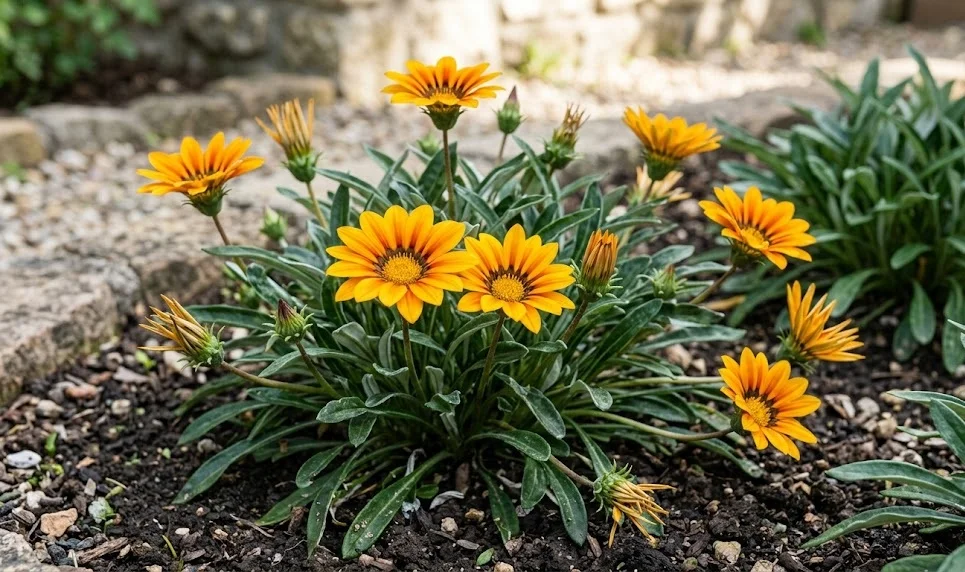
Remove faded flowers by cutting the entire flower stem close to the base. Leaving long bare stalks makes the plant untidy and provides little benefit. Use fingers only when the stem detaches easily without tearing surrounding tissue. Scissors or fine secateurs give greater control.
Regular deadheading can encourage continued bud production. It also prevents unwanted self-seeding in cultivars that produce fertile seed. Check plants once or twice each week during peak flowering. Frequent light grooming is easier than removing a large amount of neglected material.
Dead, yellow, or badly damaged leaves should be removed from the crown. Cut them at their base without injuring healthy shoots. Decaying foliage can trap moisture and shelter pests. Prompt removal improves airflow through the plant.
Do not remove healthy leaves simply to expose flowers. The foliage produces the energy needed for continued blooming and root growth. Excessive thinning weakens the plant and can expose the crown to weather damage. Prune only material that is spent, diseased, or structurally unsuitable.
More articles on this topic
Cutting back overgrown or ageing plants
Perennial gazanias may become loose, woody, or bare in the centre. Light cutting back can stimulate fresh growth from healthy basal shoots. Shorten stems selectively rather than shearing every part to the same level. Always leave some active foliage on each viable section.
The best time for stronger renovation is usually when active growth is about to resume. Avoid severe pruning immediately before cold, wet weather. Fresh cuts heal more slowly in low temperatures and may become infected. Spring treatment allows rapid recovery under improving conditions.
If only the outer parts of a clump remain vigorous, division may be more effective than pruning. Lift the plant and separate rooted sections with healthy crowns. Discard exhausted woody centres and any soft tissue. Replant the divisions in fresh, well-drained soil.
Do not expect badly weakened plants to recover through repeated cutting alone. Check light, drainage, watering, and root health before pruning heavily. Correcting the underlying problem is essential. Pruning supports recovery but cannot compensate for unsuitable growing conditions.
More articles on this topic
Tools, hygiene, and aftercare
Use sharp scissors, a clean knife, or fine bypass secateurs. Blunt tools crush stems and create ragged wounds. Clean blades before starting and between diseased plants. Disinfection is particularly important after removing rotted or spotted tissue.
Make cuts close to the point of origin without damaging the crown. Avoid leaving short hollow stems that may collect water. Work when the foliage is dry so diseases are less easily transferred. Remove all cut material from around the plant when finished.
Water only when the soil condition requires it after pruning. A freshly cut plant does not automatically need extra moisture. Overwatering during recovery can damage roots and delay new growth. Maintain the same free-draining conditions the plant normally prefers.
Wait for visible new growth before applying fertiliser after substantial cutting. A light, balanced feed may support recovery in containers or poor soil. Avoid high-nitrogen products that create soft, stretched shoots. Strong sunlight and moderate nutrition will produce the firmest replacement growth.