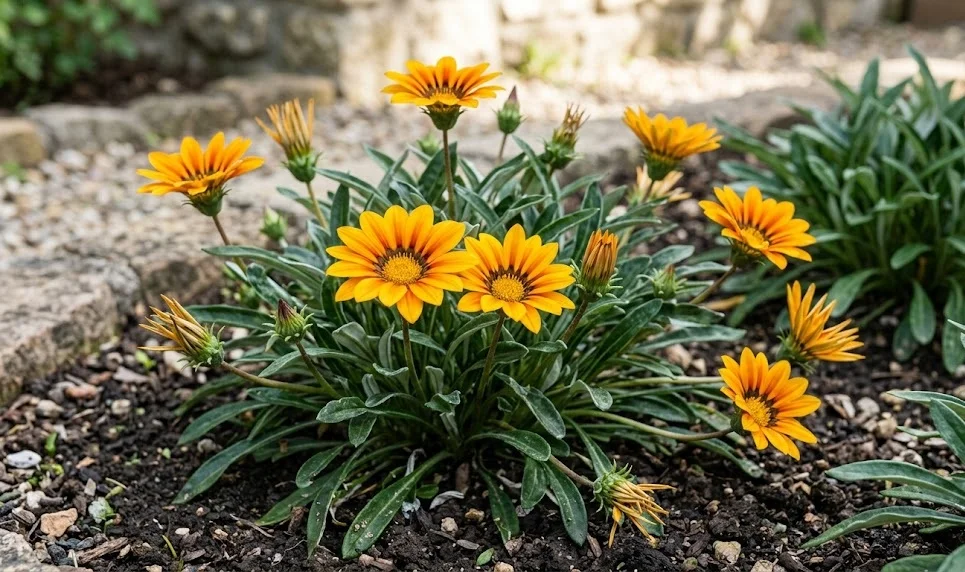

Gazanias tolerate heat and drought far better than frost, yet valuable plants can often be preserved through winter with suitable protection. The best method depends on local minimum temperatures, winter rainfall, available indoor space, and the size of the plants. Some gardeners lift entire specimens, while others save compact cuttings or treat gazanias as annuals. Planning before the first hard frost greatly improves the chance of successful overwintering.
Deciding whether outdoor overwintering is possible
In mild, relatively dry climates, gazanias may remain outdoors throughout winter. The safest sites are sunny, sheltered, and sharply drained. Mature plants usually tolerate brief cool periods better than young transplants. Persistent wet soil is often more destructive than a short spell of light frost.
Microclimates can make a significant difference. A south-facing wall stores daytime warmth and offers protection from cold wind. Sloping ground allows chilled air and surplus water to move away from the plants. Exposed hollows and heavy soil create much greater risk.
Apply a light, dry protective covering before severe weather, but do not smother the crown. Horticultural fleece can be placed over plants during short cold spells and removed when conditions improve. A raised clear cover may help exclude heavy winter rain while preserving ventilation. Plastic should never rest directly on wet foliage.
Outdoor plants need little water during winter. Natural rainfall is often more than sufficient, especially in heavy soil. Irrigate only during unusually dry periods when the root zone has clearly dried. Wet crowns combined with low temperatures encourage rapid decay.
More articles on this topic
Lifting and potting plants before frost
Select healthy, compact plants several weeks before severe frost is expected. Plants already suffering from disease or heavy pest infestation are poor candidates for storage. Cut away dead flowers and damaged leaves before lifting. Inspect the foliage carefully so pests are not carried indoors.
Dig around the root system with a generous margin. Lift the plant with as many fine roots as possible and place it in a clean container. Use a gritty, free-draining compost rather than rich garden soil. Ensure that the crown remains at its previous depth.
Water the newly potted plant lightly to settle the compost. Allow surplus moisture to drain completely before moving it into winter quarters. Avoid heavy feeding because the plant should enter a slower growth phase. Soft new growth produced in weak winter light is vulnerable to pests and rot.
Some leaf loss may occur after lifting. Remove leaves only when they are yellow or dead, because healthy foliage supports recovery. Keep the plant in a bright, sheltered position while it adjusts. Move it indoors before damaging frost arrives.
More articles on this topic
Providing suitable indoor conditions
A bright, cool, frost-free place is ideal. Suitable locations may include an unheated conservatory, enclosed porch, greenhouse, or well-lit garage window. Warm living rooms often encourage weak growth and pest activity. Darkness causes severe stretching and gradual decline.
Temperatures should remain cool enough to slow growth but safely above freezing. Avoid positions directly beside heaters or in strong cold drafts. Sudden temperature fluctuations can stress the plant. Consistent conditions are more valuable than excessive warmth.
Water very sparingly during winter storage. Allow most of the compost to dry before applying a small amount around the root zone. Never leave water in a saucer or decorative outer pot. Plants with few active leaves use very little moisture.
Inspect overwintering gazanias every week or two. Remove dead material and check leaf undersides for aphids, whiteflies, and mites. Isolate affected plants and treat early. Good spacing and ventilation prevent small problems from spreading through the entire collection.
Restarting growth in spring
As days lengthen, healthy plants begin producing fresh leaves from the crown. Gradually increase watering when active growth becomes visible. Do not saturate dry compost suddenly, because inactive roots may absorb water slowly. A measured return to normal care is safer.
Begin light feeding only after clear new growth appears. Use a diluted balanced fertiliser rather than a concentrated dose. Plants that were repotted into fresh compost may not need immediate feeding. Watch the foliage for signs of strong, compact development.
Trim dead stems and weak winter growth before moving plants outside. If the clump has become crowded, it can be divided at this stage. Healthy cuttings may also be taken to create additional plants. Use clean tools and discard any soft or discoloured sections.
Harden plants gradually over one to two weeks. Place them outdoors during mild days and bring them under cover when frost threatens. Increase exposure to direct sunlight and wind step by step. Permanent outdoor planting should wait until damaging frost is no longer expected.