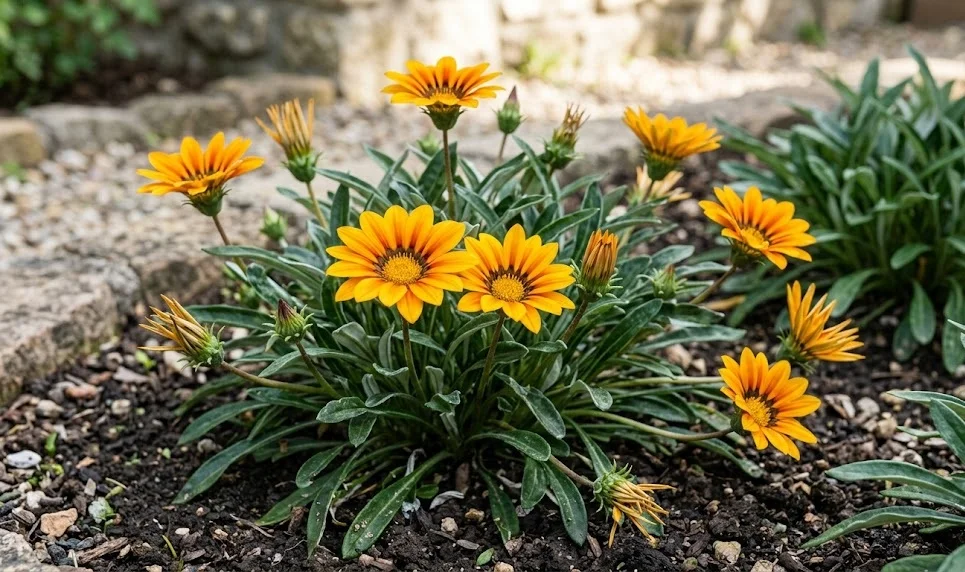

Gazanias flourish when water and nutrients are supplied with restraint rather than generosity. Their roots are adapted to soils that dry between periods of moisture, while their flowers develop best when growth remains compact. Constantly wet soil and heavy feeding can produce fewer flowers, weak stems, and serious root damage. A successful routine therefore responds to soil conditions, weather, and the plant’s stage of development.
Assessing when gazanias need water
The surface of the soil offers a useful first indication, but deeper moisture should also be checked. Insert a finger several centimetres into the soil or use a small trowel to inspect the root zone. Water only when the upper layer has dried and the soil below is beginning to lose moisture. This method prevents irrigation based solely on habit.
Leaves that lose firmness during cool morning hours may indicate genuine water shortage. Afternoon wilting during extreme heat can be temporary and does not always require immediate irrigation. Check the soil before responding, because overwatered roots can also cause limp foliage. Correct diagnosis prevents a cycle of unnecessary watering.
Soil texture strongly influences watering frequency. Sandy ground drains rapidly and may require more frequent irrigation during hot weather. Clay soil dries more slowly and can remain saturated beneath a deceptively dry surface. Container compost may dry fastest of all, especially in small or exposed pots.
Rainfall should always be considered before adding water. A brief shower may wet only the surface, while prolonged rain can saturate the entire root zone. Examine the soil rather than relying on rainfall totals alone. Plants beneath roof overhangs may receive far less natural moisture than nearby beds.
More articles on this topic
Applying water effectively
Deep watering encourages roots to grow downward into cooler soil. Apply water slowly so it penetrates instead of running across the surface. Stop when the root zone is thoroughly moist but before water begins pooling. Allow the soil to drain freely afterward.
Watering at the base keeps flowers and leaves cleaner. A narrow-spouted watering can, drip line, or low-pressure hose works well. Repeated overhead irrigation can encourage fungal disease and may damage open blooms. It also wastes water through evaporation and drift.
Morning irrigation is generally safest because the plant can absorb moisture before peak heat. Any splashed foliage also has time to dry during the day. Evening watering may be suitable in very hot, dry climates if leaves remain dry. In cool or humid conditions, late watering can keep the crown damp overnight.
Container plants should be watered until excess moisture escapes through the drainage holes. This ensures that the entire root ball is moistened and helps remove accumulated salts. Empty decorative outer pots and saucers after watering. Standing water deprives roots of oxygen and can cause rapid decline.
More articles on this topic
Adjusting irrigation through the season
Recently planted gazanias require closer monitoring than established plants. Their roots initially occupy a small volume of soil and cannot yet reach wider moisture reserves. Water when the root ball begins to dry, but avoid keeping it constantly damp. Irrigation can be reduced as vigorous new growth confirms establishment.
During active summer flowering, plants use more water than they do in cool spring conditions. Hot wind can increase moisture loss even when temperatures are not extreme. Check exposed containers and raised beds more frequently during these periods. Larger established plants may also dry their soil faster than young specimens.
Cool, cloudy weather reduces water use. Flowering may slow, and moisture remains in the soil for longer periods. Continue checking the root zone rather than following a summer schedule unchanged. Reducing irrigation during cool spells protects the roots from saturation.
As autumn approaches, lower temperatures and shorter days further reduce demand. Perennial plants preparing for winter need considerably less water. In frost-free climates, occasional irrigation may still be necessary during prolonged dry weather. In protected storage, water should be supplied only often enough to prevent complete root desiccation.
Choosing and applying fertiliser
Gazanias generally prefer moderate fertility. Plants growing in ordinary garden soil may flower well without routine feeding. Excess fertiliser, particularly products high in nitrogen, encourages foliage at the expense of buds. Soft, nutrient-rich growth may also be more vulnerable to aphids and fungal problems.
Container-grown gazanias gradually exhaust the nutrients in their growing medium. A diluted liquid fertiliser can be applied during active growth according to the product’s instructions. Using half-strength feed at sensible intervals is often safer than occasional heavy doses. Always apply fertiliser to moist soil to reduce the risk of root burn.
A balanced fertiliser supports general development, while a formulation with proportionally less nitrogen may favour flowering. Product labels should be read carefully because concentration varies considerably. More fertiliser does not produce proportionally more blooms. Light, warmth, and drainage remain more important than nutrient intensity.
Slow-release fertiliser can provide steady nutrition in containers. Mix it evenly through fresh compost or apply it to the surface at the recommended rate. Avoid placing concentrated granules directly against roots or the crown. Additional liquid feeding may be unnecessary while the slow-release product remains active.
Identifying nutrient and salt problems
Pale foliage may suggest nutrient deficiency, but it can also result from waterlogged roots. Check drainage and soil moisture before feeding. Roots damaged by excess water cannot absorb nutrients efficiently even when those nutrients are present. Correcting the root environment should come before fertiliser application.
Older leaves that gradually lose colour may indicate nitrogen shortage in long-term container plants. New leaves with unusual yellowing between the veins can point to restricted micronutrient uptake. Soil reaction, root health, and fertiliser history should all be considered. A complete, low-dose feed is safer than applying a single nutrient without evidence.
White crusts on the soil surface or pot rim indicate salt accumulation. These salts may come from fertiliser or mineral-rich irrigation water. Flush the container thoroughly with clean water and allow it to drain completely. Severe buildup may require repotting into fresh growing medium.
Brown leaf tips and stalled growth can also develop when fertiliser concentration is too high. Stop feeding and leach the soil with generous, free-draining irrigation. Remove only leaves that are completely dead, because partially green tissue still supports the plant. Resume feeding cautiously after healthy new growth appears.