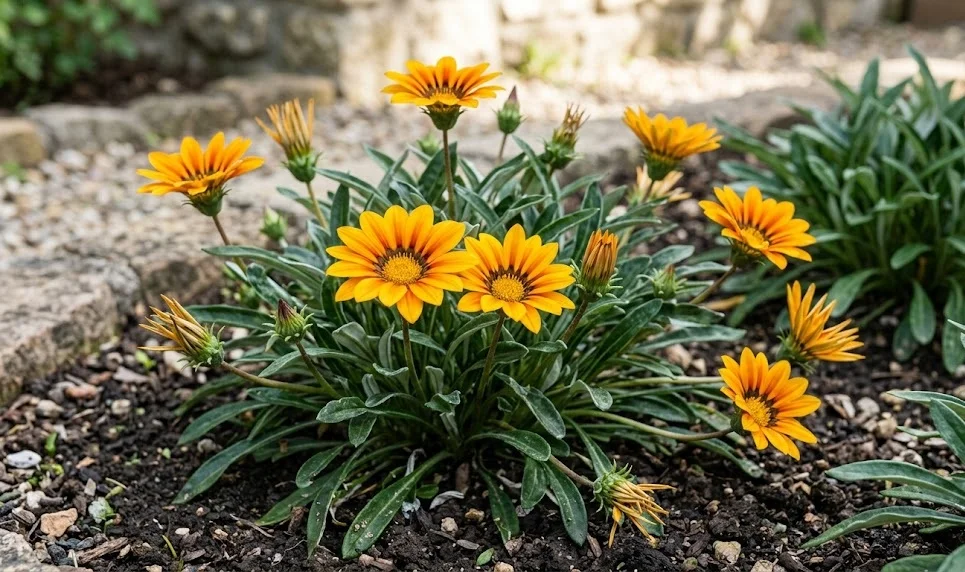

Gazanias are generally robust, but unsuitable growing conditions can weaken their natural resistance to pests and disease. Most serious problems begin with excessive moisture, poor air movement, overcrowding, or stressed roots. Regular inspection allows early treatment before damage spreads through a bed or container display. Cultural correction should remain the foundation of control, with pesticides used only when genuinely necessary.
Root rot and crown decay
Root rot is one of the most damaging gazania problems. It usually develops when soil remains saturated and oxygen cannot reach the roots. Affected plants may wilt despite wet soil, turn yellow, and stop producing new growth. The crown can eventually become soft, dark, and unstable.
Remove a suspicious plant carefully and inspect the roots. Healthy roots are firm and usually pale, while rotting roots appear brown, black, soft, or hollow. An unpleasant smell is another sign of advanced decay. Severely damaged plants are unlikely to recover and should be discarded.
Mild cases may improve if watering is stopped and drainage is corrected immediately. Container plants can be lifted, trimmed of damaged roots, and replanted in fresh, porous compost. Clean tools between plants to avoid transferring disease organisms. Do not reuse contaminated growing medium.
Prevention is much more reliable than treatment. Use containers with open drainage holes, avoid planting too deeply, and never leave pots standing in water. Improve heavy garden soil with raised planting positions rather than creating isolated planting pockets. Allow the upper soil to dry before irrigating again.
More articles on this topic
Leaf spots, mildew, and grey mould
Fungal leaf spots may appear as brown, grey, or black lesions on the foliage. They often become more common during damp, cool weather. Splashing water can spread spores from infected tissue to healthy leaves. Crowded growth and persistent surface moisture increase the risk.
Remove heavily spotted leaves as soon as they are noticed. Dispose of them away from the growing area rather than adding them to a cool compost pile. Water at soil level and improve spacing where plants touch. These measures often control minor outbreaks without chemical treatment.
Grey mould can affect fading flowers, damaged leaves, and dense plant centres. Infected material may develop soft brown patches covered with fuzzy grey growth. Deadheading and removing decaying tissue reduces the material on which the fungus develops. Ventilation is particularly important in greenhouses and winter storage areas.
Powdery growth on leaves may indicate a mildew infection. Although some mildews tolerate dry weather, stressed and crowded plants are often most vulnerable. Remove affected foliage and correct poor circulation. Where disease persists, a fungicide labelled for ornamental plants may be considered according to local regulations.
More articles on this topic
Aphids, whiteflies, and sap-feeding insects
Aphids gather on soft shoots, flower stems, and the undersides of leaves. They remove plant sap and may cause distorted growth, sticky deposits, and reduced flowering. Ant activity can draw attention to colonies because ants feed on the sugary honeydew. Small infestations are easiest to manage.
A strong but controlled jet of water can dislodge aphids from sturdy plants. Repeated inspection is necessary because surviving insects reproduce quickly. Insecticidal soap may be used when physical removal is insufficient. Spray coverage must reach hidden colonies without soaking flowers unnecessarily.
Whiteflies rise in small clouds when infested foliage is disturbed. Their immature stages remain attached to leaf undersides and are easy to overlook. Sticky honeydew can lead to dark sooty mould on the leaves. Improving air movement and removing badly infested foliage can reduce populations.
Beneficial insects provide valuable natural control outdoors. Ladybirds, lacewings, hoverfly larvae, and parasitic wasps all attack common sap-feeding pests. Broad-spectrum insecticides may kill these allies and allow pest numbers to rebound. Selective treatment should therefore be preferred whenever intervention is required.
Spider mites, thrips, slugs, and snails
Spider mites are most troublesome in hot, dry, sheltered conditions. Fine stippling, dull foliage, and delicate webbing are typical signs. Check the undersides of leaves with a hand lens when damage is suspected. Early detection is important because large populations spread rapidly.
Mites can be reduced by removing badly damaged leaves and washing the remaining foliage carefully. Plants should not be kept excessively dry during an infestation, although the soil must still drain well. Insecticidal soap or horticultural oil may help when used correctly. Repeat treatment may be necessary because eggs can survive the first application.
Thrips feed inside flowers and on young leaves. Their damage may appear as pale streaks, distorted petals, or tiny dark specks of waste. Remove badly affected blooms and nearby weeds that may host the insects. Blue or yellow monitoring traps can help reveal their presence in protected growing areas.
Slugs and snails may chew irregular holes in leaves and flowers, especially during damp weather. Their silvery trails often identify the cause. Reduce hiding places, water in the morning, and inspect plants after dusk. Physical barriers and approved baits can be used where damage remains severe.
Integrated prevention and responsible treatment
Healthy gazanias tolerate minor pest activity better than stressed plants. Full sun, sensible watering, and adequate spacing strengthen growth and reduce disease pressure. Avoid excessive nitrogen because soft foliage attracts sap-feeding insects. Clean cultivation removes many places where pests and pathogens persist.
Inspect new plants before placing them near an established collection. Quarantine suspicious specimens until their condition is clear. Wash containers and tools before reuse, particularly after root disease. Good hygiene is a simple but effective form of prevention.
Accurate identification should come before treatment. Similar symptoms can arise from drought, waterlogging, nutrient imbalance, frost injury, and pest attack. Applying an insecticide to a plant with damaged roots will not solve the underlying problem. Examine the whole plant and its growing conditions before deciding on control.
When a pesticide is necessary, choose a product specifically labelled for the pest and ornamental plant concerned. Follow the stated dose, timing, protective measures, and environmental restrictions. Avoid spraying open flowers when pollinating insects are active. Targeted application reduces unnecessary exposure and protects beneficial organisms.