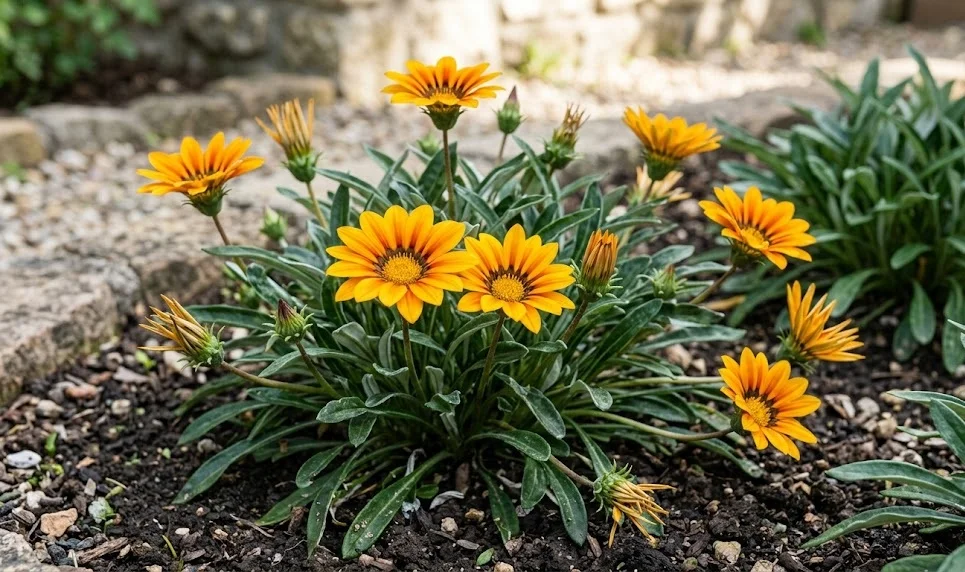

Planting gazanias correctly gives them the warm, dry root environment they need for rapid establishment and generous flowering. These adaptable plants can be started from nursery plants, seed, cuttings, or divided clumps. Each method is straightforward when warmth, strong light, and careful moisture control are provided. Good early care is especially important because young roots are less tolerant of waterlogging than mature plants.
Selecting plants and preparing the site
Choose nursery plants with compact foliage, firm crowns, and several healthy growing points. Avoid specimens with yellow leaves, stretched stems, or roots that smell sour when removed from the pot. A few unopened buds are more valuable than numerous fading flowers because they indicate continued growth. Check the undersides of leaves for aphids, mites, and other pests before purchasing.
Prepare a position that receives direct sunlight for most of the day. Remove weeds and loosen compacted soil across a wider area than the original root ball. Where drainage is doubtful, raise the planting level with gritty soil or use a raised bed. Gazanias should never be placed at the bottom of a water-holding depression.
Space plants according to the mature spread of the cultivar. Compact types can be placed closer together for rapid colour, while vigorous spreading forms need more room. Adequate spacing reduces competition and allows air to move between leaves. Crowded plants often flower less freely and remain damp after rain.
Water nursery plants before transplanting so the root ball is evenly moist but not saturated. Gently loosen circling roots without tearing the entire root system apart. Set the crown at the same level it occupied in the container. Planting too deeply can trap moisture around the base and encourage decay.
More articles on this topic
Establishing new transplants
After planting, firm the soil lightly around the roots to remove large air pockets. Do not compress it so heavily that drainage is reduced. Water thoroughly once to settle the soil around the root ball. Additional watering should wait until the surface begins to dry.
New transplants may pause briefly while adjusting to outdoor conditions. This is especially common when greenhouse-grown plants are moved directly into strong sun or wind. Gradual hardening over several days reduces leaf scorch and moisture stress. Increase outdoor exposure a little each day before final planting.
A thin layer of gravel around the plants can limit soil splash and improve surface drainage. Keep the material away from the central crown so emerging leaves remain unobstructed. Organic mulch should be used cautiously in damp climates. Thick, moisture-retentive layers may create unsuitable conditions around young plants.
Remove the first badly damaged or fading flowers after planting. This allows the plant to direct more energy into root establishment and new growth. Healthy buds can remain because flowering does not usually prevent successful establishment. Avoid strong fertiliser applications until the roots have begun expanding into the surrounding soil.
More articles on this topic
Growing gazanias from seed
Sow gazania seed indoors several weeks before the expected final frost. Use clean trays filled with a light, sterile seed-starting medium. Press the seeds gently into the surface and cover them with only a thin layer of compost or vermiculite. Deep sowing may delay or reduce germination.
Warmth encourages consistent emergence. Keep the growing medium slightly moist but never waterlogged, and provide gentle ventilation. A clear cover can retain humidity, but it should be removed once seedlings appear. Excess humidity after emergence increases the risk of damping-off disease.
Place young seedlings under strong light immediately. Weak light causes thin, stretched stems that are difficult to correct later. If natural light is insufficient, a suitable grow light can maintain compact development. Rotate trays when necessary so seedlings grow evenly rather than leaning in one direction.
Transplant seedlings into individual cells or small pots after they develop true leaves and become easy to handle. Hold them by a leaf rather than the delicate stem. Grow them on in bright conditions and allow the surface to dry slightly between waterings. Harden them gradually before planting outside after frost danger has passed.
Propagating by cuttings and division
Non-flowering side shoots can be used as cuttings during active growth. Select healthy shoots without visible pest damage or soft tissue. Remove the lowest leaves and insert the cut end into a gritty propagation medium. The medium should remain barely moist while roots develop.
Place cuttings in bright, indirect light rather than harsh midday sun. Excessive humidity can cause the fleshy tissues to rot, so good ventilation is essential. A light cover may help in very dry conditions, but it should not allow condensation to remain on the leaves. Rooting success improves when temperatures remain steadily warm.
Mature clumps can also be divided, particularly where gazanias survive as perennials. Lift the plant carefully and separate healthy outer sections with roots and growing points attached. Discard old woody centres and any areas showing blackened or soft tissue. Replant the divisions immediately at their original depth.
Recently divided plants need slightly more attention than established clumps. Water them thoroughly after planting, then avoid keeping the soil continuously wet. Temporary shading from extreme afternoon heat can reduce stress for a few days. Once new growth appears, resume normal full-sun care.