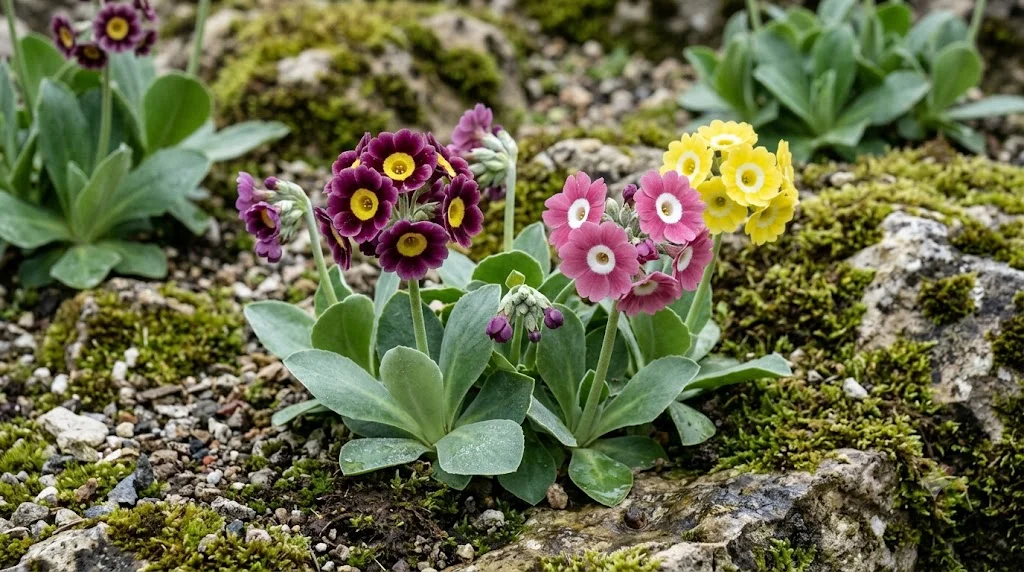

Auricula primrose does not require conventional heavy pruning, but selective removal of spent flowers, damaged leaves, and deteriorating tissue is essential for long-term health. The plant grows as a compact rosette, so careless cutting can injure the central crown from which all new foliage emerges. Maintenance should therefore be precise, conservative, and based on the natural growth cycle. Clean work improves airflow, reduces disease pressure, and keeps the plant attractive without forcing unnecessary regrowth.
Most routine trimming can be carried out with fingers, fine scissors, or a narrow sterile knife. Tools should be sharp enough to make clean cuts rather than crush fleshy tissue. Disinfection is particularly important when several plants are being handled. A blade used on a rotting crown can easily transfer infectious material to a healthy specimen.
The best time for major cleaning is after flowering or during early spring inspection. Minor removal of dead material can be performed whenever it is noticed. Healthy green leaves should remain unless they are seriously damaged or obstructing treatment. Excessive defoliation weakens the plant and exposes the crown to sun, cold, and moisture fluctuations.
Cut material should be removed from benches, pots, and surrounding soil. Decaying leaves and flowers create humid pockets and provide food for grey mould. They can also shelter slugs, vine weevils, and other pests. Good disposal practices are therefore part of pruning rather than a separate task.
Deadheading after flowering
Flowers should be removed as they fade unless seed production is desired. Ageing petals can collapse onto the foliage and retain moisture around the crown. Deadheading keeps the display clean and reduces conditions favourable to fungal growth. It also prevents the plant from investing energy in unwanted seed capsules.
More articles on this topic
Follow the flower stalk down toward its point of origin. Cut or pinch it near the base while supporting the surrounding leaves. Do not pull forcefully because the stalk may tear tissue from the crown. A clean removal leaves only a short, dry stub that soon detaches naturally.
When several flowers are carried on one stem, remove the entire stalk only after the display has finished. Individual fading blooms can be taken off earlier if they are becoming mouldy. This approach preserves unopened buds while maintaining hygiene. Check closely because dead petals may remain hidden behind healthy flowers.
Seed heads can be retained for breeding or propagation. Select only healthy plants with desirable characteristics and protect the developing capsules from excessive wetness. Once mature, collect seed before the capsules release it naturally. The parent plant may flower less strongly the following year if it is allowed to ripen a large seed crop.
Removing old and damaged foliage
Outer leaves naturally age and turn yellow or brown. Wait until they loosen easily before removing them by hand. Support the crown and pull the leaf gently downward and outward. If resistance is strong, cut the leaf close to its base instead of tearing it.
More articles on this topic
Leaves damaged by scorch, hail, slugs, or mechanical injury can be removed when they no longer contribute useful green tissue. Minor blemishes do not require immediate cutting because partly healthy leaves still support photosynthesis. Avoid creating a bare crown solely for cosmetic reasons. The plant recovers more effectively when adequate foliage remains.
Diseased leaves should be removed promptly and handled separately. Cut below visible spotting while avoiding healthy neighbouring tissue. Disinfect tools between plants and discard infected material rather than composting it beside the collection. Improve airflow and watering practices so new foliage is less likely to develop the same problem.
Farina-covered leaves should be handled as little as possible. Fingers easily rub away the powdery surface and leave permanent marks. Hold the plant by the pot or beneath the leaves rather than touching their upper surfaces. Careful handling is particularly important before exhibitions or formal displays.
Rejuvenating older or congested plants
Older auriculas may develop elongated stems as lower leaves are shed over several seasons. Exposed roots and a raised crown can make the plant unstable. Adding a small amount of fresh compost around visible roots may provide temporary support. The central growing point must always remain above the surface.
A severely elongated plant can be rejuvenated by careful repotting or division. Remove it from the container and inspect the stem for healthy roots and offsets. Sections with firm crowns can be replanted at a sensible depth after dead lower tissue is cleaned away. Work during cool active growth so new roots can establish without heat stress.
Congested clumps should be divided when multiple rosettes press tightly against one another. Overcrowding reduces air movement and makes it difficult to water the compost without wetting the crowns. Separate vigorous offsets and pot them individually or in well-spaced groups. Discard weak central tissue that shows signs of decline.
After rejuvenation, keep the plant in bright shade and water cautiously. Reduced roots cannot support rapid moisture loss from a large leaf mass. Remove only clearly damaged foliage rather than cutting the entire plant back. New growth should emerge from intact crowns once the divisions have established.