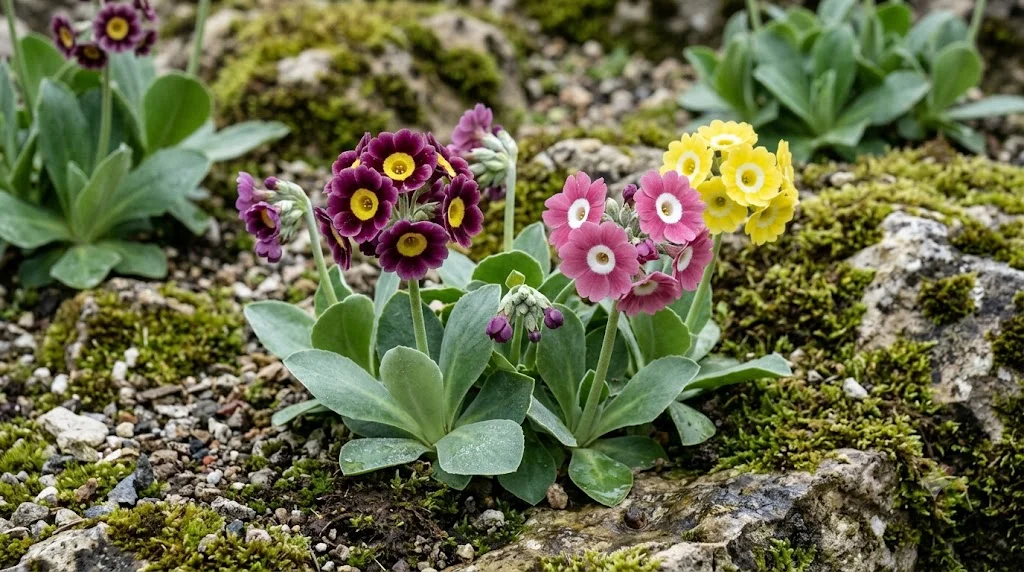

Auricula primrose is cold tolerant, but successful overwintering depends on protecting its roots and crown from persistent wetness. A plant in free-draining soil can survive temperatures that would be dangerous in saturated compost. Winter care should therefore focus less on providing warmth and more on maintaining ventilation, drainage, and moderate dryness. The plant still needs natural cold because this resting period supports compact growth and spring flowering.
Outdoor conditions vary considerably between regions. In areas with cool but relatively dry winters, hardy border auriculas often remain in beds without special protection. Regions with repeated freeze-thaw cycles, heavy rainfall, or prolonged waterlogging present a greater challenge. Container plants are more exposed because their root balls cool and freeze faster than garden soil.
Show auriculas require greater protection from rain and wind, especially when their foliage carries decorative farina. An unheated greenhouse, cold frame, covered porch, or auricula theatre provides suitable shelter. The structure should not be sealed tightly because stagnant humid air promotes fungal disease. Protection from precipitation must always be combined with ventilation.
Winter preparation begins before the first severe frost. Plants should enter dormancy healthy, clean, and free from pests. Late feeding and excessive autumn watering should be avoided. Gradual hardening produces stronger tissues than a sudden move from warm indoor conditions to freezing weather.
Preparing plants during autumn
Remove spent flowers, fallen debris, and completely dead outer leaves. Do not strip away healthy foliage because it continues to protect and support the crown. Check the plant for aphids, vine weevil damage, leaf spots, and soft tissue. Problems discovered in autumn are easier to manage before plants are grouped closely under cover.
More articles on this topic
Examine drainage holes and clear any roots or debris blocking them. Raise containers on pot feet, gravel, or slatted benches so rainwater cannot collect underneath. Replace cracked pots that may break during freezing conditions. Stable containers also prevent winter wind from tipping over top-heavy specimens.
Reduce feeding as temperatures begin to fall. Nitrogen-rich fertiliser encourages tender leaves that remain vulnerable to rot and frost injury. The plant should gradually slow its growth in response to shorter days and cooler nights. This natural transition should not be interrupted by bringing the plant into a heated room.
Water less frequently but do not allow the roots to remain completely dry for months. Check moisture below the surface because the upper grit can look dry while the compost remains wet. Apply small amounts around the pot edge when necessary. Morning watering gives surplus moisture time to drain before night temperatures fall.
Protecting outdoor and container plants
Border auriculas should be planted where winter water moves away quickly. A gravel mulch around the crown reduces soil splash and prevents wet compost from touching the lower leaves. In extremely wet gardens, a temporary transparent cover can deflect rainfall while remaining open at the sides. The cover must be secured firmly and positioned so condensation does not drip onto the plants.
More articles on this topic
Containers can be moved against a sheltered wall or beneath an overhanging roof. Grouping pots provides some insulation, but enough space should remain for air movement. Wrapping the outside of containers can reduce rapid freezing in very cold regions. The crown itself should not be enclosed in plastic or other moisture-trapping material.
A cold frame offers good protection when its lid is managed actively. Open it during mild days to release humidity and close it before severe frost or heavy rain. Plants should stand on a drained base rather than directly on wet soil. Condensation must not be allowed to fall repeatedly into the rosettes.
An unheated greenhouse protects plants from rain but can warm rapidly on sunny winter days. Ventilation may be required even when outdoor air feels cold. Sudden temperature fluctuations encourage premature growth and increase condensation. Shading is rarely needed in midwinter, but doors and vents should be adjusted to prevent overheating.
Managing frost, snow, and winter moisture
Frozen leaves may appear stiff or slightly darkened in the morning. Avoid handling them until they thaw naturally because frozen tissue breaks easily. Most established plants recover from ordinary frost when their compost is not waterlogged. Damage becomes more likely when freezing follows prolonged saturation.
Snow can insulate hardy plants from extreme cold, but heavy wet snow may crush leaves and flower buds. Remove excessive accumulation gently without pulling frozen foliage. Snow melting into a poorly drained crown presents a greater risk than light dry snowfall. Ensure that meltwater can escape from beds and containers.
Repeated freezing and thawing can lift newly planted specimens from the soil. Check the crowns periodically and gently firm exposed roots back into place during mild weather. Do not bury the rosette while correcting movement. A surface layer of grit helps stabilise the root zone and moderates moisture changes.
Winter watering should be based on actual compost moisture. Plants beneath solid cover may need occasional irrigation even during rainy weather because no natural precipitation reaches them. Outdoor pots may need no additional water for long periods. Checking each group separately prevents both hidden drought and unnecessary saturation.
Restarting growth in spring
As daylight increases, new leaves begin appearing from the centre of the rosette. Increase watering gradually rather than returning immediately to a summer routine. Remove any winter-damaged leaves that detach easily. Inspect the crown carefully for softness, discolouration, or pest activity.
Move protected plants into brighter conditions if they have been kept in deep shade. The transition should be gradual because tender new foliage can scorch in sudden strong sunlight. Continue protecting developing flower stalks from heavy rain and severe late frost. Mild cold rarely harms established foliage, but advanced buds can be more sensitive.
Begin weak feeding only after active growth is clearly visible. A balanced fertiliser at low concentration is sufficient for most container plants. Feeding too early in cold compost may allow salts to accumulate before roots can use them. Moisture, light, and temperature should be stabilised before nutrition is increased.
Spring is also a useful time to assess whether repotting or division is needed after flowering. Mark crowded plants and any specimens that drained poorly during winter. Review the effectiveness of shelters, pot positions, and compost mixtures while the experience is still recent. Small improvements made each year lead to increasingly reliable overwintering.