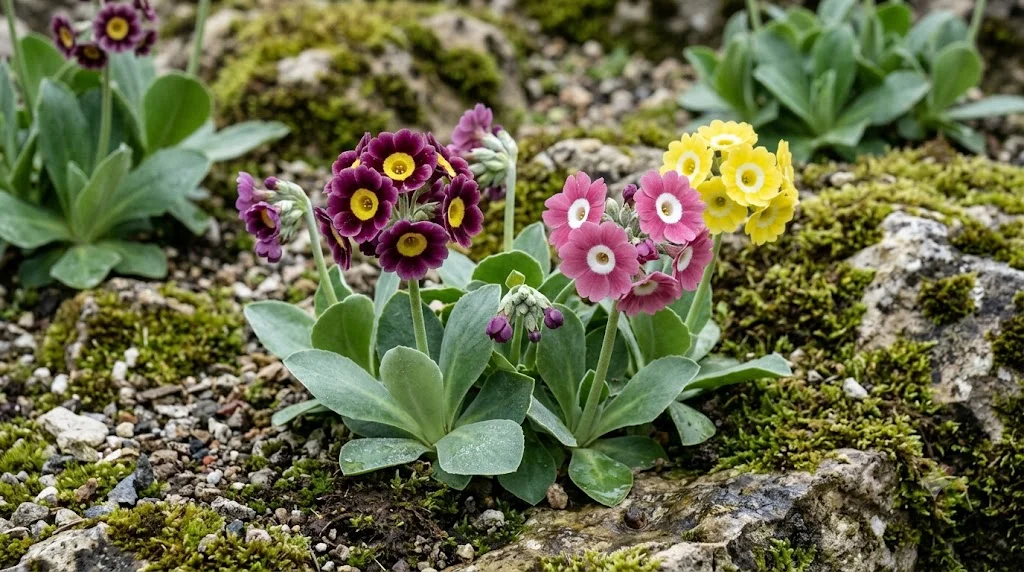

Auricula primrose is a compact perennial prized for its leathery evergreen leaves, richly coloured flowers, and distinctive powdery coating known as farina. Although it has a reputation for being a collector’s plant, it can grow reliably in ordinary gardens when its basic needs are understood. The key is to provide cool conditions, excellent drainage, and protection from prolonged winter wetness. With thoughtful care, established plants can flower generously for many years and gradually develop into attractive clumps.
Auricula primrose naturally favours mountain-like conditions where temperatures remain moderate and moisture drains away quickly. It dislikes the combination of stagnant air, saturated compost, and intense heat more than it dislikes cold weather. Gardeners therefore achieve the best results by imitating a cool, airy, well-drained habitat. Consistency matters more than elaborate equipment or complicated maintenance routines.
Different auricula types may respond slightly differently to outdoor cultivation. Border auriculas are generally robust and suitable for beds, rock gardens, troughs, and containers exposed to normal weather. Show auriculas, especially those with heavy farina or intricately marked flowers, often benefit from protection under an open-sided shelter or unheated greenhouse. Recognising which type you are growing helps you choose an appropriate level of protection.
Healthy plants form firm rosettes with short stems and leaves that feel substantial rather than soft or watery. Flowers normally rise above the foliage on upright stalks during spring, although exact timing depends on climate and cultivar. Slow growth during winter is natural and should not automatically be interpreted as a problem. The plant’s appearance, soil condition, and root health together provide a more reliable guide than growth speed alone.
Choosing the right growing position
Auricula primrose performs best in bright conditions that remain cool during the warmest part of the day. Morning sunlight followed by light afternoon shade usually produces sturdy growth and vivid flowers without scorching the leaves. An east-facing position is often ideal because it allows foliage to dry after cool nights. South-facing locations can work only when sufficient shade and ventilation are available during hot weather.
More articles on this topic
Shelter from heavy rain is particularly valuable for show auriculas and plants grown in decorative pots. Repeated rainfall can wash farina from the leaves and flowers, spoil delicate markings, and saturate the compost. A traditional auricula theatre provides overhead protection while leaving the front open for light and airflow. A covered porch, cold greenhouse, or sheltered wall can offer similar practical benefits.
Outdoor border plants appreciate a site that does not remain waterlogged after storms or snowmelt. Raised beds, sloping borders, and rock gardens are often more suitable than low areas where water collects. Air should move freely around the foliage, but the plants should not be exposed to constant drying winds. Good circulation lowers disease pressure while moderate shelter prevents excessive water loss.
Container-grown auriculas can be moved as seasonal conditions change. During spring flowering, they may be displayed in a bright, sheltered place where their colours can be appreciated closely. In summer, the pots can be transferred to a cooler position with afternoon shade. During wet winters, they can be placed beneath a roof while still remaining exposed to natural cold.
Providing suitable soil and drainage
The root system requires a growing medium that holds moderate moisture without becoming compacted or airless. In garden soil, a fertile loam with plenty of coarse mineral material generally gives the best balance. Heavy clay should be improved with grit, fine gravel, leaf mould, and well-decomposed organic matter. Simply adding a thin layer of compost to dense clay rarely creates enough drainage around the crown.
More articles on this topic
Auriculas prefer neutral to slightly alkaline conditions, although many cultivars tolerate mildly acidic soil when drainage is excellent. Excessively acidic compost can restrict nutrient availability and may weaken long-term growth. A small proportion of horticultural grit or crushed limestone can help maintain structure and a suitable reaction. Any amendment should be mixed evenly rather than placed in a concentrated layer beneath the roots.
A practical container mixture may contain loam-based compost, coarse grit, and a smaller amount of leaf mould or fine bark. The mineral fraction prevents collapse of the mixture and encourages air to reach the roots. Rich, peat-heavy compost often remains wet for too long, particularly during winter. The finished mixture should feel open and crumbly while retaining enough moisture to support the plant between waterings.
Drainage holes must remain clear throughout the year. Pots can be raised slightly on feet or gravel so surplus water leaves freely after irrigation. A layer of coarse grit around the crown reduces splashing and keeps the base of the leaves drier. Deep layers of crocks at the bottom are less important than using a well-structured mixture throughout the entire container.
Managing seasonal temperatures
Auricula primrose is naturally adapted to cool climates and generally tolerates frost when its roots are not waterlogged. Cold weather encourages a proper resting period and supports the development of strong spring flowers. Plants kept continuously in warm indoor rooms often become weak, stretched, and vulnerable to pests. An unheated environment is therefore preferable throughout most of the year.
Spring temperatures between cool and mild conditions support steady flowering. Sudden heat can shorten the display, fade pigments, and cause flowers to collapse more quickly. Moving containers away from hot glass or midday sun can prolong bloom quality. Good ventilation is especially important when plants are kept under cover.
Summer is often the most challenging season because auriculas dislike prolonged heat around their roots. Pots exposed to direct afternoon sun can become much warmer than the surrounding air. Shading the containers, grouping them together, or placing them on a cool surface helps moderate root-zone temperatures. Watering alone cannot compensate for a position that repeatedly overheats.
During autumn, cooler nights naturally slow growth and prepare the plant for winter. Fertilising should be reduced so that soft new tissue is not encouraged late in the season. Plants should remain outdoors or in an unheated shelter rather than being moved into domestic warmth. Gradual exposure to colder conditions allows tissues to harden properly before severe frost arrives.
Supporting flowering and plant vigour
Flower initiation depends on a combination of plant maturity, adequate nutrition, suitable light, and a cool winter rest. A healthy rosette should produce firm leaves and a strong central growing point before it is expected to flower generously. Very young offsets may need one or two growing seasons before reaching full performance. Forcing immature plants with heavy feeding usually produces soft foliage rather than better flowers.
As flower stalks emerge, check that they are developing from clean, healthy crowns. Weak or distorted stems may indicate pest damage, poor nutrition, or stress caused by irregular moisture. Pots can be rotated occasionally so that growth remains balanced and flowers face outward evenly. Frequent turning is unnecessary once buds begin opening because delicate stems can be damaged.
Removing fading flowers prevents the plant from directing unnecessary energy into seed production. Cut or pinch each spent stalk near its base without injuring the surrounding leaves. Seed may be allowed to develop when breeding or propagation is intended, but seedlings will not necessarily resemble the parent cultivar. For routine care, deadheading usually supports a tidier appearance and stronger vegetative growth.
After flowering, the plant enters an important period of leaf and root development. Continue providing moderate moisture, good light, and weak feeding while temperatures remain cool. Do not neglect the plant simply because its decorative season has ended. The condition achieved after flowering strongly influences the number and quality of blooms produced the following spring.
Maintaining foliage and crown health
Healthy leaves are firm, slightly fleshy, and arranged in a compact rosette. Older outer leaves naturally yellow and decline as they are replaced by new growth. These ageing leaves can be removed gently once they detach without force. Pulling firmly attached foliage may tear the crown and create an entry point for rot.
Farina is a natural waxy powder found on many auricula cultivars. It should not be rubbed, washed, or polished from the leaves because it contributes to the plant’s distinctive appearance. Watering directly over farinose foliage can produce spots and irregular markings. Applying water to the compost rather than the rosette helps preserve this coating.
The crown should remain slightly above the surrounding compost rather than being buried. Deep planting traps moisture around leaf bases and increases the likelihood of fungal decay. As older plants develop an elongated stem, fresh compost can be placed carefully around exposed roots without covering the central growing point. Severely stretched plants may benefit from division or careful rejuvenation.
Inspect the centre of each rosette regularly, especially during damp weather. New leaves should emerge cleanly and remain firmly attached. A soft centre, unpleasant smell, or sudden collapse may indicate crown rot. Promptly removing affected tissue and correcting excessive moisture can sometimes save the healthy portions of the plant.
Repotting and long-term renewal
Container-grown auriculas benefit from periodic repotting because old compost gradually loses structure and becomes difficult to manage. Repotting is commonly carried out after flowering or in early autumn when temperatures are moderate. The plant should be removed gently so the roots can be inspected without damaging the crown. Dead, blackened, or hollow roots should be trimmed away with a clean tool.
Choose a pot only slightly larger than the root system. Oversized containers retain unnecessary moisture and can encourage the compost to remain cold and wet. Traditional clay pots provide stability and allow some evaporation, although plastic pots are also suitable when watering is carefully controlled. The most important factors are drainage, cleanliness, and an appropriate compost mixture.
Older clumps often produce offsets around the main rosette. Some can remain attached to create a fuller plant, but overcrowding eventually reduces airflow and flowering quality. Dividing vigorous clumps every few years renews the planting and provides replacement specimens. Retaining several young plants is sensible because individual old crowns may gradually decline.
Labels should be maintained when named cultivars are grown. Auricula collections can contain plants with very similar foliage but completely different flowers. A weather-resistant label records the cultivar, colour group, and propagation date. Accurate identification is especially important when exchanging offsets or planning breeding work.
Creating a reliable annual care routine
In early spring, remove damaged outer leaves, check drainage, and begin watering more regularly as growth resumes. Flower stalks should be monitored for aphids and protected from severe late frost if buds are advanced. A weak, balanced feed can be introduced once active growth is clearly visible. Plants under cover should receive plenty of ventilation on mild days.
During flowering, keep the compost evenly moist but never saturated. Protect delicate blooms from heavy rain, strong sunlight, and hot enclosed air. Remove faded flowers promptly unless seed is required. Continue checking the undersides of leaves and the base of stalks for early pest activity.
After flowering, repot or divide plants that have become congested. Maintain moderate feeding for a limited period while new roots and leaves develop. Move containers into cooler summer shade before temperatures become excessive. Regular observation during this quieter season prevents heat stress, vine weevil damage, and hidden root problems from progressing unnoticed.
In autumn and winter, reduce watering and keep the crown dry without allowing the roots to desiccate completely. Clear fallen leaves and other debris from around the pots to improve hygiene. Avoid warm indoor storage and protect containers from persistent winter rain. This simple seasonal rhythm supports compact growth, clean foliage, and dependable flowering year after year.