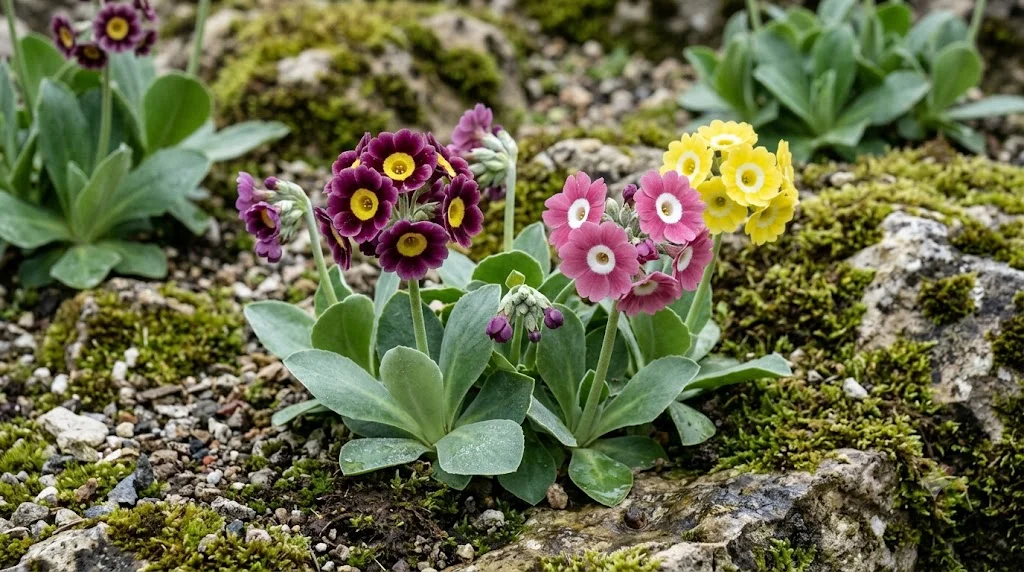

Auricula primrose needs abundant light to remain compact and flower well, but it does not tolerate prolonged exposure to intense heat and scorching midday sun. The ideal position provides gentle direct light during the morning and protection during the hottest part of the afternoon. This balance supports strong flower stems, firm leaves, and rich colour without overheating the roots. Light management should change with the seasons because winter sunshine and midsummer sunshine affect the plant very differently.
Insufficient light produces stretched leaves, weak stalks, and reduced flowering. Excessive exposure can cause bleached patches, crisp leaf edges, faded petals, and rapid moisture loss. The symptoms may resemble watering or nutritional problems, so the position should always be considered during diagnosis. Observing how sunlight moves through the growing area provides more useful information than relying only on compass direction.
The plant’s natural preference for cool brightness makes it suitable for east-facing gardens, lightly shaded courtyards, and open cold frames. It can also thrive on shelves beneath a transparent roof when ventilation remains good. Dense shade under evergreen shrubs is usually too dark. Equally, a reflective south-facing wall can generate damaging heat even when the air temperature seems moderate.
Farinose show auriculas often need additional protection because strong sunlight can spoil their powdery coating and delicate floral markings. Border forms are generally more tolerant of ordinary outdoor light. Young divisions and seedlings are also more sensitive than established plants. Positioning should therefore reflect cultivar type, maturity, and current weather.
Finding the best outdoor exposure
Morning sun is especially valuable because it dries dew and provides useful light before temperatures peak. An east-facing site often creates this pattern naturally. Plants receive enough energy for photosynthesis while avoiding the most intense afternoon radiation. This exposure is particularly suitable for containers and display shelves.
More articles on this topic
Light shade from a deciduous tree can work well when roots are not heavily competitive. The emerging canopy provides increasing protection as summer temperatures rise. In early spring, the plant still receives generous light before the tree is fully in leaf. Avoid locations where fallen leaves accumulate deeply around the rosettes during autumn.
North-facing positions may be suitable when they are open to the sky and not enclosed by tall walls. Bright reflected light can support healthy growth without direct midday sun. Dark, narrow spaces usually produce weak foliage and poor flowering. The difference between bright shade and deep shade is therefore important.
South- and west-facing positions require careful management. Temporary shade cloth, taller companion plants, or movable screens can reduce afternoon intensity. Containers should be moved before heat damage becomes visible because leaf scorch cannot be reversed. Shading the pot itself is also useful because hot roots can suffer even when the foliage appears protected.
Adjusting light through the seasons
In winter, the low sun is less intense and can be beneficial. Plants under cover should not be placed so far from the glass that they receive only dim light. Clean greenhouse panels and remove objects that cast unnecessary shade. Good winter light supports sturdy crowns without forcing active growth when temperatures remain cool.
More articles on this topic
Spring is the main flowering period and usually requires bright conditions. Adequate light strengthens stalks and develops clear petal colour. Sudden warm spells can still overheat sheltered displays, particularly behind glass. Ventilation and temporary afternoon shading may be needed even before summer officially begins.
During summer, protection from midday and afternoon sun becomes a priority. Move container plants to the east or north side of a building, beneath open shade, or behind a lightly filtering screen. Avoid dense, humid shade where foliage stays wet and air remains stagnant. The aim is cool brightness rather than darkness.
In autumn, sunlight becomes gentler and plants can often be returned to a brighter position. Increased light helps maintain compact foliage as temperatures fall. Make the change gradually if plants have spent the summer in shade. Sudden exposure during an unusually hot autumn period can still mark sensitive leaves.
Reading the plant’s response to light
A well-lit auricula forms a tight rosette with firm leaves and balanced growth. Flower stalks are generally upright and strong enough to hold the blooms above the foliage. The plant does not lean dramatically toward one side. These characteristics indicate that the position is providing useful light without excessive stress.
A plant receiving too little light may produce long leaf stalks, loose rosettes, and pale new growth. Flowering can be sparse, delayed, or absent even when nutrition is adequate. Move the plant gradually into a brighter place rather than exposing soft foliage to direct sun immediately. Improvement will appear in new growth rather than in leaves that have already stretched.
Sun scorch often appears as pale tan or brown patches on exposed leaf surfaces. Damage may occur rapidly when a shaded plant is moved into strong sun. Increase shade and check root moisture, but do not keep the compost saturated in an attempt to compensate. New leaves should emerge normally once the environmental stress is corrected.
Plants leaning toward the light can be rotated occasionally before flower stalks become advanced. A quarter-turn every week or two is usually enough to encourage balanced growth. Constant movement is unnecessary and may make watering or display management more difficult. In garden beds, surrounding vegetation can be pruned selectively to improve even illumination.