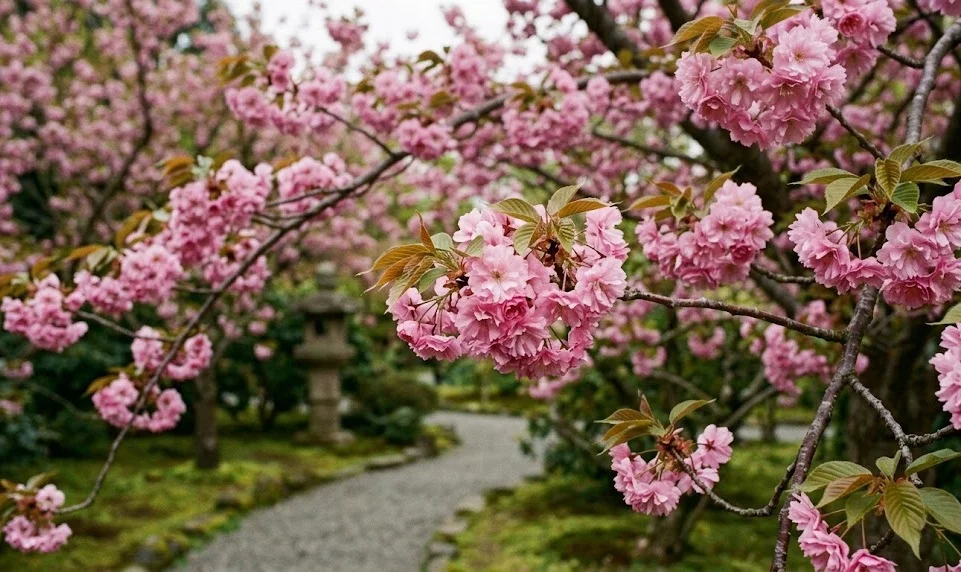

Successfully establishing a Japanese flowering cherry begins with a precise planting technique and an understanding of its reproductive potential. These trees are not merely additions to a garden; they are long-term investments that require a perfect start to reach their full ornamental glory. Whether you are planting a young sapling from a nursery or attempting to create new life through propagation, the process demands patience and attention to detail. This guide explores the professional methods used to ensure these iconic trees thrive from their very first day in the ground.
Essential steps for successful planting
The timing of planting is one of the most important factors for the successful establishment of a Japanese flowering cherry. Late autumn or early spring, while the tree is still in its dormant phase, is the ideal window for this operation. Planting during dormancy allows the root system to begin settling into the new soil before the energy-intensive process of leafing out begins. Avoid planting during the peak of summer heat, as the high evaporation rates can quickly overwhelm a young, unestablished root system.
Preparing the planting hole is a task that should not be rushed, as it dictates the future expansion of the roots. The hole should be at least twice as wide as the root ball, but no deeper than the container the tree was previously growing in. Loosening the soil on the sides of the hole helps the young roots penetrate the surrounding earth more easily as they grow outward. Never bury the trunk deeper than it was in the nursery, as this can lead to bark rot and the eventual death of the tree.
Once the tree is positioned in the hole, you should backfill it with the original soil, perhaps enriched with a small amount of high-quality compost. Avoid using large amounts of concentrated fertilizer in the planting hole, as this can burn the sensitive new roots. Gently firm the soil with your hands to remove any large air pockets that might dry out the roots, but do not pack it so tightly that oxygen is excluded. A thorough watering immediately after planting helps to settle the soil and provides the necessary initial hydration.
The final stage of planting involves applying a protective layer of mulch and, if necessary, providing temporary structural support. A thick layer of wood chips around the base will help maintain consistent moisture levels and suppress competing weeds during the first year. In windy locations, staking the tree may be necessary to prevent it from leaning or being rocked by the wind, which can tear new roots. However, the stakes should be removed after one or two growing seasons to allow the tree to develop its own trunk strength.
More articles on this topic
Propagation through softwood cuttings
Softwood propagation is a popular method for creating new Japanese flowering cherry trees that are genetically identical to the parent. This process is best performed in early summer when the new growth is still flexible but has begun to mature slightly. You should select healthy, vigorous shoots that are free from any signs of disease or pest infestation for your cuttings. Using a sharp, sterilized blade, take cuttings that are approximately four to six inches long, ensuring each has several leaf nodes.
Preparation of the cuttings involves removing the lower leaves to expose the nodes while leaving a couple of leaves at the top for photosynthesis. Dipping the cut end into a rooting hormone powder or liquid can significantly increase the chances of successful root development. The cuttings should then be inserted into a well-draining rooting medium, such as a mix of peat moss and perlite or coarse sand. Maintaining high humidity around the cuttings is essential, which can be achieved by covering the tray with a clear plastic dome.
The environment for the cuttings must be carefully controlled, providing bright but indirect light to avoid overheating the delicate tissue. The rooting medium should be kept consistently moist but never waterlogged, as excess water will cause the stems to rot before they can root. You can expect to see the first signs of root development within four to eight weeks, depending on the variety and environmental conditions. Gently tugging on a cutting can tell you if roots have formed; if there is resistance, the process is working.
Once the cuttings have established a strong set of roots, they need to be gradually acclimated to the outdoor environment. This process, known as hardening off, involves moving the young plants outside for increasing periods each day over a week or two. After they are toughened up, they can be transplanted into individual pots filled with a high-quality potting soil to continue their growth. It will take at least a year or two of careful nursing before these young trees are large enough to be planted in their permanent garden locations.
More articles on this topic
The art of grafting and budding
Grafting is the most common professional method for propagating specific cultivars of Japanese flowering cherry onto hardy rootstocks. This technique allows gardeners to combine the beautiful floral characteristics of a sensitive variety with the vigorous, disease-resistant roots of a stronger species. The most frequent method used is “T-budding” or “chip budding,” which is typically performed in late summer when the bark is “slipping” or easy to peel. This requires a high degree of precision and the use of very sharp, specialized grafting knives to ensure a perfect fit.
The process begins by selecting a healthy bud from the desired cultivar and carefully inserting it into a cut made in the stem of the rootstock. It is absolutely vital that the cambium layers of both the bud and the rootstock make direct contact for a successful union to form. Once the bud is in place, it must be wrapped tightly with grafting tape or raffia to hold it securely and prevent the wound from drying out. If the graft is successful, the bud will remain green and eventually begin to grow in the following spring.
Grafting is particularly useful for creating specialized forms, such as weeping cherry trees, where the weeping variety is grafted onto a tall, straight trunk. This method allows for a predictable and aesthetically pleasing shape that would be impossible to achieve through seeds or simple cuttings. It also ensures that the resulting tree will have the exact flower color, size, and timing of the parent plant. Mastery of grafting takes practice, but it is an incredibly rewarding skill for any serious horticulturist or nursery professional.
After the graft has taken and the new shoot begins to grow, the original top of the rootstock must be carefully pruned away. This directs all the plant’s energy into the newly grafted variety, allowing it to become the dominant part of the tree. Throughout the first few years, you must be vigilant about removing any “suckers” that grow from the rootstock below the graft union. These suckers can quickly outcompete the desired variety if they are not managed, potentially reverting the tree to its wild rootstock form.
Growing from seed and its challenges
While it is possible to grow Japanese flowering cherry trees from seed, it is important to know that the offspring will likely not be identical to the parent. Most ornamental cherries are hybrids, meaning their seeds will produce a wide range of variations in flower color, form, and overall hardiness. However, growing from seed can be a fascinating experiment for those who enjoy the unpredictability of nature and are not looking for a specific cultivar. It is a slow process that requires a significant commitment of time before you see the first blossoms.
Cherry seeds have a hard outer shell and internal dormancy that must be broken through a process called stratification. This involves mimicking the cold conditions of winter by placing the seeds in a moist medium and refrigerating them for several months. Without this cold period, the seeds will likely never germinate, as they are biologically programmed to wait for the return of spring. Once the stratification period is complete, the seeds can be sown in pots and kept in a warm, bright location to encourage sprouting.
Seedlings require a very high level of care during their first few months, as they are extremely vulnerable to damping-off and other fungal issues. They should be kept in a sterile seed-starting mix and watered carefully to ensure the soil remains moist but not saturated. As they grow their first true leaves, they will need plenty of light to prevent them from becoming leggy and weak. You should thin out the weakest seedlings, keeping only the most vigorous ones to continue growing into larger pots.
Transplanting the young seedlings into the garden should only happen once they have reached a height of at least twelve to eighteen inches. Even then, they will need extra protection from pests like rabbits and deer, who find the young, tender wood of cherry trees quite delicious. It may take five to ten years for a seed-grown cherry tree to reach maturity and produce its first flowers. This method is truly a labor of love, providing a deep connection to the life cycle of the garden.