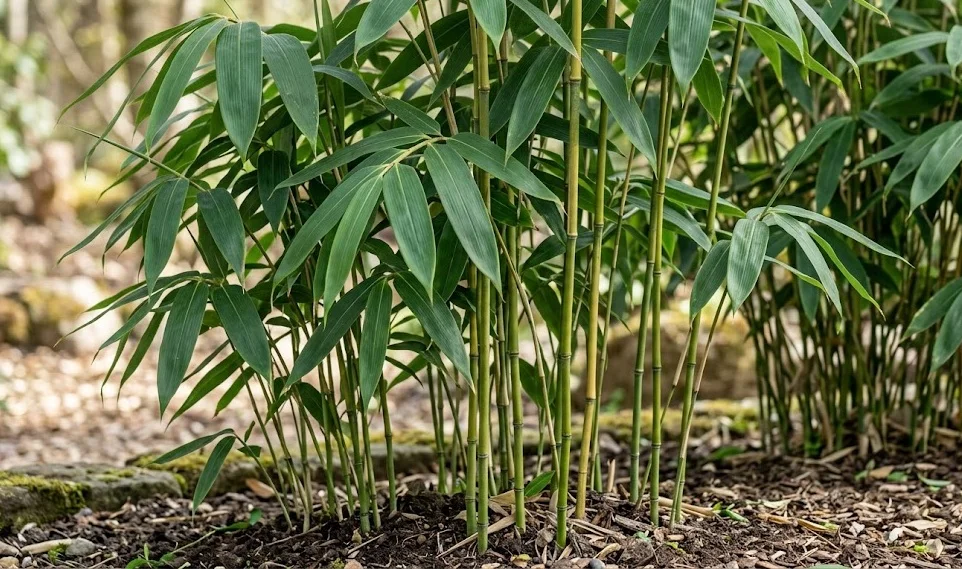

Establishing a thriving stand of Japanese arrow bamboo begins with a calculated planting strategy and an understanding of its reproductive potential. This species is renowned for its adaptability, yet it requires specific initial conditions to ensure its root system takes hold successfully in a new environment. Whether the goal is to create a living screen or to multiply existing specimens, professional techniques in soil preparation and rhizome handling are essential. Proper execution during the planting phase sets the trajectory for the plant’s vigor and long-term structural integrity.
Preparation and site selection
Selecting the optimal location is the most critical decision a gardener makes when introducing this bamboo to the landscape. While it is a hardy species, it performs best in locations that offer protection from the most intense afternoon sun and harsh drying winds. The site must have sufficient room for the plant to reach its mature height and width without interfering with overhead utilities or underground pipes. A professional site assessment includes evaluating the drainage patterns to ensure that water does not pool around the root zone during heavy rains.
Soil preparation should begin several weeks before the actual planting takes place to allow the substrate to settle and the amendments to integrate. The area should be cleared of all perennial weeds and grass, as these will compete with the young bamboo for water and nutrients. Digging a hole that is twice as wide as the root ball and slightly shallower allows for the addition of high-quality organic matter. This loosened soil encourages the new rhizomes to spread easily and establish a robust foundation for the culms that will follow.
Incorporating a specialized bamboo fertilizer or a balanced organic compost into the backfill soil provides an immediate boost for the transplant. It is also the ideal time to install any necessary root barriers, as retrofitting them later is a much more labor-intensive process. The barrier should be placed around the perimeter of the planting hole, ensuring that it forms a continuous loop without gaps. If the soil is naturally poor or rocky, replacing a portion of it with a premium topsoil mix will significantly improve the success rate of the planting.
Orientation also plays a role in how the bamboo will look once it matures and begins to fill in the designated space. If the goal is a hedge, the plants should be spaced approximately one to one and a half meters apart to allow them to merge into a seamless wall. For a standalone specimen, giving the plant plenty of “breathing room” allows its natural fountain-like shape to be fully appreciated. Thinking ahead about how the light hits the site throughout the day will help in positioning the bamboo to avoid unnecessary leaf scorch.
More articles on this topic
The planting process
The actual act of planting requires careful handling of the root ball to avoid damaging the delicate rhizomes and emerging shoots. Before placing the bamboo in the hole, it is beneficial to soak the root mass in a bucket of water to ensure it is fully hydrated. When positioning the plant, it should sit at the same depth it was growing in its previous container, as planting too deep can suffocate the roots. The culms should be oriented vertically, and if the plant is tall, temporary staking may be necessary to keep it stable until the roots take hold.
Backfilling the hole should be done in stages, gently tamping down the soil at each layer to remove large air pockets without over-compacting the substrate. As the hole is filled, water should be added periodically to help settle the soil around the roots and provide immediate moisture. Once the hole is completely filled, a small basin or berm of soil can be created around the base of the plant to hold water during future irrigations. This “well” ensures that water reaches the center of the root ball where it is needed most.
Applying a thick layer of organic mulch immediately after planting is a professional standard that cannot be skipped. The mulch keeps the soil cool, prevents weed competition, and slowly adds nutrients as it breaks down over the coming months. It is important to keep the mulch a few centimeters away from the base of the culms to prevent moisture from sitting against the stems and causing rot. A well-mulched plant will require less frequent watering and will be more resilient to the stresses of its new environment.
Initial post-planting care involves daily monitoring for the first few weeks to ensure the plant does not dry out while it is establishing itself. Even if the surrounding soil looks wet, the original root ball can dry out quickly, so direct watering to the center is crucial. If the leaves begin to curl or fold inward, it is a clear sign that the plant is under water stress and needs immediate attention. Once new growth is observed on the tips of the branches, it is a positive indicator that the root system has begun to expand.
More articles on this topic
Propagation techniques and timing
Propagating Japanese arrow bamboo is most successfully achieved through the division of the rhizomes, a process that is best performed in the early spring. This timing allows the new divisions to establish their own root systems before the heat of summer and the emergence of new culms. A professional approach involves identifying a healthy, vigorous section of the parent plant and using a sharp spade or saw to cut a portion of the rhizome mass. Each division should have at least three to five healthy culms and a substantial amount of attached roots and rhizomes.
The selected division should be removed carefully to keep as much of the original soil around the roots as possible to minimize transplant shock. It is essential to keep the roots of the new division moist at all times during the transition to its new location or container. If the culms are very tall, they can be pruned back by about one-third to reduce the transpiration load on the severed root system. This balance between leaf area and root capacity is vital for the survival of the new plant.
Another method of propagation, though slightly more advanced, involves using rhizome cuttings without any attached culms. This requires selecting young, healthy rhizomes with visible nodes and burying them horizontally in a nursery bed or flat of moist, sandy soil. Over time, new shoots will emerge from the nodes, eventually developing into independent plants that can be moved to the garden. This method is slower but allows for the creation of a large number of plants from a single parent specimen.
Success in propagation also depends on the quality of the aftercare provided to the new divisions. They should be kept in a sheltered, partially shaded area where they are protected from strong winds and direct sunlight for the first growing season. Frequent, light watering is better than occasional deep soaking during this phase to keep the surface roots consistently moist. By following these professional propagation steps, a gardener can effectively expand their bamboo collection while maintaining the genetic integrity of the original plant.
Initial establishment and monitoring
The first year after planting or propagation is a critical period where the bamboo transitions from a guest to a permanent resident of the garden. During this time, the plant is focusing most of its energy on root and rhizome development rather than dramatic vertical growth. It is normal for the plant to look somewhat static for several months as it builds the underground infrastructure necessary for future expansion. A professional gardener knows that “leap years” follow “creep years,” and patience is required during this establishment phase.
Monitoring the color and texture of the leaves provides immediate feedback on the health of the newly planted bamboo. Yellowing leaves may indicate a nitrogen deficiency or an issue with soil pH that needs to be addressed with appropriate amendments. On the other hand, dark green, glossy leaves suggest that the plant is successfully accessing the nutrients and water it needs from its new home. Regular inspections for pests like bamboo mites or aphids are also important, as young plants are more vulnerable to infestations.
Winter protection during the first year is especially important, as the root system may not yet be deep enough to withstand severe ground freezes. Adding an extra layer of mulch or wrapping the culms in burlap can provide the necessary insulation to get the plant through its first winter. If the foliage is damaged by frost, it is best to wait until spring to see which parts of the plant recover before doing any major pruning. Often, the plant will surprise the gardener by pushing up vigorous new shoots even if the original culms were lost.
By the end of the second growing season, the bamboo should be well-established and starting to show its true potential. The rhizomes will have begun to explore the surrounding soil, and the new culms should be taller and thicker than those of the previous year. At this stage, the maintenance routine can transition from intensive care to a more standard schedule of watering and fertilization. A successfully established stand of Japanese arrow bamboo is a testament to the quality of the initial planting and the care provided during its formative years.