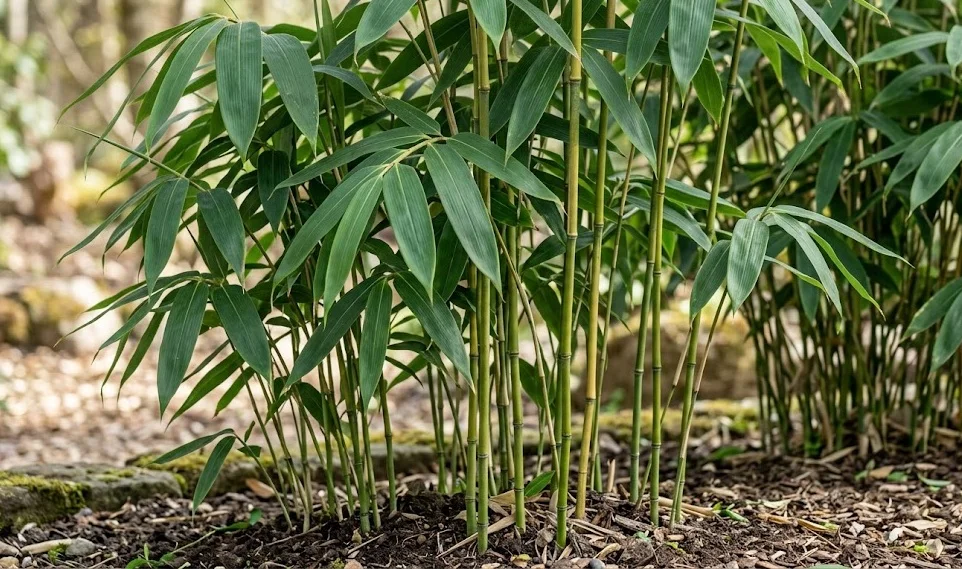

Pruning is a fundamental maintenance task that transforms a wild bamboo thicket into a refined and healthy structural element of the garden. For Japanese arrow bamboo, pruning serves multiple purposes: it controls the size of the plant, improves air circulation, and rejuvenates the grove by removing old or damaged material. A professional approach to pruning requires an understanding of the plant’s growth cycle to ensure that each cut contributes to the long-term vitality of the specimen. With the right tools and techniques, a gardener can maintain the perfect balance between density and elegance.
Thinning and rejuvenation of the grove
As a bamboo grove matures, it naturally accumulates a high density of culms, some of which will eventually become old, weak, or unproductive. A professional thinning process involves identifying and removing these older culms to make room for vigorous new shoots. Typically, culms that are more than three to five years old begin to lose their vibrant color and leaf density, making them prime candidates for removal. By cutting these culms down to the soil level, the gardener redirects the plant’s energy into the younger, more efficient parts of the rhizome system.
Thinning also plays a critical role in improving the internal microclimate of the bamboo stand. Densely packed culms can trap humidity and block light from reaching the center of the plant, creating an ideal environment for pests like mites and fungi. A well-thinned grove allows air to flow freely through the stems and permits sunlight to penetrate the interior foliage, which keeps the entire plant healthy. A good rule of thumb for a professional look is to remove roughly one-fifth of the oldest culms every year once the grove is established.
The best time for this major structural pruning is in the late winter or very early spring, before the new shoots begin to emerge from the ground. At this time, the plant is dormant, and the absence of new, soft growth makes it easier to navigate the interior of the grove without causing damage. Removing dead or broken culms at this stage also gives the new shoots an unobstructed path to the light as they begin their rapid ascent. This annual cleanup ensures that the bamboo always looks its best when the growing season begins.
In cases where a grove has become completely overgrown and neglected, a more aggressive “rejuvenation pruning” may be necessary. This involve cutting a larger percentage of the culms—or even the entire stand—back to the ground to start fresh. While this is a drastic measure, Japanese arrow bamboo is resilient and will quickly send up a new flush of growth from its healthy underground rhizomes. This technique is often used to “reset” a hedge that has become too tall or too messy for its designated space.
More articles on this topic
Shaping and hedge maintenance
Japanese arrow bamboo is an excellent candidate for formal and informal hedges because of its ability to be “topped” or shaped with precision. Topping involves cutting the tops of the culms at a uniform height to encourage the development of dense side branches and a more compact form. Once the top of a bamboo culm is cut, it will never grow taller, but it will become much leafier as the plant redirects its vertical energy horizontally. This makes it possible to maintain a screen at a specific, manageable height year after year.
When pruning for a formal hedge, professional gardeners often use long-handled shears or power trimmers to create clean, straight lines along the top and sides of the planting. It is best to perform this shaping in the early summer, after the new culms have finished their vertical growth and have begun to unfurl their leaves. This ensures that the hedge stays neat for the remainder of the growing season. A well-maintained bamboo hedge provides a architectural quality that is both modern and naturalistic.
For a more natural look, “windowing” or “thinning from the bottom” is a popular technique that reveals the beautiful vertical structure of the culms. This involves removing all the small branches and leaves from the lower one-third of the stems, creating a see-through effect at eye level. This is particularly effective in small gardens where a solid wall of green might feel too heavy or oppressive. It also allows the gardener to showcase the interesting tan sheaths and olive-green stems that define this species.
Maintaining the width of the planting is just as important as controlling its height, especially in urban gardens with limited space. Pruning the rhizomes at the edge of the designated area prevents the bamboo from creeping into neighboring beds or lawns. This can be done by simply pushing a sharp spade into the soil around the perimeter of the plant once or twice a year to sever any escaping roots. By combining top-down shaping with bottom-up containment, a gardener retains complete control over the bamboo’s footprint.
More articles on this topic
Tools and professional techniques
The quality of the tools used for pruning significantly impacts both the health of the bamboo and the ease of the task. Because bamboo culms are rich in silica and can be very tough, high-quality, sharp bypass pruners are essential for smaller branches. For thicker culms at the base of the plant, a specialized bamboo saw or a sharp pruning saw is necessary to make clean, flat cuts. Dull tools can crush the hollow stems or leave jagged edges that become entry points for diseases and pests.
When removing a culm, it is important to cut it as close to the ground as possible to prevent leaving “stubs” that can be unsightly and hazardous to walk on. If a culm is being shortened rather than removed, the cut should be made just above a node (the ring-like joint on the stem). Cutting above the node ensures that the remaining section stays healthy and allows new side branches to emerge from the buds located at that joint. A clean, angled cut prevents water from pooling on top of the severed stem, which reduces the risk of rot.
Safety is also a consideration when working within a dense bamboo grove, as the cut ends of branches and culms can be quite sharp. Professional gardeners often wear eye protection and gloves to prevent scratches and “pokes” from the stiff foliage and stems. For tall hedges that require a ladder, ensuring a stable base and having a second person to assist is a standard safety practice. Taking the time to work methodically and carefully ensures a professional result without any personal injury.
Finally, the disposal of the pruned material is an opportunity for sustainability within the garden. Bamboo culms are incredibly durable and can be repurposed as stakes for other plants, used in craft projects, or even chopped up to be used as a long-lasting mulch. If the material is diseased or infested with pests, however, it should be removed from the site or burned to prevent the problem from spreading. Professional pruning is not just about what is removed, but about how the remaining plant is positioned for a future of healthy, beautiful growth.