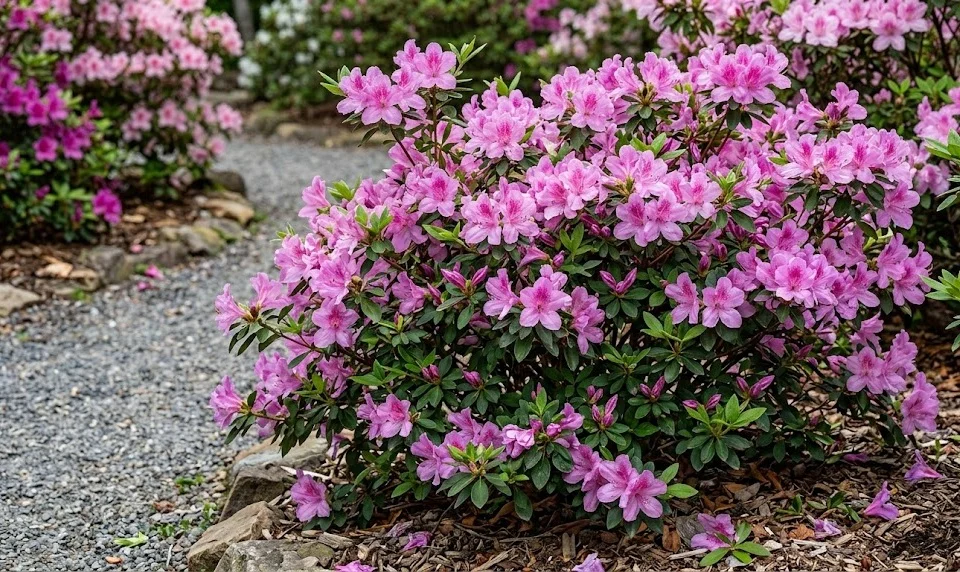

Success with azaleas begins long before the first flower appears, starting with the careful selection of the planting site and the method of propagation. These plants are specific about their requirements, and taking the time to prepare the environment properly is the best investment a gardener can make. Whether you are adding a single specimen to your landscape or trying to multiply your collection, understanding the biology of the plant is essential. The following sections will guide you through the professional standards for establishing and expanding your azalea garden.
The initial step in planting is selecting a location that provides the right balance of shade and filtered light. Azaleas are naturally forest-edge plants, meaning they prefer the dappled sunlight found under the canopy of tall, deep-rooted trees. Avoid planting them under trees with shallow roots, such as maples, which will compete aggressively for water and nutrients. A north-facing or east-facing slope is often ideal as it protects the plants from the most intense afternoon heat.
Soil preparation is the next critical phase, as azaleas require an acidic, well-draining medium rich in organic matter. If your native soil is heavy clay or highly alkaline, you should consider creating a raised bed or amending a large area rather than just a single hole. Incorporating generous amounts of leaf mold, composted pine bark, or peat moss will create the airy structure that roots crave. Always aim for a soil pH between 4.5 and 6.0 for optimal nutrient availability and growth.
When you are ready to put the plant in the ground, the depth of the planting hole is more important than its width. The azalea should be planted so that the top of its root ball is slightly above the surrounding soil level. Never bury the stem, as this can lead to rot and the eventual death of the entire shrub. Once positioned, backfill the hole with the amended soil and firm it gently with your hands to remove large air pockets.
The planting process
Before placing your azalea in the soil, it is vital to inspect the root ball for any signs of being pot-bound. If the roots are circling the container, you must gently tease them outward or make shallow vertical cuts to encourage them to grow into the new soil. This step ensures that the plant can establish a wide and stable root system quickly. Failure to do this often results in a plant that never truly integrates with its environment and eventually fails.
More articles on this topic
Watering immediately after planting is a non-negotiable step that helps settle the soil around the roots and eliminates air gaps. You should apply water slowly at the base of the plant until the entire root zone is thoroughly saturated. This initial hydration is critical for reducing transplant shock and helping the plant recover from the stress of being moved. After watering, add a layer of mulch to keep the moisture in and the soil temperature stable.
The spacing between multiple azalea plants should be determined by their mature size and the desired aesthetic effect. If you want to create a solid hedge, the plants should be placed closer together, but for individual specimens, allow enough room for air to circulate. Good air movement is a natural defense against fungal diseases that thrive in stagnant, humid environments. Planning for future growth prevents the need for drastic pruning or relocation later on.
During the first year after planting, the azalea will require frequent monitoring to ensure it does not dry out. Because the root system is still limited to the original root ball, it cannot yet access moisture from the surrounding earth. In dry weather, you may need to water the new plant two or three times a week. Providing this extra care during the establishment phase is the key to building a resilient and long-lived garden feature.
Vegetative propagation techniques
Stem cuttings are the most common and reliable method for home gardeners to multiply their favorite azalea varieties. This process involves taking semi-hardwood cuttings in the mid to late summer when the new growth has started to firm up. A cutting should be about four to six inches long and taken from a healthy, disease-free parent plant. Removing the lower leaves and dipping the cut end into a rooting hormone will significantly increase the success rate.
More articles on this topic
The cuttings need to be placed in a sterile, well-draining rooting medium such as a mix of perlite and peat moss. Maintaining high humidity around the cuttings is essential, which can be achieved by covering the tray with a clear plastic dome. Place the tray in a warm spot with bright but indirect light, and avoid exposing it to direct sun which could overheat the plants. It usually takes several weeks for the first roots to form and become strong enough for the next step.
Once the cuttings have developed a healthy root system, they can be transplanted into individual small pots. Use a professional-grade potting mix designed for acid-loving plants to provide the necessary nutrients for young growth. Continue to keep the young plants in a sheltered environment, gradually acclimating them to outdoor conditions. This process of hardening off is vital to prevent the tender new plants from being shocked by wind or sun.
Layering is another effective vegetative method that works well for azaleas with flexible, low-growing branches. This involves bending a living branch down to the ground and burying a portion of it under the soil while it is still attached to the parent. After a year or so, the buried section will develop its own roots and can be severed from the main plant. This is a slower but very high-success method that requires very little specialized equipment or daily maintenance.
Growing azaleas from seed
While more time-consuming than cuttings, growing azaleas from seed is a rewarding way to discover new variations and characteristics. Seeds are typically collected in the autumn after the seed pods have turned brown and begun to split open. The seeds are very small and should be sown on the surface of a fine, moist peat-based starting mix. They require light to germinate, so do not cover them with soil, but rather press them gently into the surface.
Maintaining consistent moisture is the biggest challenge when starting azaleas from seed, as the surface can dry out quickly. Using a fine mist sprayer and keeping the container covered with plastic will help maintain the necessary humidity levels. Germination can take anywhere from a few weeks to a couple of months depending on the species and the temperature. Once the seedlings have their first true leaves, they can be carefully thinned to allow space for growth.
As the seedlings grow, they will need a very weak solution of liquid fertilizer to support their development. Be extremely careful not to over-fertilize, as the tiny roots are very sensitive to salt buildup and chemical burns. Transition the young plants to larger containers as they outgrow their starting trays, ensuring they always have plenty of room. It may take several years of growth before a seedling is large enough to produce its first blossoms.
Breeding your own azaleas through seed allows you to select for specific traits like color, fragrance, or cold tolerance. By manually pollinating the flowers of two different plants, you can create unique hybrids that are perfectly suited to your garden. This process requires patience, as it can take five years or more to see the final results of your work. However, the chance to create a one-of-a-kind plant makes this an exciting endeavor for any serious horticulturist.