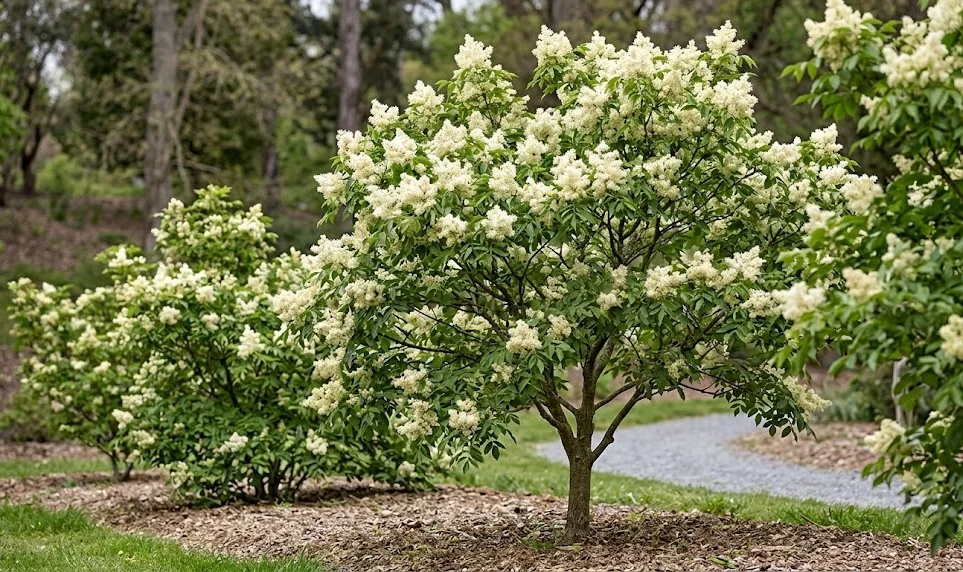

Flowering ash is generally a resilient ornamental tree, but it can still experience disease and pest problems when growing conditions are unfavorable. Most issues become more serious when the tree is weakened by drought, compacted soil, poor air circulation, mechanical injury, or unsuitable planting depth. A healthy flowering ash in the right site can usually tolerate minor pest activity without losing ornamental value. The most effective protection is therefore a combination of prevention, careful observation, and timely intervention when symptoms begin to affect vitality.
Leaf diseases and spotting
Leaf spots can appear on flowering ash during humid weather, especially where air movement is limited. These spots may be brown, dark, or irregular, and they sometimes merge as the season progresses. In many cases, light spotting is mostly cosmetic and does not require aggressive treatment. The tree’s overall vigor is more important than the presence of a few marked leaves.
Fungal leaf problems often become worse when foliage remains wet for long periods. Dense planting, overhead irrigation, and shaded sites can all increase this risk. Improving air circulation and watering at soil level can reduce disease pressure naturally. Preventive cultural care is usually more effective than repeated chemical treatments.
Fallen infected leaves should be removed if spotting is severe or recurring. This reduces the amount of disease material that can overwinter near the tree. Good garden hygiene is especially useful in smaller gardens where the same tree is affected each year. It is a simple practice, but it can make the next season cleaner.
If defoliation occurs early and repeatedly, the issue deserves closer investigation. A single difficult summer may not cause permanent harm, but repeated leaf loss weakens the tree over time. Soil moisture, nutrition, root health, and light exposure should all be checked. Disease management works best when the tree’s growing conditions are also improved.
More articles on this topic
Branch dieback and bark problems
Branch dieback may appear as dead twigs, sparse sections of crown, or shoots that fail to leaf out in spring. It can result from winter injury, drought stress, root problems, or localized infections. Dead wood should be pruned back to healthy tissue with clean tools. Cuts should be made correctly so the tree can close wounds as effectively as possible.
Bark injuries are common entry points for decay organisms and secondary pathogens. Damage from mowers, trimmers, stakes, animals, or careless handling can weaken the tree even when the crown looks healthy at first. The base of the trunk should be protected from repeated mechanical injury. A mulch ring can help keep equipment away from the bark.
Cankers may develop as sunken, cracked, or discolored areas on branches or stems. Their seriousness depends on size, location, and whether they are expanding. Small affected twigs can often be removed during pruning. Large trunk cankers are more serious and may require professional assessment.
Stress reduction is essential when dieback or bark damage appears. A weakened tree has less energy to compartmentalize wounds and produce healthy new growth. Proper watering, mulch, and avoidance of unnecessary pruning can help recovery. Treat the tree as a whole organism rather than only removing visible symptoms.
More articles on this topic
Insect pests
Aphids may feed on tender shoots and leaves, especially during spring growth. They can cause curling, sticky honeydew, and minor distortion on young foliage. In many gardens, natural predators such as ladybirds and lacewings help keep populations under control. Heavy intervention is not always necessary when the tree remains vigorous.
Scale insects can be more persistent because they attach to stems or leaves and feed quietly over time. They may be noticed as small bumps, sticky deposits, or reduced vigor. Light infestations can sometimes be managed by pruning affected twigs and encouraging plant health. Severe infestations may require targeted treatment at the appropriate life stage.
Caterpillars and leaf-chewing insects may occasionally damage foliage. Some chewing is tolerable and does not automatically threaten the tree. The extent of damage, the tree’s age, and the timing in the season should guide the response. A mature flowering ash can usually replace moderate leaf loss better than a newly planted tree.
Pest outbreaks are often worse on stressed trees. Drought, compacted soil, and excessive nitrogen can make foliage more attractive or reduce the tree’s ability to recover. Balanced care is therefore part of pest control. A strong tree is not pest-proof, but it is far less vulnerable to lasting damage.
Root and soil-related disorders
Root problems are among the most serious issues because symptoms often appear in the crown only after damage has progressed. Yellowing leaves, weak growth, dieback, and poor flowering can all be linked to root stress. Waterlogged soil is especially risky because roots need oxygen as well as moisture. If drainage is poor, the tree may decline even with attentive surface care.
Compacted soil restricts root growth and reduces air exchange. This is common in gardens where construction work, foot traffic, or vehicles have compressed the ground. Flowering ash may tolerate difficult soil better than some species, but it still needs a functional root zone. Loosening and protecting the soil around the tree can improve long-term health.
Planting too deep can also create chronic problems. When the root collar is buried, bark at the base may remain too moist and root function can suffer. This mistake may not show immediately, but it often weakens young trees over time. Correct planting depth is one of the simplest and most important preventive measures.
Root competition from lawns, hedges, and nearby trees can intensify drought stress. A young flowering ash surrounded by dense grass may struggle even when it receives occasional watering. Creating a mulched, weed-free area gives roots a better chance to establish. Root health is the foundation of disease and pest resistance.
Prevention and responsible treatment
Regular inspection is the best way to catch problems early. Look at leaves, young shoots, bark, branch tips, and the soil surface during the growing season. Small changes are easier to manage than advanced decline. Observation also prevents unnecessary treatment when symptoms are minor or temporary.
Chemical control should not be the first response to every problem. Many pest and disease issues can be reduced through pruning, sanitation, improved watering, and better air circulation. When treatment is necessary, it should be accurately targeted and used according to local regulations. Misuse can harm beneficial insects and disrupt the garden’s natural balance.
Pruning tools should be kept sharp and clean, especially when removing diseased material. Ragged cuts heal poorly and can create additional stress. Diseased branches should not be composted if the problem is severe or likely to spread. Disposal choices should support the health of the entire garden.
The strongest defense for flowering ash is a suitable site and steady care. Adequate sun, well-drained soil, moderate nutrition, and protection from physical injury reduce most common problems. A tree growing in balance can tolerate occasional pests and seasonal blemishes. Professional plant health begins with prevention, not rescue.