
The interplay between light and shade is the most significant factor in determining the visual quality and growth habit of white-striped dwarf bamboo. This variety is celebrated for its striking variegation, but maintaining that contrast requires a nuanced understanding of its photosynthetic needs. While it is often marketed as a shade-tolerant plant, its performance varies greatly depending on the intensity and duration of the light it receives. This article explores the professional secrets to finding the “sweet spot” of illumination for this elegant species.
In the world of horticulture, light is not just about visibility; it is the primary energy source that drives all biological processes. For variegated plants, the white sections of the leaves lack chlorophyll, meaning they cannot contribute to energy production. This makes the green sections work harder to support the entire plant, creating a unique metabolic balance. Finding the right light level ensures the plant has enough energy to grow without the delicate white stripes being damaged by the sun.
Too much light can lead to a condition known as leaf scorch, where the white portions of the leaves turn brown and papery. On the other hand, too little light can cause the plant to lose its variegation entirely as it produces more chlorophyll to compensate for the darkness. This “reversion” to solid green is a common frustration for gardeners who plant this bamboo in deep shade. Achieving the perfect balance is both a science and an art that requires careful observation of the garden’s microclimate.
Light quality also changes throughout the day and across the seasons, adding another layer of complexity to its care. Morning sun is generally much gentler than the harsh, direct light of a summer afternoon. Deciduous trees can also change the light levels in a garden, providing shade in the summer but allowing full light in the winter. By understanding these dynamics, you can choose a location that maximizes the bamboo’s beauty while minimizing the risk of environmental stress.
Optimal exposure for variegation
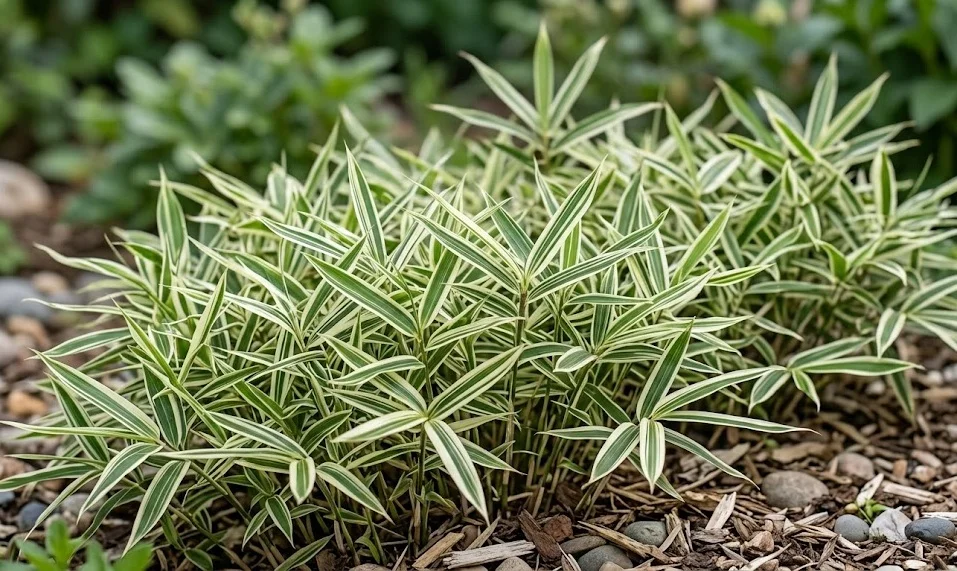
The ideal lighting for white-striped dwarf bamboo is typically described as partial shade or dappled sunlight. This environment mimics the plant’s natural habitat under the canopy of larger trees or in the margins of woodland areas. In these conditions, the leaves receive enough light to stay healthy and maintain their white stripes without being overwhelmed by heat. A location that receives a few hours of soft morning sun followed by filtered afternoon light is often perfect.
More articles on this topic
Dappled light is particularly effective because it provides a moving pattern of sun and shadow, preventing any single leaf from being exposed to intense heat for too long. This helps to keep the leaf temperature lower and reduces the rate of transpiration. Under a high canopy of trees, the bamboo will grow with a lush, full habit and display the most distinct and vibrant variegation. This is the look that most professional landscapers strive for when using this variety as a groundcover.
If you are planting this bamboo in a location with more direct sun, you must be prepared to manage its moisture levels more aggressively. Increased light levels lead to faster growth and higher water usage, which can quickly dry out the shallow root system. In sunny spots, the plant may also grow more compactly and have shorter internodes between the leaves. While it can adapt to these conditions, the risk of leaf tip browning and scorched stripes is significantly higher.
Conversely, in very bright areas, the white stripes can sometimes take on a slightly yellow or cream-colored tint rather than a pure white. This is the plant’s way of protecting its tissues from light saturation and is not necessarily a sign of ill health. However, if the goal is a “high-contrast” look, moving the plant to a slightly shadier spot will usually restore the cool, white tones. Mastering the light levels is the key to unlocking the full aesthetic potential of the foliage.
Dealing with excessive shade
While this bamboo is often recommended for shady gardens, there is a limit to how much darkness it can tolerate while remaining attractive. In deep shade, such as under a low deck or in a narrow northern alleyway, the plant may become “leggy” as it stretches toward the light. The stems will be thinner, and the leaves will be spaced further apart, resulting in a sparse and unorganized appearance. This growth habit lacks the density that makes dwarf bamboo such an effective groundcover.
More articles on this topic
The most disappointing result of excessive shade is the loss of the plant’s signature white stripes. As the bamboo struggles to produce enough energy in low light, it will naturally increase the amount of green chlorophyll in its leaves. Over time, the new leaves may emerge almost entirely green, losing the very characteristic for which the plant was chosen. This process of reversion is often reversible if the light levels are improved, but it can take a full growing season for the plant to recover.
If you find your bamboo is struggling in a dark corner, there are several professional tricks to improve the light quality without moving the plant. Thinning out the overhanging branches of nearby trees can allow more “sky brightness” to reach the ground. Painting nearby walls a light color or using reflective garden ornaments can also bounce more ambient light into the shaded area. These small changes can significantly boost the plant’s photosynthetic capacity and restore its variegation.
Monitoring the plant’s response to shade throughout the year is important, as light levels can drop significantly in the winter when the sun is lower in the sky. If the bamboo looks healthy in the summer but begins to fade in the autumn, it may be receiving too little light during the shorter days. In such cases, providing a more open location is usually the best long-term solution. A healthy bamboo in the shade should still feel firm and vibrant, never soft or overly elongated.
Managing intense summer sun
In some garden designs, white-striped dwarf bamboo is used in locations that receive more sun than is technically ideal. This is common in modern, open landscapes or in gardens where large trees have not yet matured. In these situations, the gardener must take extra steps to protect the plant during the peak of summer. The combination of high light intensity and high temperatures can be a major stressor for the variegated foliage.
One effective strategy for managing high sun exposure is the use of “nurse plants” that provide temporary or partial shade. Planting taller perennials or ornamental grasses nearby can cast just enough shadow to protect the bamboo during the hottest part of the afternoon. This creates a more complex and resilient garden ecosystem where plants help to regulate each other’s environment. It also adds textural interest and depth to the landscape design.
Mulching becomes even more critical in sunny locations to keep the root zone cool and moist. A thick layer of organic mulch reflects some of the sun’s heat and prevents the soil surface from reaching extreme temperatures. This protects the shallow rhizomes from “baking” in the sun, which can be fatal for dwarf bamboo. Consistent irrigation is also a non-negotiable requirement for sunny sites to prevent the leaves from wilting and scorching.
If you notice that the white stripes are consistently turning brown in a sunny location, it may be necessary to provide artificial shade during the summer. A simple piece of lattice or a decorative garden screen can provide the necessary relief without looking out of place. Over time, the bamboo may become more acclimated to the sun, but its most beautiful form will always be achieved when it is protected from the harshest rays. Professional care means being ready to intervene when nature becomes too intense.