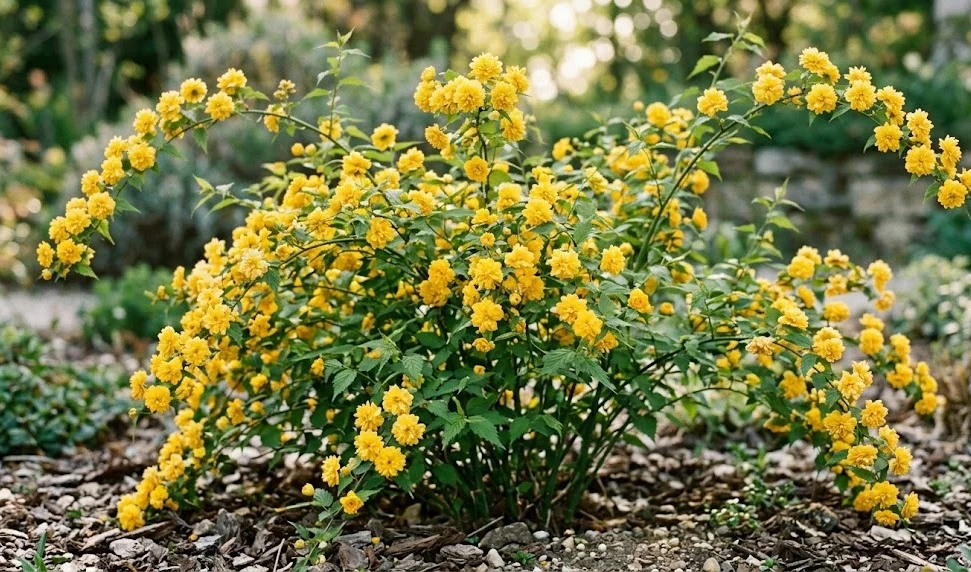

Proper hydration and nutrition are the twin pillars of a thriving Japanese kerria, dictating everything from the thickness of its green bark to the abundance of its golden flowers. This shrub is relatively forgiving, but it truly excels when its specific physiological needs are met through a consistent and informed maintenance routine. Understanding the relationship between soil moisture and nutrient uptake allows you to create an environment where the plant can flourish without being pushed to its limits. A professional approach to these tasks ensures a resilient plant that can withstand the stresses of the changing seasons.
Understanding hydration requirements
The Japanese kerria is a plant that naturally resides in moist woodland environments, which informs its preference for consistent soil moisture. You should aim to keep the soil surrounding the root zone damp but never saturated, as oxygen is just as important as water for root health. During the first two years after planting, the shrub requires more frequent attention to ensure the developing roots do not dry out. Once established, it becomes significantly more drought-tolerant, though its aesthetic quality may suffer during prolonged dry spells.
You can determine the need for water by performing a simple finger test in the soil near the base of the plant. If the top two inches of soil feel dry to the touch, it is time to provide a deep and thorough soaking. It is always better to water deeply and less frequently than to provide light, daily sprinkles that only wet the surface. Deep watering encourages the roots to grow further down into the soil, where they are better protected from heat and drought.
The texture of your soil will largely dictate how often you need to bring out the garden hose or turn on the irrigation system. Sandy soils drain quickly and will require more frequent watering, whereas clay-heavy soils hold moisture much longer but can become dangerously waterlogged. You might find that incorporating organic matter into sandy soil helps it retain moisture more effectively for the plant’s use. Conversely, improving the structure of clay soil allows excess water to move away from the sensitive root system.
Environmental factors such as temperature, wind, and humidity also play a significant role in the plant’s water consumption. You will notice that the shrub loses moisture much faster on windy summer days than during a calm, overcast spring morning. Keeping a close eye on the weather forecast allows you to adjust your watering schedule before the plant starts to show signs of stress. A proactive approach to hydration is the best way to maintain the vibrant green color of the stems throughout the year.
More articles on this topic
Seasonal irrigation strategies
In the early spring, as the plant wakes up from dormancy and begins to push out new growth and flower buds, its water needs increase. You should ensure that the soil is sufficiently moist during this period to support the energy-intensive process of blooming. If the spring is particularly dry, supplemental watering can prevent the flowers from fading prematurely or the buds from dropping. This is the foundation upon which the rest of the year’s growth is built.
Summer presents the greatest challenge for maintaining proper hydration levels, especially during periods of extreme heat. You should consider watering early in the morning or late in the evening to minimize the amount of water lost to evaporation. If the leaves begin to curl or look slightly wilted in the afternoon, it is a clear signal that the plant is struggling to keep up with transpiration. A thick layer of mulch is your best ally during these months, as it keeps the root zone significantly cooler and moister.
As autumn approaches and the growth rate slows down, you should gradually reduce the frequency of your watering sessions. This transition helps the plant begin its preparation for dormancy by allowing the new wood to harden off properly. However, it is a common mistake to stop watering entirely as soon as the weather cools down. You should continue to monitor the soil moisture until the ground freezes, especially if the autumn is unusually dry.
Winter irrigation is rarely necessary in many climates, but it can be beneficial in areas with dry, windy winters and no snow cover. If the ground is not frozen and there has been no precipitation for several weeks, a light watering on a warm day can prevent the roots from desiccating. The green stems of the Japanese kerria remain physiologically active to some extent even in winter, and they need some moisture to stay plump and healthy. Just be sure to avoid watering when a hard freeze is expected immediately afterward.
More articles on this topic
Nutritional needs and soil enrichment
While the Japanese kerria is not considered a heavy feeder, it does benefit from a steady supply of essential nutrients to maintain its vigor. You should focus on creating a soil environment that is naturally rich in organic matter rather than relying solely on synthetic chemicals. A healthy population of soil microbes will break down organic material, releasing nutrients in a form that the plant can easily absorb. This long-term approach to soil health leads to a more stable and resilient shrub.
Nitrogen is the primary nutrient responsible for the lush green foliage and the iconic green stems of this species. However, you must be careful not to over-apply nitrogen, as this can lead to excessive vegetative growth at the expense of flowers. A plant with too much nitrogen may also produce weak, spindly stems that are more susceptible to wind damage and pests. Achieving a balance is key to ensuring that the plant remains structurally sound and aesthetically pleasing.
Phosphorus and potassium are also vital for the Japanese kerria, supporting root development, flower production, and overall disease resistance. You will find that these nutrients are often present in sufficient quantities in well-maintained garden soil enriched with compost. If a soil test reveals a deficiency, you can apply a balanced, slow-release fertilizer in early spring. Always follow the manufacturer’s instructions to avoid the risk of fertilizer burn, which can damage the sensitive roots.
Micronutrients such as iron, magnesium, and manganese also play supporting roles in the metabolic processes of the plant. If you notice the leaves turning pale or yellow while the veins remain dark green, it could be a sign of a micronutrient deficiency. This is often linked to soil pH, as certain nutrients become chemically locked away and unavailable to the plant in highly alkaline conditions. Maintaining the correct pH level is often more effective than simply adding more fertilizer.
Application timing and methods
The best time to apply any type of fertilizer or soil amendment is in the early spring, just as the new growth begins to emerge. This ensures that the nutrients are available to the plant during its most active period of expansion and flowering. You should avoid fertilizing late in the summer or in the fall, as this can stimulate new growth that won’t have time to mature before winter. Young, tender shoots produced late in the season are highly vulnerable to frost damage.
When applying granular fertilizers, you should spread them evenly around the drip line of the shrub, which is the area directly under the outermost branches. This is where the most active feeder roots are located, ready to take up the dissolved nutrients. You should avoid placing fertilizer directly against the main stems, as the concentrated salts can cause irritation or chemical burns. Scratch the granules lightly into the surface of the soil and water the area thoroughly to begin the release process.
Using liquid fertilizers or compost teas is another option, especially if you need to provide a quick boost to a struggling plant. These are absorbed more rapidly through both the roots and the foliage, providing almost immediate results. However, the effects of liquid feeds are short-lived, and they need to be applied more frequently than slow-release granular products. They are best used as a supplement to a solid base of soil health rather than a primary source of nutrition.
Top-dressing with a fresh layer of high-quality compost every spring is perhaps the most effective way to fertilize your Japanese kerria. This method mimics the natural recycling of nutrients in a forest and improves the soil structure at the same time. You can simply spread an inch or two of compost over the root zone and let the rain and earthworms do the work of moving it down. Over time, this practice builds a deep, fertile soil that provides everything the shrub needs to thrive.
Identifying and correcting imbalances
Being able to read the signals the plant sends you is an essential skill for any professional gardener. You might see stunted growth and small, pale leaves if the plant is not receiving enough nutrition or water. If the shrub is growing rapidly but failing to produce its characteristic yellow flowers, it may be receiving too much nitrogen or insufficient light. Observing these patterns allows you to make precise adjustments to your care routine rather than guessing at the cause.
Leaf scorch, characterized by brown, crispy edges on the foliage, is a common sign of either underwatering or excessive fertilizer salts in the soil. If you suspect fertilizer burn, you should flush the soil with large amounts of water to help leach the excess salts away from the roots. In the future, reducing the application rate or switching to a more organic approach can prevent this issue from recurring. Consistent moisture is the best defense against environmental scorch during the peak of summer.
Chlorosis, the yellowing of leaves due to lack of chlorophyll, is often a sign that the plant is unable to access iron from the soil. You should check the soil pH first, as iron deficiency is most common in alkaline soils with a pH above 7.0. If the pH is too high, applying elemental sulfur or an acidifying fertilizer can help bring it down to the preferred neutral to acidic range. In the short term, a chelated iron foliar spray can provide temporary relief and restore the green color to the leaves.
Finally, remember that over-watering can be just as damaging as under-watering, leading to root rot and eventual plant death. If the stems feel soft or the leaves are turning yellow and dropping while the soil is still wet, you must improve the drainage immediately. Stop all irrigation and allow the soil to dry out significantly before providing any more water. In severe cases, you may need to lift the plant and prune away the rotten roots before replanting it in a more suitable location.