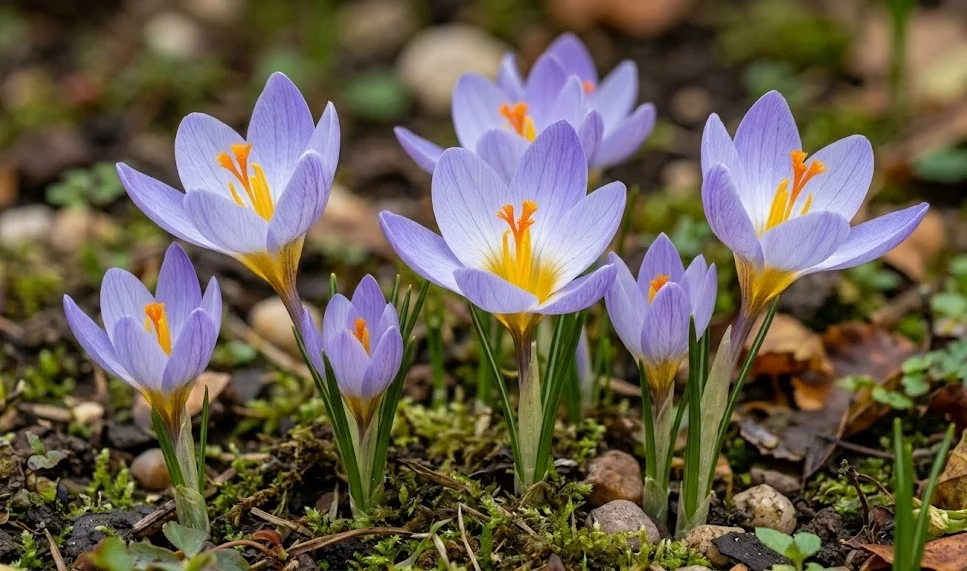

Beautiful crocus requires very little pruning, but timing is extremely important. The plant’s leaves are not decorative for long, yet they are essential for storing energy in the corm. Cutting them too early is one of the most common causes of weaker flowering in later years. Good maintenance means removing only what is spent while protecting the living foliage.
What should and should not be cut
The flowers may be removed after they collapse if the display looks untidy. This is a cosmetic task, not a strict requirement. Removing spent flowers can reduce mould in damp weather. It should be done gently to avoid pulling the corm or damaging young leaves.
Green leaves should not be cut back. They feed the corm through photosynthesis after the flowers have faded. Even if they look plain, they are doing important work. The plant needs them until they naturally yellow.
Yellowing leaves can be removed once they come away easily. At that point, they have already returned much of their stored energy to the corm. Forcing them off too soon interrupts this process. Patience produces stronger flowering in the following season.
Do not use a strimmer or mower over the planting area while foliage remains. Mechanical cutting is especially damaging because it removes all leaf surface at once. If the crocus grows in grass, mowing must wait until the leaves have died back. In borders, hand care is much safer.
More articles on this topic
Tidying without weakening the plant
A tidy appearance can be maintained without heavy cutting. Remove fallen petals, dead flower stems, and debris that traps moisture. Use fingers or small scissors rather than rough pulling. The plant is low and delicate, so precise work is best.
If neighbouring plants lean over the crocus, cut back the neighbours instead. This improves light and air movement without harming the crocus foliage. Many late-season perennials can be reduced carefully after they finish flowering. The goal is to open space around the crocus, not expose it harshly.
Avoid deep hoeing near established clumps. The corms and offsets may sit close enough to the surface to be damaged. Hand weeding is safer, especially during active growth. A thin gravel mulch can reduce weed germination and make maintenance easier.
Labels or markers help prevent accidental cutting during the dormant period. Once the leaves disappear, it is easy to forget exactly where the corms are. Marking the position protects the clump during summer border work. This simple habit is especially useful in mixed plantings.
More articles on this topic
Cutting back in containers and naturalised areas
Container-grown plants follow the same rule as garden plants. The leaves must remain until they yellow naturally. Because pots are more visible, the fading foliage may feel more untidy. Moving the pot to a less prominent but still bright place can solve this problem.
Do not hide a pot in dark shade while the leaves are still green. The plant needs light until dormancy begins. A bright side area, cold frame, or open shelf is better than a shed. After the foliage dies back, the pot can be stored drier.
In naturalised plantings, mowing is the main maintenance issue. The grass or meadow area should not be cut until crocus foliage has completed its cycle. This may require a separate mowing schedule for that patch. The reward is stronger, more persistent flowering.
Annual cutting back should be minimal and seasonal. Beautiful crocus is not a plant that benefits from shaping, pinching, or hard pruning. Its best performance comes from being allowed to complete its natural cycle. Careful restraint is the most professional form of pruning for this species.