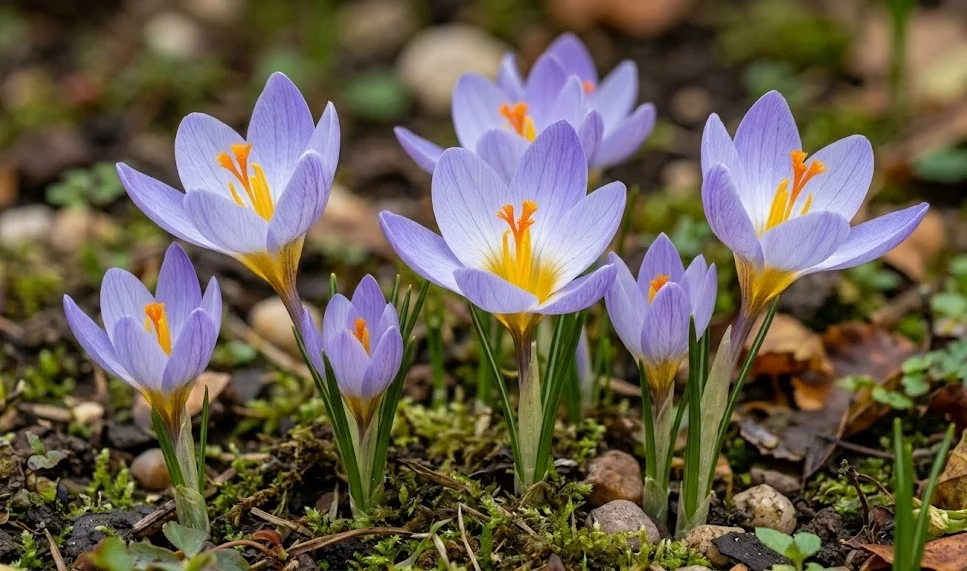

Beautiful crocus is naturally suited to cool-season growth, so winter is not simply a period of rest for the plant. In many gardens, the leaves remain active through cold months and continue feeding the corm. Successful overwintering means protecting the plant from excessive wetness, hard disturbance, and damaging freeze-thaw cycles. The aim is not to keep it warm, but to keep it healthy, stable, and well drained.
Understanding winter behaviour
Unlike many tender ornamentals, beautiful crocus does not need to be lifted for winter in suitable climates. Its active season often overlaps with autumn, winter, and early spring. The leaves may appear after or around flowering and continue working in cool weather. This makes winter care especially important for next year’s display.
Cold alone is not usually the greatest problem. Wet, compacted soil is often far more dangerous. Corms can tolerate cool conditions better than stagnant moisture. A dry cold site is usually safer than a mild but waterlogged one.
Snow cover can actually protect plants by insulating the soil. Problems arise when snow melts repeatedly into poorly drained ground. Freeze-thaw cycles can lift shallow corms or damage roots in loose soil. Firm planting and a stable surface reduce this risk.
Do not assume that winter dormancy means neglect of the foliage. Green leaves are still producing energy whenever light and temperature allow. They should remain untouched unless diseased or physically damaged. Their survival through winter directly supports future flowering.
More articles on this topic
Protecting garden plants from winter wet
Drainage should be addressed before winter rather than after symptoms appear. If the planting area puddles after rain, the corms are at risk. Adding grit to the surface alone may not solve deep compaction. Long-term improvement requires an open root zone.
Raised beds are excellent for overwintering beautiful crocus in wet climates. Even a modest elevation improves water movement. A sloping rock garden can provide similar benefits. The plant appreciates soil that drains quickly after heavy rain.
A light gravel mulch can reduce splash and keep the crown area cleaner. It also prevents soil crusting during repeated rain. The mulch should be thin enough not to smother emerging shoots. Organic mulches should be used carefully because they can hold moisture.
Avoid walking on the planting area during winter. Compacted soil loses air spaces and drains more slowly. Foot traffic can also crush shoots that are not yet obvious. Marking the bed helps prevent accidental damage.
More articles on this topic
Overwintering in containers
Potted beautiful crocus needs more winter attention than plants in open soil. Containers are exposed to stronger temperature swings, and their compost can become either too wet or too dry. A free-draining mix is essential from the start. Drainage holes must remain clear throughout winter.
Place pots where they receive light but are not soaked by constant roof runoff or standing water. A cold frame, open porch, or sheltered wall can be useful in very wet climates. The protection should not be so warm that it forces weak growth. Cool, bright, and airy conditions are ideal.
Water pots only when the compost begins to dry during active leaf growth. Rain may provide enough moisture in many winters. Always check by touch rather than assuming. Overwatering a dormant or slow-growing pot is a common cause of failure.
In severe cold, pots may need insulation around the sides. The corms are more vulnerable in containers because their roots are above ground level. Grouping pots together or placing them against a sheltered wall can reduce freezing stress. Avoid bringing them into a heated room, which disrupts their natural cycle.
Spring transition after winter
As winter ends, the leaves may continue growing for a time before gradually yellowing. This is a normal transition into dormancy. Continue to protect the foliage from mowing, cutting, or heavy disturbance. The plant is still storing energy until the leaves fade naturally.
Watering should be adjusted as the weather warms. Active green leaves may still need light moisture if spring is dry. Once yellowing begins, reduce watering gradually. This helps the corms ripen properly for summer rest.
Do not lift the corms immediately after flowering or during active winter foliage. Wait until the leaves have fully died back if division is needed. Lifting too early interrupts the storage process. Patient timing produces stronger, better-flowering corms.
After the foliage disappears, keep the planting area relatively dry through summer. Avoid planting thirsty annuals directly above the dormant corms. A dry summer rest is part of the overwintering success story, because it prepares the corms for the next autumn. Good winter care and good summer restraint work together.