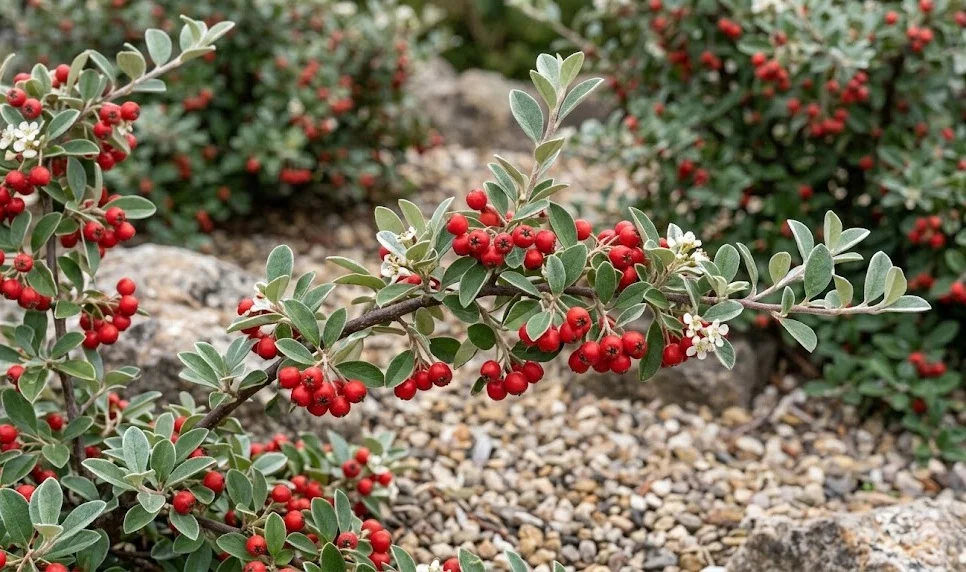

Pruning is as much an art as it is a science, and it is a critical skill for any serious gardener to master. The bright-beaded cotoneaster is a vigorous grower that responds well to trimming, but the timing of your cuts is essential for the best results. A well-pruned shrub is not only more attractive but also healthier and more productive. By understanding the basic principles of pruning, you can shape your plants to fit your vision while supporting their natural vitality.
The best time for most structural pruning is in the late winter or very early spring, just before the new growth begins to emerge. At this stage, the plant is still dormant, and it is easier to see the framework of the branches without the foliage in the way. Removing dead, damaged, or crossing branches during this window prevents the plant from wasting energy on unhealthy parts. It also allows the shrub to direct all its spring energy toward a flush of healthy, vigorous new stems.
Light trimming to maintain the shape of a hedge or to remove stray branches can be done throughout the growing season. However, avoid heavy pruning in the late summer or autumn, as this can stimulate new growth that won’t have time to harden before winter. If you are pruning for the sake of the flowers and berries, keep in mind that the plant blooms on the previous year’s wood. Drastic pruning in the spring may reduce the number of flowers and fruit you see later in the year.
Using high-quality, sharp tools is the first rule of professional pruning and should never be compromised. Bypass pruners are the preferred choice for most tasks, as they make clean, scissor-like cuts that heal quickly. For larger branches, use a dedicated pruning saw to avoid crushing the wood and creating jagged wounds. Always clean your blades with a disinfectant between plants to ensure you are not accidentally spreading any pathogens throughout your garden collection.
Shaping techniques for hedges and groundcover
The bright-beaded cotoneaster is an incredibly versatile plant that can be shaped to serve many different roles in the landscape. When used as a hedge, the goal is often to create a dense, uniform wall of green that provides privacy or structure. To achieve this, you should start training the plants early, encouraging them to fill in from the bottom up. Regular, light trimming of the outer tips will stimulate more lateral branching and a thicker overall habit.
More articles on this topic
One of the most common mistakes in hedge trimming is making the top wider than the base, which eventually shades out the lower branches. To prevent this, professional gardeners always prune their hedges with a slight “taper,” so the base is wider than the top. This allows sunlight to reach all parts of the plant, ensuring that the foliage remains green and dense right down to the ground. Using a string line can help you maintain straight, even edges as you work along the length of the hedge.
When managing this species as a groundcover, the approach is slightly different and focuses on maintaining a low, spreading form. You should selectively prune any branches that are growing too vertically, encouraging them to stay close to the earth. This helps the plant to quickly cover a large area and effectively suppress weeds with its dense foliage. Occasional thinning of the older branches will allow new, more vigorous growth to fill in the gaps and keep the carpet looking fresh.
For individual specimen shrubs, the goal is usually to enhance the natural form of the plant rather than imposing a strict geometric shape. Focus on maintaining a balanced silhouette and removing any branches that are growing in a way that looks out of place. You should aim to make your cuts inside the foliage canopy, so they are hidden from view as the plant grows. This “invisible” pruning technique results in a shrub that looks naturally beautiful and well-proportioned within the garden.
Rejuvenation pruning for older specimens
Over time, even a well-maintained cotoneaster can become overly woody, sparse in the center, or simply too large for its space. Rejuvenation pruning is a technique used to breathe new life into these older, tired-looking shrubs. This involves a more drastic approach to cutting that encourages the plant to produce a completely new set of branches. While it can look a bit stark initially, the long-term results are often a much healthier and more attractive plant.
More articles on this topic
One method of rejuvenation is the “one-third” rule, where you remove the oldest third of the stems right down to the ground each year. Over the course of three years, the entire shrub is replaced with new growth without leaving a bare spot in the garden. This gradual approach is less stressful for the plant and allows it to maintain its presence in the landscape throughout the process. It is a particularly good strategy for large, established hedges that have become hollowed out in the middle.
For plants that are truly overgrown or in very poor health, a more aggressive “renewal” pruning can be performed. This involves cutting the entire shrub back to within six to twelve inches of the ground in late winter. Because the root system is already well-established, the plant will usually respond with a flush of very rapid, vigorous growth. This method is a great way to “reset” a shrub and start fresh with a new, more manageable shape and healthier foliage.
After any major pruning, it is essential to provide the shrub with extra care to support its recovery. Ensure it is well-watered and consider a light application of balanced fertilizer to fuel the new growth. Keep an eye out for any pests that might be attracted to the succulent new stems that emerge after a hard pruning. With a bit of patience and the right technique, rejuvenation pruning can transform an eyesore into a highlight of your horticultural collection.