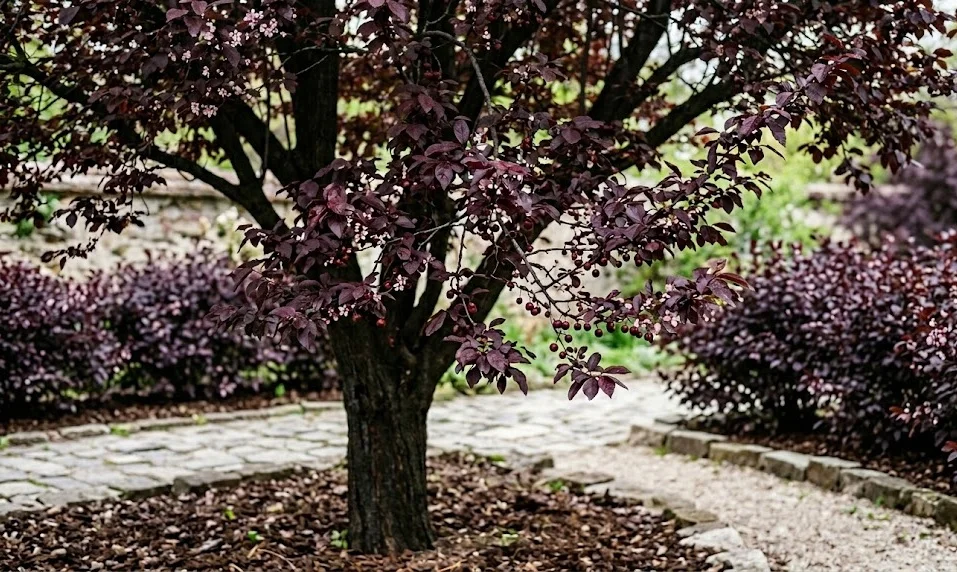

Purple-leaf plum is generally a dependable ornamental tree, but like many stone-fruit relatives it can be affected by fungal diseases, bacterial issues and sap-feeding pests. Most problems become serious only when the tree is stressed by poor drainage, drought, overcrowding or incorrect pruning. Early recognition is essential because small symptoms are easier to manage than advanced decline. With good hygiene, sensible pruning and balanced care, you can reduce many risks before they damage the tree’s ornamental value.
Leaf diseases and foliage problems
Leaf spot diseases can affect purple-leaf plum, especially during wet or humid weather. Small spots may appear on the leaves and gradually enlarge or darken. In severe cases, affected leaves may yellow and fall earlier than normal. Although occasional spotting is not always serious, repeated heavy infection can weaken the tree over time.
Good air circulation is one of the most practical ways to reduce leaf disease. A crowded crown dries slowly after rain, which gives fungal spores more favourable conditions. Light pruning after flowering can help open the canopy without removing too much growth. Planting the tree in a sunny, open site also reduces the time leaves remain wet.
Fallen infected leaves should be collected and removed from the base of the tree. This helps reduce the amount of disease material that can overwinter nearby. Composting diseased leaves in a cool garden heap may not destroy all pathogens. Disposal away from the tree is often a safer option when infections are repeated.
Watering technique also matters. Water should be directed to the soil rather than sprayed over the crown. Evening overhead watering is particularly unhelpful because leaves may remain wet through the night. A dry leaf surface is one of the simplest forms of disease prevention.
More articles on this topic
Canker, dieback and bark damage
Canker diseases can cause sunken, cracked or discoloured areas on branches and stems. Affected branches may show weak growth, wilting leaves or dieback beyond the damaged area. In some cases, gum-like exudate may appear on the bark. This symptom should be taken seriously because it can indicate stress, infection or physical injury.
Pruning cuts, frost cracks and mechanical wounds can all provide entry points for disease. Clean cuts made at the right time heal more effectively than torn or ragged wounds. Tools should be sharp, and diseased material should be removed carefully. Cutting back to healthy wood can stop the problem spreading further along the branch.
Trees under stress are more vulnerable to canker and dieback. Drought, waterlogged soil and nutrient imbalance can reduce the tree’s ability to defend itself. Improving the growing conditions is often as important as removing infected branches. A tree that is otherwise healthy can recover more strongly after corrective pruning.
Severe trunk cankers are more difficult to manage than small branch infections. If the main stem is badly damaged, the long-term stability and health of the tree may be compromised. In such cases, regular monitoring is essential. When decline continues despite good care, replacement may be more practical than repeated intervention.
More articles on this topic
Aphids and sap-feeding insects
Aphids are among the most common pests on purple-leaf plum. They often gather on young shoots, leaf undersides and tender new growth. Their feeding can cause distorted leaves, sticky honeydew and reduced shoot quality. The honeydew may also encourage sooty mould, which darkens leaf surfaces and reduces ornamental appearance.
Small aphid populations are often controlled naturally by ladybirds, lacewings, hoverfly larvae and other beneficial insects. A diverse garden with flowering plants can support these natural predators. Avoiding unnecessary broad-spectrum insecticides helps preserve this balance. In many cases, patience and observation are enough.
If aphids become numerous, they can be reduced with a strong stream of water or a suitable insecticidal soap. Treatment should focus on the affected areas and be repeated only when necessary. It is important to reach the undersides of leaves, where pests often hide. Trees that are heavily fertilised with nitrogen may produce soft growth that attracts aphids more readily.
Regular inspection in spring is the best prevention. Aphid colonies develop quickly when conditions are favourable. Catching them early avoids heavy distortion of young shoots. Healthy, well-watered trees usually tolerate minor aphid feeding without lasting harm.
Other pests and stress-related issues
Scale insects may occasionally affect purple-leaf plum, appearing as small, fixed bumps on stems and branches. They feed on sap and can weaken growth if populations become high. Like aphids, some scale insects produce honeydew. Careful inspection of branches during dormant periods can reveal infestations before foliage hides them.
Caterpillars and leaf-chewing insects may also appear from time to time. Minor feeding damage is usually cosmetic and does not require strong intervention. Serious defoliation is less common but should be monitored, especially on young trees. Encouraging birds and beneficial insects can help keep occasional pests under control.
Mites may become a problem during hot, dry conditions. Leaves can develop a dull, speckled appearance, and fine webbing may be visible in heavy infestations. Drought-stressed trees are more vulnerable, so proper watering is part of prevention. Improving humidity around the root zone through mulching can also reduce stress, though the foliage should not be kept constantly wet.
Not every symptom is caused by a pest or disease. Poor planting depth, compacted soil, drought, waterlogging, herbicide drift and root damage can all produce unhealthy foliage. Before treating the tree, the growing conditions should be checked carefully. Correct diagnosis prevents unnecessary chemical use and leads to better long-term results.
Prevention and integrated care
The strongest defence against disease and pests is a healthy tree. Purple-leaf plum grown in full sun, well-drained soil and adequate space is less likely to suffer severe problems. Balanced watering and moderate feeding support natural resistance. Stress reduction is the foundation of integrated plant care.
Pruning hygiene is especially important. Diseased branches should be removed with clean tools, and cuts should be made back to healthy tissue. Tools can be disinfected between cuts when disease is suspected. Removed material should not be left under the tree.
Seasonal monitoring helps detect changes early. In spring, check young shoots for aphids and inspect flowers and new leaves for unusual symptoms. In summer, watch for leaf spots, mites and drought stress. In autumn and winter, examine the branch structure and bark condition.
Chemical treatment should be the last step rather than the first. Many problems can be managed by improving air flow, removing infected material and supporting tree vitality. When a product is necessary, it should be chosen for the specific problem and used exactly as directed. Responsible management protects the tree, the garden ecosystem and the surrounding environment.