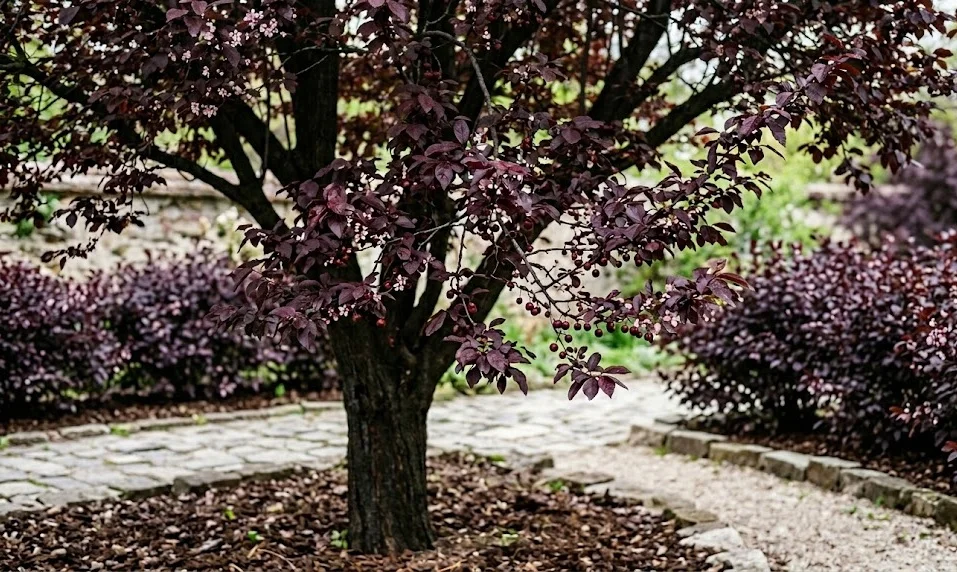

Purple-leaf plum is hardy enough for many temperate gardens, but winter care still matters if you want a healthy crown, strong spring flowering and fewer stress-related problems. The tree enters dormancy during the cold season, yet its roots, bark and buds remain exposed to frost, wind, wet soil and sudden temperature changes. Most winter protection is simple and preventive rather than intensive. The key is to help the tree go into winter strong, stable and free from avoidable damage.
Preparing the tree before cold weather
Winter preparation begins in late summer and autumn, not after the first hard frost. Feeding should be stopped early enough to avoid stimulating soft new growth late in the season. Tender shoots are more likely to be damaged by cold and may die back during winter. A tree that finishes the season naturally is better prepared for dormancy.
Watering should be adjusted according to rainfall. The soil should not be bone dry before winter, because dry roots can suffer during freezing weather. At the same time, saturated soil can increase root problems and make the tree less resilient. The aim is moderate moisture in a well-drained root zone.
Fallen leaves should be cleared, especially if the tree had leaf spot or other fungal issues during the season. Diseased leaf litter can harbour spores that may affect the tree again in spring. A clean area beneath the crown also makes it easier to inspect the trunk and lower branches. Garden hygiene is a simple but valuable part of winter care.
Mulch can be renewed in autumn to protect the root zone. Organic mulch helps moderate temperature changes and reduces moisture loss from the soil. It should be spread broadly but kept away from the trunk. Bark buried under damp mulch can become vulnerable to rot and pests.
More articles on this topic
Protecting roots and the trunk
The roots of purple-leaf plum are usually more vulnerable in newly planted trees than in established specimens. Young trees have not yet developed a wide root system, so they benefit from a stable soil environment. A mulch layer helps reduce repeated freezing and thawing near the surface. This is especially helpful in exposed gardens or lighter soils.
The trunk can be affected by winter sun, frost cracks and animal damage. In areas where temperature swings are sharp, the sunny side of the trunk may warm during the day and freeze again at night. This expansion and contraction can damage bark. A breathable tree guard or white trunk wrap may be useful for young trees in high-risk sites.
Protection from animals may be necessary in rural or semi-rural gardens. Rabbits, deer or rodents can damage bark during winter when other food is limited. Even partial girdling can seriously weaken a young tree. Guards should allow air movement and should be checked so they do not rub the bark.
Stakes and ties should be inspected before winter storms. A loose stake may damage roots, while a tight tie can injure the trunk. The tree should be supported without being strangled or held completely rigid. Removing unnecessary stakes once the tree is established reduces long-term rubbing and bark damage.
More articles on this topic
Managing snow, frost and winter wet
Snow is not always harmful, but heavy wet snow can bend or break branches. Purple-leaf plum has a branching structure that may catch snow, especially if the crown is dense. When snow loads are heavy, branches can be gently relieved if it is safe to do so. Shaking branches violently should be avoided because frozen wood can snap.
Frost damage is more likely on young, soft or poorly ripened shoots. This is one reason late fertilising and heavy late pruning are best avoided. If some shoot tips are damaged, they should usually be left until spring before pruning. Waiting makes it easier to see which parts are truly dead.
Winter wet can be more damaging than cold in poorly drained soil. Roots sitting in saturated ground for long periods may decline before spring growth begins. If a site is known to hold water, improving drainage around the planting area is important. Raised planting areas and organic soil improvement can help prevent future problems.
Containers are riskier than open-ground planting in winter. Roots in pots are more exposed to freezing and thawing, and the compost can become either too wet or too dry. If a purple-leaf plum is temporarily kept in a container, the pot should be placed in a sheltered position. The container should drain freely and should not stand in water.
Spring recovery after winter
Spring inspection should begin as buds swell. Broken, dead or frost-damaged branches can be identified more clearly once growth resumes. Pruning should be careful and limited to what is necessary. Removing damaged material helps the tree direct energy into healthy growth.
The first signs of flowering and leaf emergence are useful indicators of winter survival. A healthy tree should open buds evenly across much of the crown. If one side is weak, winter wind, root stress or branch damage may be involved. Observing the pattern of growth helps guide later care.
Mulch can be refreshed in spring, and compost can be applied around the root zone. This supports the tree as it enters active growth. Fertiliser should be moderate, especially if the tree already appears vigorous. The goal is recovery and steady growth, not excessive shoot production.
Winter care should be seen as part of the whole year’s maintenance. A tree that was watered correctly, not overfed and kept healthy during summer will usually cope better with cold weather. Likewise, a tree protected from winter damage begins spring with more energy. This continuity is what keeps purple-leaf plum attractive and reliable over the long term.