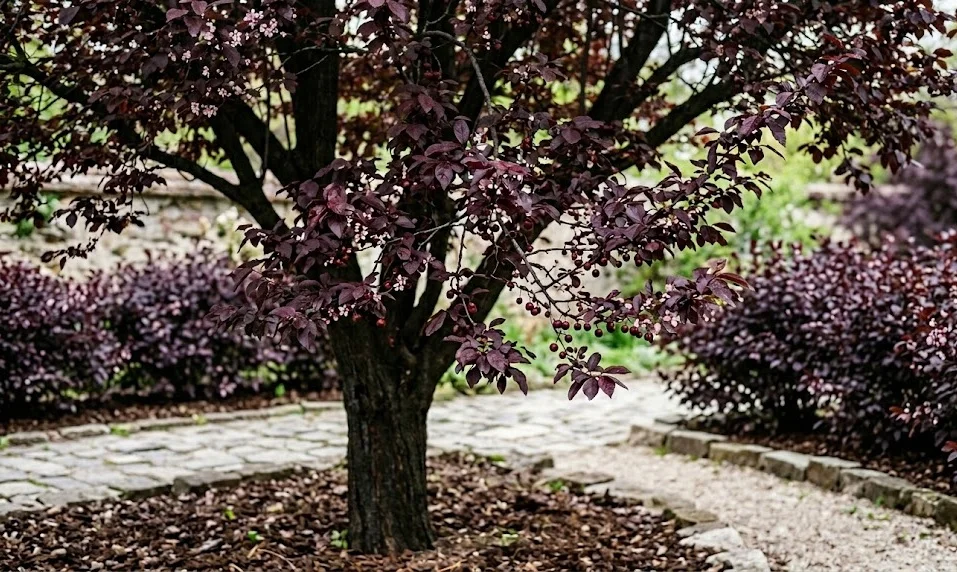

Purple-leaf plum is one of those ornamental trees that can transform a garden almost instantly with its dark foliage, pale spring blossom and elegant small-tree habit. It is often chosen for front gardens, mixed borders and urban planting because it gives strong colour even when other plants are between flowering periods. Good care is not complicated, but it does require attention to soil, light, watering, pruning and long-term plant health. When you understand how the tree grows through the seasons, you can keep it attractive, balanced and resilient for many years.
Choosing the right position in the garden
Purple-leaf plum performs best when it is planted in a bright, open position where the crown receives plenty of direct sunlight. Strong light helps the foliage develop its characteristic deep purple tone, while shaded positions often produce duller, greener leaves. A sunny site also supports better flowering in spring, because the tree can build stronger buds during the previous growing season. In a garden design, it is worth placing the tree where its foliage can contrast with green shrubs, pale grasses or silver-leaved perennials.
Air movement is another important factor when choosing the position. Purple-leaf plum does not enjoy stagnant, damp conditions around the crown, because poor air circulation can increase the risk of fungal leaf problems. A slightly open site allows the leaves to dry more quickly after rain and morning dew. This is especially useful in gardens where spring and early summer are often humid.
The tree should have enough space to develop its natural outline without constant heavy cutting. Although purple-leaf plum is not usually a very large tree, it still needs room for its rounded crown and spreading branches. If it is planted too close to buildings, fences or larger trees, the crown can become uneven and the lower branches may weaken. A well-spaced tree looks more graceful and requires less corrective pruning later.
It is also wise to think about visibility throughout the year. In spring, the flowers create a soft ornamental effect before the foliage fully opens, while in summer the dark leaves provide a strong architectural feature. In autumn, the colour may become less intense, but the tree still adds structure to the planting. During winter, a well-shaped crown can remain attractive, particularly when it is not crowded by surrounding plants.
More articles on this topic
Soil quality and ground preparation
Purple-leaf plum prefers a fertile, well-drained soil that holds some moisture but does not stay waterlogged. Heavy clay soil can be improved before planting by incorporating mature compost and loosening the planting area widely, not only the immediate planting hole. This encourages new roots to move into the surrounding ground rather than circling in a small pocket of improved soil. Good preparation at the beginning often has a greater effect than later attempts to correct poor growth.
Sandy soil can also support purple-leaf plum, but it usually needs more organic matter to improve water retention. Compost, leaf mould and well-rotted manure can help the soil hold moisture around the root zone. However, the aim is not to make the soil permanently wet, because the roots still need oxygen. A balanced soil structure allows both water and air to move through the ground.
The pH of the soil is usually not a major difficulty, because purple-leaf plum is reasonably adaptable. It tends to grow well in neutral to slightly alkaline or slightly acidic garden soils. Extreme conditions should still be avoided, especially very compacted or strongly waterlogged sites. Where soil is poor, gradual improvement with organic matter is better than relying on strong fertilisers alone.
Mulching is a simple but valuable part of soil care. A layer of organic mulch helps moderate soil temperature, conserve moisture and reduce competition from weeds. The mulch should be kept away from direct contact with the trunk, because damp material piled against bark can encourage disease and rot. Renewing the mulch once or twice a year keeps the root environment more stable.
More articles on this topic
Watering and moisture management
A newly planted purple-leaf plum needs regular watering during its first growing season. The roots are still limited, so the tree cannot yet draw moisture from a wide area of soil. Deep watering is more effective than frequent shallow watering, because it encourages the roots to grow downward and outward. In dry periods, the soil should be checked beneath the surface rather than judged only by how it looks on top.
Established trees are more drought tolerant, but they still benefit from watering during prolonged heat and dryness. Drought stress can lead to smaller leaves, early leaf drop and weaker growth. When the tree is planted in a lawn, it may also compete with grass for moisture. In such cases, maintaining a clear mulched area around the base can make a noticeable difference.
Overwatering can be just as harmful as underwatering. Purple-leaf plum roots do not thrive in soil that remains saturated for long periods. If the leaves yellow, shoots weaken or the soil smells sour, drainage may be part of the problem. The solution is not simply to stop watering, but to improve soil structure and ensure excess water can move away.
Seasonal timing matters when managing moisture. Spring watering supports new growth and flowering, while summer watering protects the foliage during heat. In autumn, watering may be needed if the weather is unusually dry, because roots continue to function while the soil remains warm. Before winter, the tree should enter dormancy with moderately moist but not saturated soil.
Feeding and nutrient balance
Purple-leaf plum does not need aggressive feeding if it is growing in reasonably fertile garden soil. A moderate supply of nutrients supports healthy leaves, strong shoots and steady root development. Too much nitrogen can encourage soft, vigorous growth that is more vulnerable to pests, diseases and winter damage. For ornamental trees, balanced nutrition is usually better than rapid growth.
Compost applied around the root zone in spring is often enough for mature trees. It improves the soil gradually while feeding soil organisms that support root health. If growth is weak and the foliage looks pale, a slow-release balanced fertiliser may be used carefully. The amount should follow the product guidance, because overfeeding can disturb the natural growth rhythm of the tree.
Young trees sometimes benefit from gentle feeding after they have begun to establish. Feeding immediately at planting is not always necessary, especially if the soil has been improved with compost. The first priority should be root contact with the surrounding soil and consistent moisture. Once new growth is visible, light feeding can support development without forcing the tree.
Nutrient problems are often linked to soil condition rather than the absence of fertiliser. Compacted soil, poor drainage or drought can prevent roots from absorbing nutrients efficiently. Before adding more fertiliser, it is worth checking whether the roots have a healthy environment. A tree growing in balanced soil usually shows better long-term colour and structure than one pushed with excessive feeding.
Pruning for shape and health
Purple-leaf plum benefits from thoughtful pruning, but it does not need severe annual cutting. The aim is to maintain an open, balanced crown and remove damaged, crossing or diseased branches. Light pruning helps the tree keep its natural character while improving air movement through the canopy. Heavy pruning can stimulate awkward shoots and spoil the graceful outline.
The best time for pruning is usually after flowering, when the spring display has finished. This timing allows you to enjoy the blossom while reducing the risk associated with winter pruning in stone-fruit relatives. Dead, broken or clearly diseased wood can be removed whenever it is noticed. Clean, sharp tools are important because ragged cuts heal more slowly.
Young trees should be trained gently during the first years. A clear central structure and well-spaced side branches create a stronger mature tree. Branches with narrow angles may be more likely to split later, especially during storms or snow. Correcting these issues early is easier than making large cuts once the tree is older.
Pruning should never be used as a substitute for correct placement. If the tree is planted in a space that is too small, constant cutting will become necessary and the plant may lose its ornamental value. A well-sited purple-leaf plum only needs occasional shaping and maintenance. This produces a healthier crown and a more natural garden effect.
Seasonal care from spring to autumn
Spring is the most decorative period for purple-leaf plum, because the flowers appear before or alongside the young foliage. At this time, the tree should be checked for winter damage, broken twigs and signs of disease. A light layer of compost and fresh mulch can support the new season’s growth. Watering should begin if rainfall is low and the soil starts to dry.
In early summer, the focus shifts to foliage quality and shoot growth. The leaves should be richly coloured, firm and evenly distributed along the branches. If the crown is very dense, light thinning after flowering can improve air movement. Regular observation helps catch aphids, leaf spots or stress symptoms before they become serious.
During hot summer periods, moisture management becomes especially important. Young trees and trees in exposed urban sites can suffer quickly during drought. Mulch, deep watering and reduced competition from weeds all help reduce stress. A stressed tree is more likely to attract pests and recover slowly from disease.
In autumn, the tree begins preparing for dormancy. Feeding should be avoided late in the season, because soft new growth may not harden properly before cold weather. Fallen leaves should be cleared if they show signs of disease, as this can reduce overwintering fungal material. A final check of ties, stakes and mulch prepares the tree for winter conditions.
Long-term maintenance and garden use
Purple-leaf plum is often used as a small focal tree because its colour is strong enough to stand alone. It works well near pale paving, light walls, green hedges or ornamental grasses. The dark leaves can also give depth to mixed borders, especially when paired with plants that have cream, pink, silver or lime-green tones. Careful plant combinations make the tree look intentional rather than isolated.
The tree can also contribute to seasonal rhythm in the garden. Its blossom brings early interest, its foliage gives summer drama and its branching structure adds winter shape. This makes it valuable in gardens where space is limited but year-round structure is needed. Even a single well-grown specimen can provide a strong design anchor.
Long-term success depends on preventing stress rather than reacting to decline. Good soil, sensible watering, balanced pruning and regular inspection are the core tasks. When these are in place, purple-leaf plum is usually a reliable ornamental tree. Problems tend to appear more often in poorly drained, shaded or overcrowded sites.
As the tree matures, its growth rate may slow and its care needs may change. Older trees should be inspected for deadwood, weak branch unions and signs of trunk damage. Mulching and soil care remain useful, even when the canopy is fully developed. A mature purple-leaf plum with a healthy crown can remain one of the most eye-catching features in the garden.