
Regular maintenance through pruning is the key to keeping your ornamental shrub healthy, productive, and aesthetically pleasing in your garden. You must understand that this species responds very well to being cut back, which encourages it to produce more branches and flowers. Without proper pruning, the plant can eventually become overgrown, messy, and less vigorous as it ages over the years. A professional approach to shaping your plant will enhance its natural beauty and ensure it remains a highlight of your collection.
The best time to perform a major pruning session is in the early spring, just before the plant begins its main growth surge for the season. You should look for any branches that were damaged by the winter cold or have become dead and brittle over the resting period. Removing this useless material allows the plant to direct its energy toward new, healthy shoots that will bear the year’s flowers. Using sharp and clean pruning shears is essential to make smooth cuts that heal quickly and do not invite diseases into the stems.
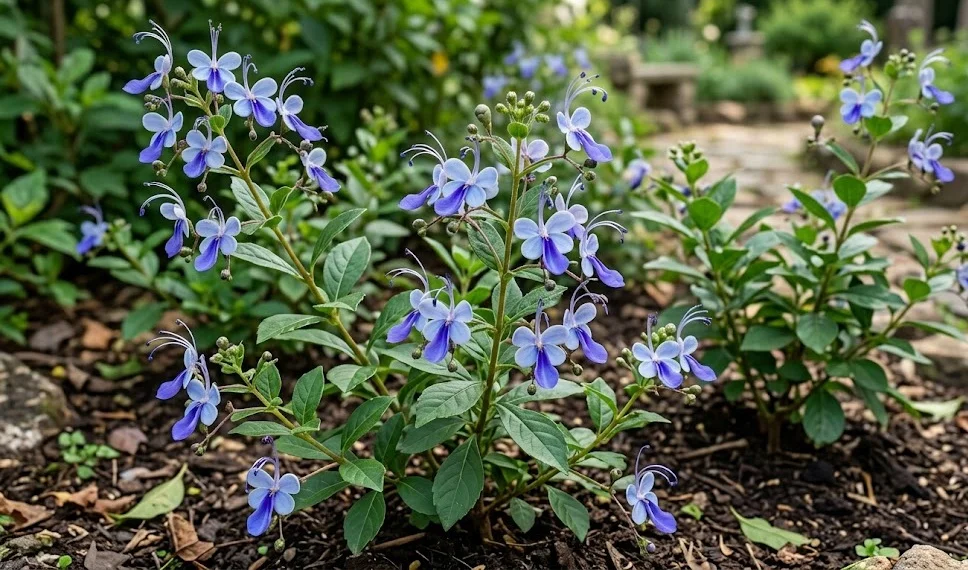
Thinning out the center of the shrub is another important task that helps to improve air circulation and light penetration throughout the plant. You should remove any branches that are crossing over each other or growing toward the middle rather than outward. This open structure reduces the risk of fungal infections and ensures that even the inner leaves can photosynthesize effectively. A well-pruned plant looks much more organized and allows the beautiful blue flowers to be seen more clearly from the outside.
Heading back the main stems by about a third of their length can help to stimulate a more compact and bushy growth habit in your specimen. You should make your cuts just above a healthy leaf node or a dormant bud to encourage new side shoots to develop. This technique is particularly useful if your plant has become “leggy” or has too much bare stem at the bottom. By consistently pinching and pruning your butterfly bush, you can create a dense wall of green foliage and blue blossoms.
Techniques for shaping and encouraging blooms
If you want to maximize the amount of flowers your plant produces, you can use a technique called “deadheading” throughout the summer months. This involves removing the spent flower clusters as soon as they begin to fade and lose their vibrant blue color. By doing this, you prevent the plant from wasting energy on seed production and encourage it to produce a new set of flower buds. This simple task can significantly extend the blooming season and keep the plant looking fresh and tidy for several months.
More articles on this topic
For older plants that have become very woody and less productive, you might consider a more radical “rejuvenation pruning” every few years. This involves cutting some of the oldest, thickest stems back to near the base of the plant to encourage entirely new growth from the roots. You should only do this to about a third of the stems at a time to avoid shocking the plant and ensuring it still has enough foliage to survive. Over three years, you can completely refresh the entire structure of the shrub, giving it a new lease on life.
Training your butterfly bush into a specific shape, such as a formal globe or a tree-like standard, requires a more disciplined and long-term approach to pruning. You must consistently remove any growth that does not fit into your desired form, even during the active growing season. For a standard, you would choose a single strong central leader and remove all the lower side branches until the “trunk” reaches the height you want. It takes patience and a steady hand, but the resulting specimen can be a stunning architectural element in any professional garden design.
Always pay attention to the natural growth pattern of the species when you are deciding where and how much to cut back on your plant. The blue butterfly bush has a naturally graceful and somewhat arching habit that many gardeners find very attractive and charming. You should aim to enhance this natural form rather than trying to force the plant into a shape that is completely foreign to its biological tendencies. Working with the plant’s inherent structure will always yield the most beautiful and professional-looking results in your horticultural endeavors.
Tool maintenance and safety during pruning
Keeping your pruning tools in top condition is not just about making the job easier, but also about protecting the health of your prized plants. You should regularly sharpen the blades of your shears and loppers to ensure they make clean, surgical cuts every time you use them. Dull blades can crush the stems of the butterfly bush, leaving behind ragged wounds that are slow to heal and prone to infection. A small investment in a sharpening stone and some tool oil will pay off in the long-term health and appearance of your garden.
More articles on this topic
Sanitizing your tools between plants is a critical step that many home gardeners overlook but is a standard practice for professional horticulturists everywhere. You can use a simple solution of isopropyl alcohol or a specialized garden disinfectant to wipe down the blades after working on each specimen. This prevents the accidental transfer of microscopic pathogens like fungi or bacteria from one plant to another through the open pruning wounds. Maintaining a clean work environment is one of the best ways to ensure your butterfly bush remains healthy and vibrant throughout its life.
When you are pruning, you should also be mindful of your own safety and the physical comfort of the plant as you handle its branches. Wear a good pair of gardening gloves to protect your hands from scratches and to give you a better grip on the stems and tools. Always make sure you have a stable footing if you need to reach higher parts of a large shrub to avoid falls or accidental damage to the plant. Taking your time and being deliberate with each cut will lead to a better outcome for both you and your blue butterfly bush.
Finally, remember to step back frequently and look at the overall shape of the plant from a distance as you are working on it. It is very easy to get caught up in the details of a single branch and lose sight of how the whole shrub is coming together visually. By regularly checking the overall balance and symmetry, you can avoid over-pruning one side and ensure a pleasing final result. Successful pruning is as much an art form as it is a science, requiring both technical knowledge and a good eye for natural beauty.