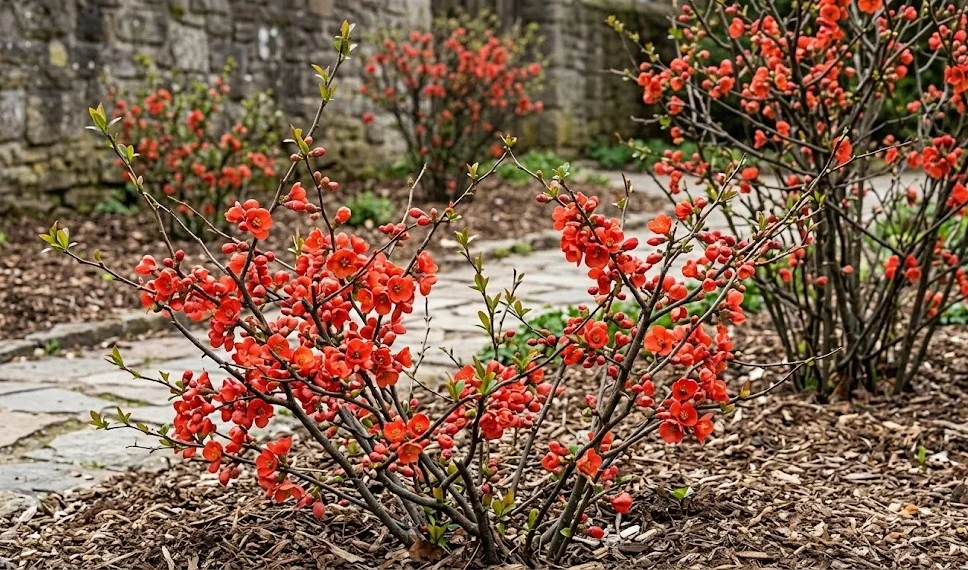

Watering is a fundamental aspect of maintaining a healthy Japanese quince, especially during its first few years in your garden landscape. While mature shrubs are relatively drought-tolerant, young plants need consistent moisture to develop a deep and resilient root system. You should aim to keep the soil consistently damp but never waterlogged, as poor drainage can quickly lead to root rot issues. Understanding the natural rhythm of your local climate is the first step in creating an effective irrigation schedule.
During the spring and summer months, the water requirements of the shrub will increase significantly as it produces new foliage and fruit. You should monitor the soil moisture regularly by checking the top few inches of the ground around the base of the plant. If the soil feels dry to the touch, it is time to provide a deep soaking that reaches the entire root zone. Shallow watering should be avoided, as it encourages roots to stay near the surface where they are more vulnerable to heat and drought.
Environmental factors like wind, temperature, and humidity will all play a role in how quickly the soil dries out in your specific garden. On particularly hot or windy days, the rate of evaporation increases, meaning you might need to water more frequently than usual. Using a soaker hose or drip irrigation system is often the most efficient way to deliver water directly to the roots while keeping the foliage dry. This targeted approach reduces water waste and helps prevent the development of fungal diseases on the leaves.
As the growing season winds down in the autumn, you can gradually reduce the frequency of irrigation to allow the plant to prepare for dormancy. However, it is important to ensure the shrub goes into the winter with adequate moisture, especially in regions with dry winters. A final deep watering before the ground freezes can help the plant survive the dehydrating effects of cold winds. Observing your plant’s leaves for signs of wilting or curling will always be your best guide for adjusting your watering habits.
Managing soil moisture and drainage
The success of your irrigation efforts is closely tied to the structure and drainage capabilities of the soil in which your quince is planted. Japanese quinces are sensitive to “wet feet,” meaning they do not perform well in areas where water stands for long periods after a rainstorm. If your garden has heavy clay soil, you may need to take extra steps to ensure that excess moisture can drain away from the root ball. Creating a slightly raised mound for planting can be an effective way to improve drainage in problematic areas.
More articles on this topic
Incorporating organic matter such as compost or well-rotted manure into the soil can dramatically improve its ability to manage water. Organic material helps heavy soils drain better while simultaneously helping sandy soils retain the moisture that the plant needs. This creates a more stable environment for the roots and reduces the stress caused by extreme fluctuations in soil moisture. A healthy soil structure acts like a sponge, holding onto what the plant needs while letting the rest pass through.
Mulching is another professional technique that plays a vital role in moisture management for garden shrubs. A three-inch layer of organic mulch, such as wood chips or shredded bark, helps to insulate the soil and slow down evaporation. This means you will need to water less often, and the moisture level in the ground will remain more consistent throughout the day. Mulch also prevents the soil surface from crusting over, which allows irrigation water and rainfall to penetrate more easily into the root zone.
You should also be aware of the “rain shadow” effect if your Japanese quince is planted near a wall or under the canopy of a large tree. These locations may stay dry even after a light rain, requiring you to provide supplemental water manually. Regularly checking the moisture level in these specific spots ensures that the shrub isn’t quietly suffering from drought while the rest of the garden is wet. A proactive approach to monitoring drainage and moisture will prevent most of the common health problems associated with improper watering.
Understanding nutrient requirements
To produce its characteristic vibrant flowers and firm fruit, the Japanese quince requires a steady supply of essential nutrients from the soil. Nitrogen is necessary for healthy leaf and stem growth, while phosphorus is critical for flower development and root strength. Potassium helps the plant regulate its internal water balance and improves its overall resistance to diseases and environmental stress. A balanced nutritional profile ensures that the shrub remains vigorous and productive year after year without becoming overly leggy.
More articles on this topic
In many garden settings, the native soil provides a good foundation, but supplemental feeding can help the plant reach its full aesthetic potential. You should perform a soil test every few years to determine which nutrients might be lacking or if the pH level needs adjustment. Japanese quinces prefer slightly acidic conditions, and if the soil becomes too alkaline, the plant may struggle to absorb iron. This often results in yellowing leaves, a condition that can be easily corrected once the underlying cause is identified.
Organic fertilizers are often the best choice for shrubs because they release nutrients slowly over time as they are broken down by soil microbes. Using compost, bone meal, or specialized organic shrub foods nourishes the plant while also improving the long-term health of the soil. This approach mimics the natural nutrient cycle found in the wild and leads to more sustainable growth patterns. Chemical fertilizers can provide a quick boost but may lead to a buildup of salts in the soil if used excessively over many years.
You should also consider the role of micronutrients like magnesium, calcium, and sulfur in the overall health of your Japanese quince. While these are needed in much smaller quantities, their absence can still cause significant growth issues and reduced flowering. Most high-quality organic fertilizers and well-made composts contain a wide range of these trace elements. Keeping your soil biologically active ensures that these nutrients are processed and made available to the plant’s root system in a form it can use.
Timing and techniques for fertilization
The timing of fertilizer application is just as important as the type of nutrients you choose to provide for your shrub. The most effective time to feed a Japanese quince is in early spring, just as the buds begin to show the first signs of swelling. This provides the plant with a boost of energy right when it is preparing for its most intensive period of growth and flowering. Avoid fertilizing in late summer or autumn, as this can encourage soft new growth that won’t have time to harden off before the first frost.
When applying granular fertilizer, you should spread it evenly over the entire root zone, which typically extends slightly beyond the drip line of the branches. Avoid piling fertilizer against the main trunk of the shrub, as the concentrated nutrients can cause chemical burns to the bark. Use a garden rake to lightly incorporate the granules into the top inch of soil or mulch to prevent them from washing away. This ensures that the nutrients stay where they are needed and are slowly moved down to the roots by subsequent watering.
After applying any type of fertilizer, it is essential to water the area thoroughly to begin the process of nutrient delivery. Water dissolves the fertilizer components and carries them into the soil profile where the root hairs can absorb them. If you are using liquid fertilizers, they should be applied to already moist soil to prevent potential root damage from high concentrations. Following these simple technical steps ensures that your feeding program is both safe and effective for the plant.
For older or established shrubs, a single application of balanced fertilizer in the spring is usually all that is required for the entire year. If you have a very young plant or are growing your quince in a container, you might consider a second, lighter feeding in early summer. Always follow the manufacturer’s instructions regarding application rates to avoid over-fertilizing, which can be just as harmful as under-feeding. Professional gardeners know that a “less is more” approach often yields the best results when it comes to supplemental nutrition.
Identifying signs of nutritional issues
Being able to read the visual cues provided by the plant’s foliage is a vital skill for any serious gardener or landscape professional. If you notice that the leaves are turning pale green or yellow starting from the bottom of the shrub, it may be a sign of nitrogen deficiency. Conversely, if the plant is producing a massive amount of dark green leaves but very few flowers, you might be providing too much nitrogen. Balancing the diet of the plant requires constant observation and a willingness to adjust your care routine based on what you see.
Iron chlorosis is one of the most common nutritional problems for Japanese quince, particularly in areas with hard water or alkaline soil. This condition manifests as bright yellow leaves with distinct green veins, usually appearing first on the newest growth at the tips of the branches. You can treat this by applying chelated iron to the soil or as a foliar spray for a quicker but more temporary fix. However, the long-term solution usually involves lowering the soil pH using sulfur or acidic organic matter like pine needles.
If the edges of the leaves appear burnt or brown, it could indicate a potassium deficiency or a buildup of salts from over-fertilization or poor water quality. Stunted growth and a lack of vigor, even when water is plentiful, often point toward a more general lack of essential nutrients or poor soil health. In these cases, a thorough soil test is the only way to accurately diagnose the problem and create a targeted recovery plan. Addressing these issues early prevents long-term damage to the plant’s structure and productivity.
Finally, keep in mind that many environmental stresses can mimic the symptoms of nutritional deficiencies, such as drought, over-watering, or pest damage. You should rule out these common physical factors before assuming that the plant needs more fertilizer. Taking a holistic view of the plant’s health allows you to provide the right solution for the specific problem at hand. A healthy Japanese quince is a reflection of a balanced environment where all its biological needs are being met consistently.