
Caring for this ornamental shrub requires a deep understanding of its natural rhythms and environmental preferences to ensure its vibrant foliage remains healthy. Gardeners often appreciate its resilience, yet they must remain attentive to its specific needs regarding soil quality and space management to prevent overcrowding in the garden. Providing a stable environment allows the plant to develop its signature deep purple or red hues that characterize its visual appeal throughout the growing season. A systematic approach to maintenance ensures that the shrub thrives for many years while maintaining its structural integrity and ornamental value.
To start with the basics of development, the root system needs a well-drained medium to avoid the pitfalls of stagnant water which often leads to decay. It is important to monitor the surrounding soil density as heavy clay can impede the natural expansion of the roots during the early growth stages. Professionals recommend testing the soil periodically to maintain a slightly acidic to neutral environment for optimal nutrient uptake. Ensuring that the site allows for adequate air circulation is also a critical factor in preventing common moisture-related issues that might affect the inner branches.
As the shrub matures, it exhibits a remarkable ability to adapt to various microclimates, although it consistently performs best in moderate temperate conditions. Observations show that younger specimens require more frequent observation until they establish a robust enough structure to withstand minor environmental stressors. We should pay close attention to the base of the plant to ensure that no debris or fallen leaves accumulate too heavily, which could harbor unwanted pathogens. Consistent observation during the spring months helps in identifying any potential growth irregularities before they become significant problems for the entire plant.
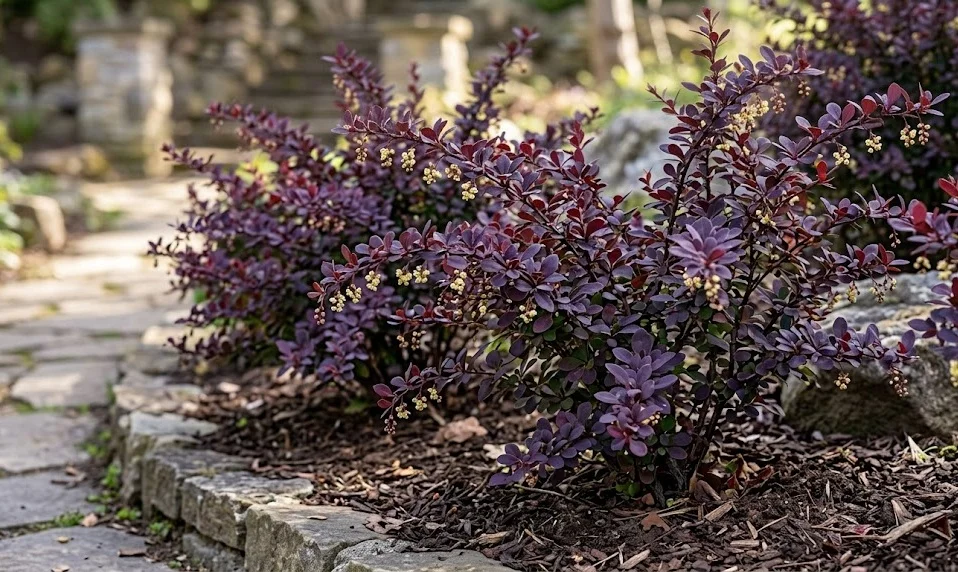
The aesthetic management of the Japanese barberry involves more than just keeping it alive; it is about maximizing its potential as a focal point. Its dense growth habit makes it an excellent choice for borders, but this density requires us to ensure that internal light penetration is sufficient. If the center of the shrub becomes too thick, the inner leaves may lose their color and eventually drop off prematurely. By maintaining a balance between growth and space, we allow the plant to breathe and showcase its unique textures effectively against other garden elements.
Environmental adaptability and resilience
This particular shrub is widely known for its ability to withstand urban pollution and various soil types once it has been properly established. It can handle periods of dry weather remarkably well, making it a favorite for gardeners looking for low-maintenance yet beautiful options. However, we should never mistake resilience for complete neglect, as the plant still requires basic seasonal care to look its best. Integrating the shrub into a diverse landscape helps it build a natural resistance to localized environmental shifts and temperature fluctuations.
More articles on this topic
The growth rate of the Japanese barberry is typically moderate, allowing for predictable planning within a larger landscape design. It rarely outgrows its designated space too quickly, but we must account for its ultimate width to avoid crowding neighboring perennials. When plants are spaced correctly, they develop a more uniform shape and are less likely to compete for vital resources like surface moisture. Understanding the mature dimensions of the specific cultivar being grown is the first step toward a successful and harmonious garden layout.
Seasonal transitions bring about changes in the metabolic rate of the shrub, requiring different levels of attention from the caretaker. In the height of summer, the focus shifts toward maintaining hydration levels, while the autumn focuses on preparing the wood for dormancy. We should watch for the transition of leaf color as a primary indicator of the plant’s overall health and physiological status. Proper preparation during these transitional phases ensures that the shrub enters each new season with enough energy reserves to flourish.
Common mistakes in caring for this plant often stem from over-watering or planting it in areas with poor light exposure. It is a frequent misconception that more water leads to faster growth, whereas it actually often causes root stress in this species. Another error is neglecting the removal of dead or damaged wood, which can serve as an entry point for various environmental threats. By following a structured care routine and avoiding these pitfalls, the Japanese barberry remains a stunning and reliable addition to any professional landscape.
Long term vitality and companion planting
For a Japanese barberry to live a long and healthy life, the focus must remain on the quality of the surrounding ecosystem. Regularly refreshing the mulch around the base helps retain moisture while also suppressing weeds that might compete for nutrients. We must be careful not to pile mulch directly against the bark, as this can cause moisture traps and lead to bark rot. A well-managed root zone is the foundation upon which the longevity of the entire shrub is built and maintained.
More articles on this topic
Choosing the right companions for this shrub can enhance both its health and its visual impact within the garden. Plants with silver or lime-green foliage provide a striking contrast to the deep purples of the barberry, creating a professional and polished look. It is beneficial to select companions that share similar water and light requirements to simplify the overall maintenance schedule of the garden bed. Such strategic planting not only looks better but also creates a more stable microhabitat for all the plants involved.
The structural integrity of the plant becomes increasingly important as it ages and becomes a permanent fixture in the garden. Older specimens may develop a more gnarled or woody appearance, which can be an intentional aesthetic choice or something to be managed through careful intervention. We should evaluate the plant’s structure every few years to ensure that the weight of the branches is distributed evenly. This proactive approach prevents breakage during heavy storms or under the weight of winter snow, preserving the plant’s form.
Finally, the health of the Japanese barberry is often a reflection of the gardener’s consistency in providing basic needs. While it is a hardy plant, it thrives most when its specific preferences for drainage and light are met with professional precision. We must remember that every garden is unique, and small adjustments to the care routine may be necessary based on local weather patterns. Ultimately, a dedicated care plan results in a vibrant, healthy specimen that enhances the landscape for decades to come.