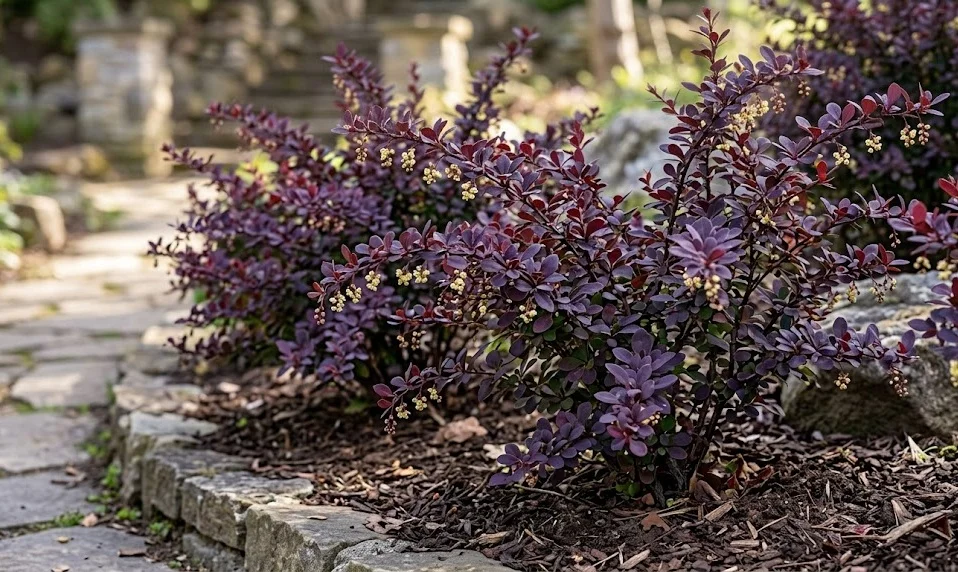

Pruning is an essential maintenance task that keeps the Japanese barberry healthy, attractive, and within its designated space in the landscape. Because this shrub can become quite dense and carries sharp spines, a professional approach to trimming is necessary for both the plant’s health and the gardener’s safety. Regular intervention prevents the center of the shrub from becoming a tangled mass of dead wood and encourages the production of fresh, colorful stems. Understanding the correct timing and technique ensures that the plant remains a structured and beautiful element of the garden.
The best time for pruning is usually in the late winter or very early spring before the new growth begins to emerge. This timing allows us to see the structure of the branches clearly without the distraction of the leaves, making it easier to identify damaged wood. It also gives the plant an entire growing season to recover from the cuts and produce new foliage that will cover any temporary gaps. We should avoid heavy pruning in the late summer or autumn, as this can stimulate new growth that will not survive the upcoming winter frost.
Shaping techniques vary depending on whether the plant is being grown as an informal specimen or as part of a structured hedge. For a natural look, we should focus on thinning out the oldest branches at the base of the plant to improve light penetration and air circulation. If a formal hedge is desired, shearing the outer surface of the shrub several times a year will maintain a crisp, clean outline. We must always be careful to keep the bottom of the hedge slightly wider than the top so that the lower branches receive enough sunlight to stay leafy.
Tool maintenance and safety are paramount when working with the Japanese barberry due to its sharp thorns and dense branching. We should always wear thick, puncture-resistant gloves and long sleeves to protect our skin from the defensive spines of the plant. Using sharp, clean bypass pruners ensures that the cuts are smooth and heal quickly, reducing the risk of introducing pathogens into the stems. After each pruning session, cleaning the tools with a disinfectant prevents the accidental spread of diseases between different plants in the garden.