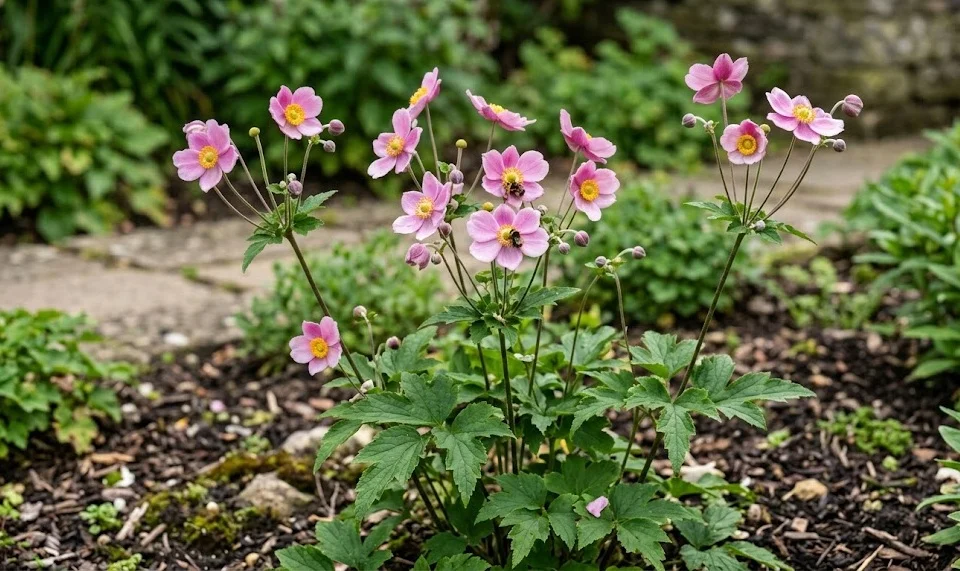

Understanding the specific lighting preferences of the Japanese anemone is a fundamental requirement for any gardener wishing to see this plant reach its full potential. While it is often classified as a shade-tolerant perennial, its relationship with sunlight is more complex and nuanced than a simple label might suggest. In its native woodland habitats, this species thrives in the filtered light found under the canopy of tall trees, where the intensity of the sun is significantly reduced. Replicating this balance of light and shadow in a domestic garden is the key to producing healthy foliage and a prolific floral display.
A professional approach to positioning these plants involves identifying areas that receive “bright indirect light” or “dappled shade” for the majority of the day. This typically means a spot that gets some morning sun when the temperatures are cooler, followed by protection from the harsh, direct rays of the afternoon. When exposed to too much direct sunlight, especially in warmer climates, the large leaves can quickly lose moisture and develop unsightly scorched edges. Conversely, a site that is too dark will result in weak, leggy stems that struggle to support the weight of the flowers later in the season.
The intensity of the light is just as important as the duration, and this can vary significantly depending on your geographic location and the time of year. In northern regions with cooler summers, Japanese anemones can often tolerate more direct sun than they would in the south. Gardeners must observe how the light moves across their landscape throughout the growing season, as a spot that is shady in May might be in full sun by July. Being prepared to provide temporary shade or adjust the plant’s environment is a hallmark of an attentive and successful horticulturist.
Light also plays a direct role in the timing and quality of the blooming period, which is the main attraction of this species. The plant uses light cues to regulate its internal clock, signaling when it is time to move from leaf production to flower development. A plant that receives the perfect amount of light will produce sturdier stalks and more vibrant, long-lasting blossoms. By mastering the light requirements of your Japanese anemones, you ensure that they remain a healthy and beautiful centerpiece of your late-summer garden for many years.
Finding the ideal balance for optimal growth
The quest for the perfect lighting for your anemones often involves a bit of trial and error as you learn the unique characteristics of your specific garden site. A location on the east side of a house or a large hedge is often ideal, as it provides that sought-after morning sun and afternoon shade. If you are planting in an open area, consider placing the anemones on the north side of taller perennials or shrubs that can act as a natural parasol. This layering of plants creates a microclimate that mimics the natural woodland edges where these flowers truly belong.
More articles on this topic
When evaluating a potential planting site, pay attention to the “quality” of the shade provided by nearby structures or trees. “Deep shade,” such as that found under evergreen trees or in narrow alleys between buildings, is generally too dark for the Japanese anemone to thrive. You are looking for “high shade,” where the canopy is high enough to allow plenty of ambient light to reach the ground level. This environment provides enough energy for photosynthesis while keeping the ambient temperature low enough to prevent heat stress on the foliage.
If you notice that your plants are leaning heavily in one direction, it is a clear sign that they are reaching for more light. This “phototropism” can lead to an unattractive, lopsided appearance and makes the tall flower spikes more prone to falling over. In such cases, you may need to prune back overhanging branches from nearby trees to allow more light to filter down to the anemone bed. Small adjustments to the surrounding vegetation can have a massive impact on the structural integrity and health of your perennials.
For those with very sunny gardens, it is still possible to grow Japanese anemones if you are willing to provide extra care and attention. In these situations, keeping the soil consistently moist is the only way the plant can survive the increased transpirational pull caused by the sun. Some professional gardeners use lattice screens or shade cloth during the hottest weeks of summer to protect their prized specimens from the most intense radiation. While not always the most aesthetic solution, it can be a necessary step in ensuring the survival of the plant in a challenging environment.
Adapting to seasonal and environmental changes
The light requirements of the Japanese anemone are not static and can change as the plant moves through different stages of its growth cycle. In the early spring, when the leaves are first emerging, they are particularly sensitive to sudden changes in light intensity. If you are moving a plant from a greenhouse or a shaded nursery to a sunnier spot in your garden, it must be “hardened off” gradually. This involves exposing the plant to increasing amounts of light over several days to allow the leaf tissues to toughen up and adapt.
More articles on this topic
As the season progresses into the long days of mid-summer, the plant’s ability to handle light is closely tied to the available moisture in the soil. On a very hot, bright day, the plant may wilt slightly even if the soil is damp, as it cannot move water fast enough to keep up with evaporation from the leaves. This is a natural defense mechanism, and the plant should recover once the sun goes down and the temperatures cool. However, if the wilting persists into the evening, it is a sign that the light levels are too high for the current moisture conditions.
The transition into autumn brings lower light angles and shorter days, which is exactly what triggers the Japanese anemone to begin its flowering phase. During this time, the plant is less prone to sunscald, and the cooler temperatures allow the flowers to last much longer than they would in the heat. Many gardeners find that their anemones look their best during these weeks of soft, golden autumn light. The interaction between light and temperature at the end of the season is what creates the magical atmosphere that these plants are known for.
Finally, consider how the light in your garden might change over the years as trees grow and the landscape matures. A spot that was perfect for anemones ten years ago might now be in deep shade due to the growth of a neighboring oak or maple. Conversely, if a large tree is removed, a previously shaded bed might suddenly be exposed to full, scorching sun. Being a professional gardener means staying aware of these long-term shifts and being ready to move or adapt your plants as the environment evolves around them.