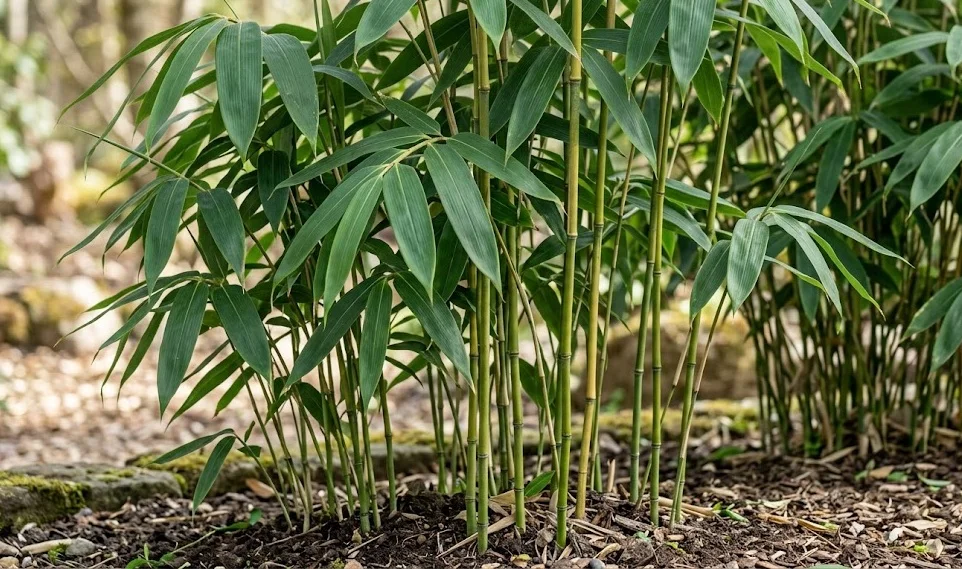

The interaction between light and foliage is a defining factor in the development and health of Japanese arrow bamboo. Unlike many bamboo species that demand full sun to reach their full potential, this particular plant is celebrated for its remarkable versatility in various lighting conditions. Professional landscape design often utilizes this species for its ability to thrive in the “difficult” shadows of a garden where other structural plants might fail. Understanding the nuances of light intensity and duration allows a gardener to manipulate the plant’s growth habit and aesthetic appearance to suit specific design goals.
Sun exposure and foliage quality
In its native habitat, Japanese arrow bamboo often grows in the understory of forests or along the edges of wooded areas, where it receives dappled sunlight. When grown in a garden setting, it can adapt to full sun, but this often results in a different physical appearance compared to shade-grown specimens. In high-intensity light, the leaves tend to be slightly smaller, more upright, and may take on a lighter, more yellowish-green hue. A professional must balance this sun exposure with consistent moisture, as full sun dramatically increases the plant’s water demand.
While the plant can tolerate direct sunlight, the intense midday sun in hotter climates can lead to leaf scorch, where the edges of the large leaves turn brown and dry. This is especially true during the summer months when heat and light intensity are at their peak. For this reason, many experts recommend a site that provides morning sun and afternoon shade, which protects the foliage during the harshest part of the day. This balance ensures the plant remains vigorous while maintaining the deep, glossy green color that is so highly prized.
The culms of the bamboo also respond to light levels, with those in sunnier locations often growing more densely and reaching their maximum height more quickly. Sunlight triggers the production of specialized cells that strengthen the bamboo’s structure, making it more resistant to wind and snow. However, if the light is too intense and the soil is poor, the plant may look “stressed” rather than lush. A professional approach involves monitoring the plant’s reaction to its site and providing supplemental shade or water if the sun exposure proves to be too aggressive.
In modern landscaping, this bamboo is frequently used to create “light-filtering” screens that block unwanted views without making a space feel dark or enclosed. The way sunlight catches the broad leaves creates a shimmering effect that adds a sense of movement and life to the garden. By carefully considering the angle and intensity of the sun throughout the seasons, a designer can position the bamboo to maximize its visual impact. Whether in sun or shade, the plant’s ability to process light into energy is the foundation of its impressive growth.
More articles on this topic
Shade tolerance and understory growth
One of the most valuable attributes of Japanese arrow bamboo is its exceptional shade tolerance, making it a “problem-solver” for dark corners and north-facing walls. In deep shade, the leaves grow larger and broader as the plant attempts to maximize its surface area for photosynthesis. This creates a more “tropical” and lush appearance that is often preferred for woodland gardens or Zen-style landscapes. The color of shade-grown foliage is typically a much deeper, richer forest green than that of plants grown in the sun.
While it thrives in partial to full shade, it is important to distinguish between “bright shade” and “dense, dark shade.” In areas with almost no light, such as under very thick evergreen canopies, the growth of the bamboo may become sparse and “leggy” as it stretches toward any available light source. The culms may be thinner and less sturdy, and the plant may spread more aggressively as the rhizomes search for a better location. Providing at least some indirect or filtered light is necessary to maintain a healthy and dense structure.
Professional gardeners often use this species to “green up” the spaces beneath high-canopy trees where grass and other shrubs struggle to survive. Because it can handle the root competition and the lower light levels, it creates a seamless transition between the ground and the tree line. In these shaded environments, the bamboo requires less frequent watering because evaporation rates are much lower. However, it is still important to ensure that the “rain shadow” of the larger trees does not prevent moisture from reaching the bamboo’s roots.
The aesthetic of a shade-grown grove is one of quiet elegance and structural depth. The large leaves overlap to create a dense wall of green that can hide fences or provide a soft backdrop for shade-loving perennials like hostas and ferns. When managed correctly, a shaded bamboo planting can become a cool, inviting retreat during the heat of the summer. The ability of Japanese arrow bamboo to turn limited light into a massive wall of greenery is a testament to its evolutionary success as an understory species.
More articles on this topic
Light management in indoor and transition spaces
Because of its adaptability to lower light levels, Japanese arrow bamboo is sometimes used in large indoor spaces, such as atriums, sunrooms, or commercial lobbies. In an indoor environment, the primary challenge is providing enough light of the correct spectrum to sustain the plant’s high energy needs. Placing the bamboo near large, south-facing windows or under skylights is usually sufficient to keep it healthy. However, even in these bright spots, the light intensity is significantly lower than outdoors, so growth will naturally be slower.
If the indoor light is insufficient, the plant will begin to shed its inner leaves and the new culms will be weak and spindly. Supplemental lighting with full-spectrum LED grow lights can be used to bridge the gap and maintain the plant’s density. These lights should be positioned to provide even coverage across the entire height of the plant to prevent it from leaning toward a single light source. Professional interior designers often use timers to ensure the bamboo receives a consistent twelve to fourteen hours of light each day.
Transitioning a plant from a low-light indoor environment to a bright outdoor spot must be done gradually to avoid “light shock” or leaf burn. The leaves that developed in the shade are not physiologically equipped to handle direct UV radiation and will scorch almost immediately if moved too fast. A professional process involves moving the plant to a sheltered, shady spot outdoors for a few hours a day and slowly increasing its exposure over several weeks. This allows the plant to build up its protective pigments and adjust its metabolic rate to the new environment.
Conversely, a plant moved from full sun to a dark indoor space may experience significant leaf drop as it sheds foliage it can no longer support. Understanding these “light budgets” is essential for anyone using bamboo in a decorative or temporary capacity. By matching the plant’s light requirements with the reality of the site, a gardener ensures a long and healthy life for the bamboo. Whether it is anchoring a garden bed or softening a modern office space, the right light is the key to the plant’s success.