
Mastering the precise application of supplemental moisture and targeted chemical nutrients is essential for maximizing both foliage vigor and floral brilliance. These specific plants possess highly specialized root systems that demand a delicate balance between adequate hydration and strict drainage. Haphazard watering practices inevitably lead to either severe physiological drought stress or catastrophic subterranean fungal infections. A professionally calibrated fertilization regimen ensures that the biological mechanisms governing bloom production operate at absolute peak efficiency.
The baseline moisture requirements of this species fluctuate dramatically depending on the specific phase of its annual growth cycle. During the active autumnal root development and vernal shoot elongation periods, consistent and even hydration is biologically mandatory. Conversely, the summer dormancy phase requires an almost completely arid environment to allow the underground structures to rest and cure. Recognizing and respecting these distinct seasonal shifts is the fundamental principle of successful water management.
Nutritional interventions must be similarly timed to coincide exactly with the plant’s natural metabolic demands. Applying potent fertilizers during periods of biological inactivity is not only financially wasteful but highly toxic to the dormant tissues. The primary goal of any nutritional program is to support rapid early growth without encouraging excessively weak, vegetative elongation. Professionals rely on specific, targeted applications rather than broad, continuous chemical saturation.
The interaction between soil structure, ambient temperature, and water retention heavily influences the frequency of both irrigation and feeding. Sandy, highly porous substrates necessitate more frequent, lighter applications of both water and water-soluble agricultural nutrients. Heavier soils retain chemistry and moisture longer, requiring a highly disciplined, conservative approach to prevent fatal root zone suffocation. Continuous monitoring of the micro-environment dictates the precise, day-to-day adjustments required for optimal plant health.
Establishing an irrigation schedule
Creating a scientifically sound irrigation protocol requires constant vigilance and an intimate understanding of localized evaporation rates. During the critical spring growth surge, the soil must be kept uniformly moist but never visibly waterlogged or stagnant. Cultivators must manually probe the soil profile regularly to assess hydration levels well below the visible surface layer. Providing deep, infrequent soakings is vastly superior to frequent, shallow sprinklings that only moisten the extreme topsoil.
More articles on this topic
Deep watering encourages the delicate root hairs to aggressively seek moisture deeper within the stabilizing earth profile. This downward root proliferation creates a structurally resilient plant capable of withstanding unexpected periods of atmospheric drought. Shallow, daily watering trains the root system to remain near the surface, rendering the plant highly susceptible to rapid desiccation. Implementing a calculated, deep-soaking schedule fundamentally alters the physical architecture of the underground support system for the better.
The method of water delivery is equally as important as the specific volume of liquid applied to the bed. Overhead sprinkling systems should be strictly avoided, as they needlessly wet the foliage and create an ideal environment for fungal spores. Precision drip irrigation lines placed directly on the soil surface deliver moisture exactly where it is required without collateral wetting. This targeted delivery method maximizes water efficiency and drastically reduces the incidence of foliar disease outbreaks.
As the late spring temperatures naturally increase, the frequency of irrigation must be carefully and continuously monitored. The rapid expansion of the floral stalk combined with increased solar radiation dramatically accelerates the natural transpiration rate. However, once the flowers completely fade, the irrigation schedule must be immediately and sharply curtailed to induce necessary dormancy. Failing to restrict water during the early summer transition inevitably leads to massive, catastrophic bulb loss due to rot.
Managing moisture during anthesis
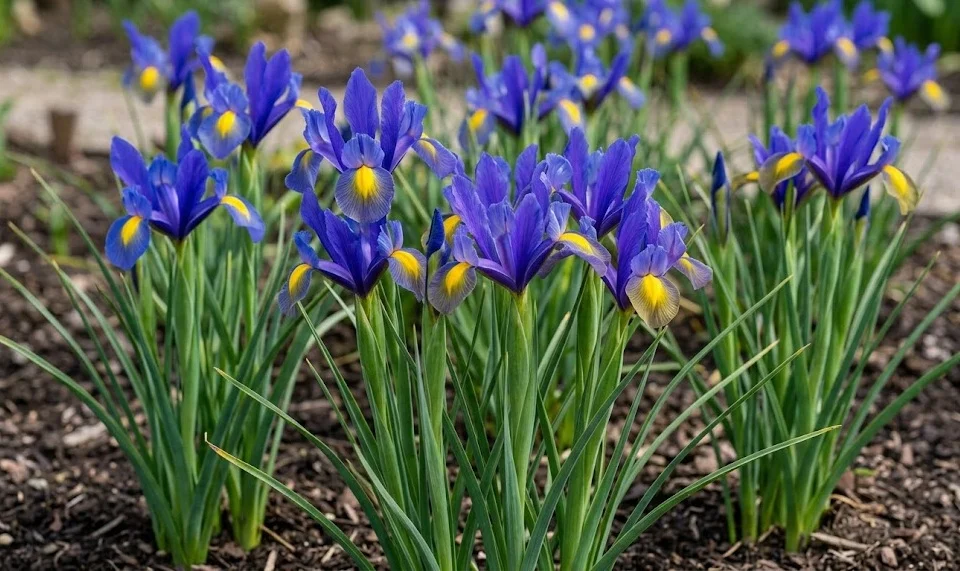
The brief, spectacular period of active blooming, known botanically as anthesis, represents the peak of the plant’s hydraulic demand. The expanding petals consist largely of complex cellular water matrices that require continuous, uninterrupted hydraulic pressure from the roots. Even a temporary deficit in soil moisture during this specific window will cause the blossoms to instantly wilt and abort. Cultivators must maintain absolute vigilance to ensure the substrate remains consistently supportive without becoming anaerobic.
More articles on this topic
Atmospheric humidity also plays a significant secondary role in maintaining the turgidity and lifespan of the open flowers. In excessively dry climates, the rapid evaporation of moisture from the petal surfaces can outpace the root system’s extraction capacity. While overhead watering remains forbidden, lightly misting the surrounding pathways can temporarily elevate localized relative humidity safely. This advanced technique helps to preserve the pristine texture and vibrant pigmentation of the delicate floral structures.
Monitoring the physical weight and rigidity of the stalks provides immediate tactile feedback regarding internal hydration levels. A fully hydrated, optimally functioning plant will possess thick, unyielding stems that easily support the heavy terminal blooms. If the stalks begin to display even a slight, unnatural curvature or softness, emergency deep irrigation is immediately required. Swift, decisive action at the first sign of hydraulic stress can salvage a severely threatened commercial harvest.
The critical balance lies in providing maximum hydration without crossing the threshold into destructive soil saturation. Overcompensating with excessive water during a heatwave can quickly displace all vital oxygen from the delicate root zone. The roots subsequently suffocate, completely shutting down their water uptake mechanisms and ironically causing the plant to wilt from drought. Perfect moisture management during anthesis represents the absolute pinnacle of skilled horticultural practice.
Choosing the correct fertilizer
Selecting the appropriate chemical or organic nutritional supplement is a critical decision that dictates the qualitative outcome of the season. Standard, high-nitrogen lawn fertilizers are universally detrimental to these specific plants, promoting massive leaf growth at the expense of flowers. The ideal formulation must possess a highly skewed ratio, heavily favoring complex phosphorus and soluble potassium compounds. This specific chemical balance directly supports aggressive root development and subsequent robust floral bud initiation.
Phosphorus is the primary engine driving the rapid cellular division required for structural expansion and internal energy transfer. It is utterly indispensable during the initial autumnal planting phase to guarantee the establishment of a massive, supportive root network. Granular bone meal remains the gold standard organic source, providing a steady, reliable release of this critical element over months. Ensuring adequate soil phosphorus levels fundamentally secures the structural integrity of the entire organism.
Potassium serves primarily as a regulatory element, governing the efficiency of water usage and enhancing overall systemic disease resistance. It thickens the cellular walls of the stems, providing the immense physical strength required to support the heavy, rain-soaked blossoms. Adequate potassium also plays a crucial role in facilitating the final transfer of carbohydrates back into the bulb during senescence. A potassium deficiency inevitably results in structurally weak stalks and visibly inferior, short-lived floral displays.
The physical format of the fertilizer—granular, liquid, or organic composite—dictates the precise speed of elemental availability. Slow-release granular formulations provide baseline nutritional security throughout the extended, volatile spring growth period. Soluble liquid feeds offer a rapid, highly targeted infusion of precise chemistry when immediate physiological correction is deemed necessary. Professional growers often utilize a sophisticated combination of both formats to maintain absolute control over the nutritional environment.
Timing of nutrient application
The efficacy of any applied fertilizer is entirely dependent upon the precise, biological timing of its introduction to the system. The very first application must occur simultaneously with the autumnal planting to stimulate immediate, aggressive root zone activity. This initial feeding focuses almost exclusively on establishing the permanent subterranean infrastructure before the deep winter freeze arrives. Missing this critical first feeding window severely handicaps the plant’s overall biological potential for the entire subsequent year.
The second crucial feeding window opens exactly as the very first green shoots break through the soil surface in early spring. At this specific juncture, a carefully balanced, rapid-release application provides the raw fuel necessary for explosive vertical elongation. This targeted nutritional boost ensures that the developing floral stalk has access to immediately available, soluble chemistry. Precision timing during this rapid expansion phase directly translates into vastly superior final stalk height and overall caliber.
Once the floral buds are visibly formed and begin to swell, all nitrogen applications must be immediately and permanently halted. Late-season nitrogen pushes unnecessary soft green growth, detracting vital energy away from the final maturation of the blossom. Instead, a final, highly targeted application of soluble potassium is often utilized to maximize the intensity of the floral pigmentation. This highly calculated, final chemical adjustment is a standard practice among top-tier competitive exhibition growers.
Following the complete cessation of blooming, a final, light application of organic compost can be gently top-dressed around the stems. This provides a very mild, slow-release nutritional base to support the crucial post-bloom photosynthetic energy gathering phase. However, aggressive synthetic fertilization must be strictly avoided during this period of impending biological dormancy. The strict adherence to this precise chronological feeding schedule is the absolute hallmark of professional cultivation.