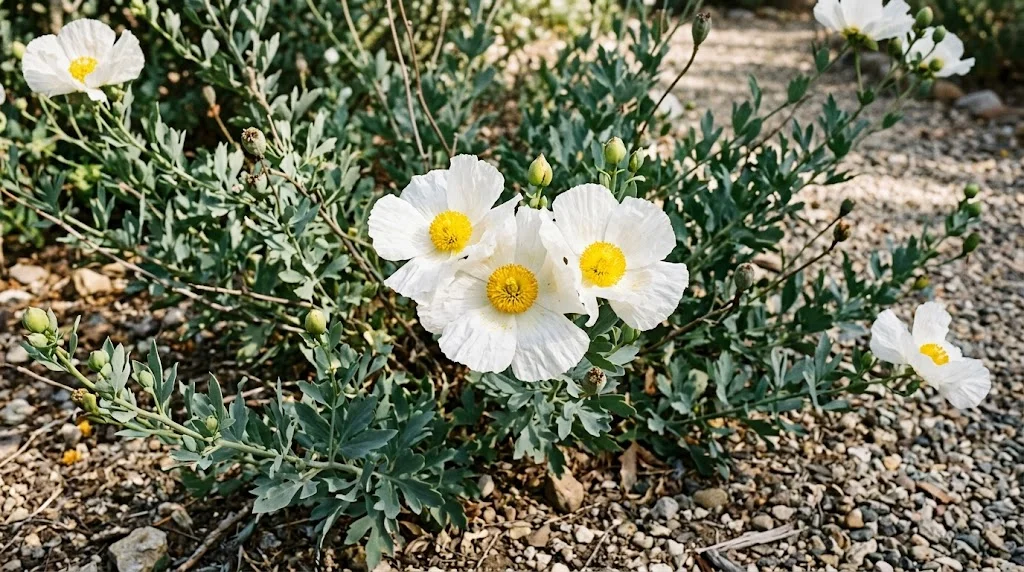

Matilija poppy is generally a robust ornamental when grown in full sun and sharply drained soil, but no plant is completely immune to stress, disease or pest damage. Most serious problems arise when cultural conditions weaken the roots or keep foliage wet for too long. Plants growing in heavy, saturated soil are far more vulnerable than those in open, dry situations with good air circulation. Effective protection therefore begins with prevention and correct cultivation rather than routine pesticide use.
Healthy specimens often experience only minor pest activity that does not justify intervention. Small holes, occasional discoloured leaves or temporary insect feeding may have little effect on an established clump. Before treating any symptom, identify whether it is actually causing progressive damage. Unnecessary spraying can disrupt beneficial insects without improving plant health.
Environmental stress can also imitate disease. Summer leaf decline may be part of the plant’s natural response to heat and drought rather than evidence of infection. Yellowing can result from excessively wet soil, while scorched margins may indicate severe water stress or transplant shock. Correct diagnosis prevents inappropriate treatments.
Inspect plants regularly during active growth. Pay particular attention to newly emerging shoots, leaf undersides, stem bases and the condition of the soil near the crown. Early detection makes genuine pest or disease problems much easier to manage. It also allows cultural causes to be corrected before secondary pathogens become established.
Root and crown problems
Root rot is among the most important potential problems in poorly drained gardens. Several soilborne organisms can exploit roots that remain deprived of oxygen in saturated conditions. Affected plants may wilt even though the soil is wet because damaged roots can no longer transport water effectively. Yellowing, weak growth and progressive collapse can follow.
More articles on this topic
Prevention is much more reliable than treatment. Plant on well-drained ground, avoid low spots where water accumulates and do not irrigate automatically when the soil is still moist. Raised beds or sloping sites can be useful in areas with heavy winter rainfall. Improving drainage before planting is far easier than trying to rescue an established plant from chronically wet soil.
Crown decay may develop when moisture remains trapped around the base of the stems. Deep organic mulch piled against the crown can contribute to this problem, especially in cool weather. Keep the immediate crown area relatively open and dry. Dead material should be removed when it begins to hold moisture against living tissue.
If severe root or crown rot is already established, recovery may be difficult. Reduce irrigation immediately and improve drainage wherever practical. Remove badly decayed material with clean tools and avoid spreading contaminated soil to healthy plants. Where an entire specimen collapses, replanting in the same poorly drained location without correcting the site will usually reproduce the problem.
Fungal and foliar disorders
Leaf spotting can occur when foliage remains wet for extended periods or air circulation is poor. Spots may appear brown, grey or dark-edged depending on the organism involved and the stage of infection. Minor spotting on older leaves may be largely cosmetic. Rapidly expanding lesions combined with widespread leaf decline deserve closer attention.
More articles on this topic
Powdery fungal growth may occasionally develop under suitable environmental conditions. Although powdery mildew does not require standing water on the leaf surface in the same way as many other fungi, crowded growth and fluctuating humidity can encourage outbreaks. Improve airflow and avoid excessive nitrogen fertilisation that creates dense, soft foliage. Severely affected leaves can be removed if this does not strip too much foliage from the plant.
Watering technique can influence foliar disease pressure. Irrigating the soil rather than repeatedly wetting the leaves is preferable, especially late in the day. If overhead watering is unavoidable, morning application allows foliage to dry more quickly. Mature Matilija poppies generally require so little irrigation that frequent foliage wetting should rarely be necessary.
Good sanitation reduces the amount of infected material remaining around the plant. Remove badly diseased leaves and dead stems rather than allowing them to accumulate in a dense layer around the crown. Clean cutting tools when moving between plants showing suspicious symptoms. Chemical fungicides should be considered only when a specific disease has been identified and cultural measures are insufficient.
Sap-feeding and chewing pests
Aphids may colonise tender new shoots and flower buds, particularly during periods of rapid spring growth. Small populations are often controlled naturally by predators such as ladybirds, lacewing larvae and hoverfly larvae. A strong jet of water can dislodge localised colonies without leaving pesticide residues. Persistent heavy infestations may require additional treatment, but broad-spectrum insecticides should not be the first response.
Spider mites can become troublesome in very hot, dry situations, especially if plants are stressed. Their feeding can produce fine stippling or a dull, bronzed appearance on foliage. Fine webbing may become visible when populations are high. Inspect leaf undersides with a hand lens if symptoms are suspicious.
Chewing insects may occasionally damage leaves, but established plants can often tolerate modest losses. The significance of damage depends on whether new growth is repeatedly destroyed or only scattered leaves are affected. Hand removal is practical for larger visible pests in a small garden. Correct identification is essential before using any targeted control.
Slugs and snails are less likely to dominate in the dry conditions that favour Matilija poppy, but they can attack fresh shoots in moist gardens. Damage is usually most important early in the season when new stems are tender. Reducing unnecessary moisture and removing dense hiding places around the crown can make the environment less favourable. Physical barriers or targeted controls may be used if damage becomes persistent.
Distinguishing pests from environmental stress
Wilting is often misinterpreted as a simple need for water. If the soil is dry several centimetres below the surface, irrigation may indeed be appropriate. If the soil is wet, however, wilting can indicate root dysfunction caused by poor aeration or decay. Adding more water in that situation can accelerate decline.
Yellow leaves also require context. Lower foliage may yellow naturally as stems age or as the plant moves into summer dormancy. Uniform yellowing during active growth in persistently wet soil points toward root stress rather than an immediate nutrient deficiency. Localised yellow patches associated with insects or lesions suggest a different cause.
Leaf scorch is another symptom with multiple explanations. Recently planted specimens can scorch after abrupt exposure to intense sunlight or drying winds, whereas established plants usually tolerate strong light extremely well. Salt accumulation from excessive fertiliser can also damage leaf margins. Review recent cultural practices before assuming a pathogen is responsible.
The seasonal cycle provides useful diagnostic clues. Decline following flowering during hot, dry weather can be entirely normal for Matilija poppy. Sudden collapse during cool weather in saturated soil is much more concerning. Understanding the plant’s natural rhythm makes it much easier to distinguish ordinary seasonal changes from genuine pathology.
Integrated prevention and treatment
Integrated management begins with site selection. Full sun, free drainage and sufficient spacing remove many of the conditions that allow diseases to become serious. Strong plants also tolerate minor insect feeding more successfully than stressed specimens. Correct culture therefore functions as the plant’s first line of defence.
Regular inspection is the second component. Examine plants closely enough to notice changes before damage becomes extensive, but avoid reacting to every blemish. Record when symptoms occur and consider recent weather, irrigation and feeding. Patterns often reveal whether the cause is environmental, insect-related or infectious.
When treatment is necessary, begin with the least disruptive effective option. Pruning infected material, adjusting irrigation, physically removing pests or encouraging beneficial insects may solve many problems. More intensive pesticide use should follow accurate identification and should comply with local regulations and product instructions. Applying a chemical without knowing the target organism is rarely sound horticulture.
Finally, accept that perfectly unmarked foliage is not a realistic or necessary goal in an ecologically active garden. Matilija poppy can support insects while still remaining vigorous and highly ornamental. The objective is to prevent damage from compromising plant health, not to eliminate every organism that visits the plant. A balanced garden usually provides better long-term control than constant intervention.