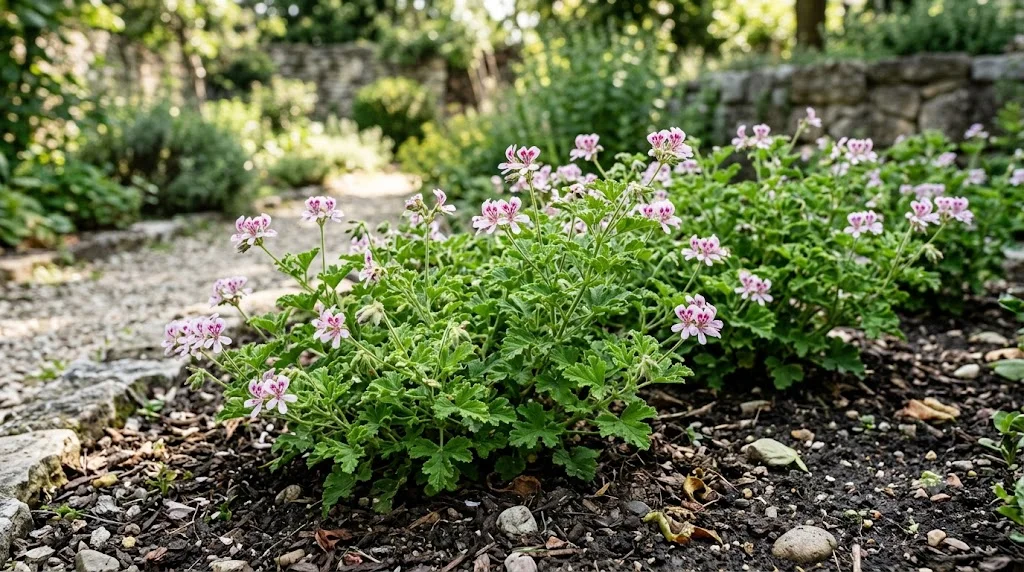

Correct watering and feeding determine whether a lemon-scented geranium remains compact and fragrant or becomes weak, yellow and vulnerable to disease. Its roots need regular access to moisture during active growth, but they also require oxygen between waterings. Fertilizer supports fresh leaves and seasonal flowers only when it is applied in moderation. A balanced routine should respond to the plant, weather and growing medium rather than follow a rigid calendar.
The plant is adapted to conditions where water drains quickly from the root zone. It therefore copes with brief surface drying more successfully than prolonged saturation. This does not mean that it should be allowed to wilt repeatedly. Severe drought damages fine roots and can cause lower leaves to yellow and drop.
Container plants require more attention than specimens growing in open ground. Their limited compost volume can dry rapidly in warm weather, especially in porous pots. At the same time, a container placed indoors may stay moist for many days. Watering frequency must therefore be based on actual conditions.
Feeding is most useful when the plant is producing new stems, foliage and flowers. During winter rest, nutrient demand decreases considerably. Applying fertilizer to a cold, inactive root system can lead to salt accumulation. Seasonal adjustment is an important part of responsible plant care.
Assessing when water is needed
Check the compost beneath the surface rather than judging only by appearance. The top layer may look dry while deeper compost remains wet. Insert a finger two or three centimetres into the medium and assess its moisture. Water when this upper zone has dried but the root ball is not completely parched.
More articles on this topic
The weight of the pot provides another reliable indicator. A freshly watered container feels noticeably heavier than one approaching dryness. Lifting the pot regularly helps develop an intuitive understanding of its moisture level. This method is especially useful when decorative mulch hides the soil surface.
Leaf condition can provide supporting clues, but it should not be the only guide. Slightly soft leaves may indicate dryness, while yellow, limp foliage can also result from excess water. Wilting in intense afternoon heat may be temporary even when the roots contain sufficient moisture. Always check the compost before adding water.
Environmental conditions change the rate at which moisture is used. Sunlight, wind, temperature, pot size, plant size and container material all influence drying. A plant may need watering every few days during a hot outdoor period but only every two weeks in a cool winter room. Flexible observation is more dependable than fixed intervals.
Using the correct watering technique
Apply water slowly and evenly across the compost surface. Continue until excess moisture begins flowing from the drainage holes. Thorough watering encourages roots to grow throughout the container rather than remaining near the surface. Small daily splashes create uneven moisture and may leave deeper roots dry.
More articles on this topic
Allow the container to drain freely after irrigation. Water should not remain in a saucer or cover pot for extended periods. Standing water excludes oxygen from the lower root zone and promotes decay. Empty collected water as soon as drainage has finished.
Watering directly onto the compost is preferable to repeatedly wetting the foliage. Constantly damp leaves are more susceptible to spotting and fungal infection, particularly indoors. If overhead watering occurs, do it early enough for the foliage to dry quickly. Avoid soaking the crown during cool weather.
Rainwater is often suitable because it contains fewer dissolved minerals than hard tap water. Where only tap water is available, it can still be used successfully. Occasional thorough flushing helps remove accumulated fertilizer salts from container compost. Letting the water reach room temperature also reduces shock to roots during winter.
Adjusting irrigation through the seasons
Spring watering should increase gradually as new growth begins. Fresh leaves use more moisture, but roots may still be recovering from winter conditions. Saturating cold compost can delay growth rather than accelerate it. Increase frequency only when the plant demonstrates stronger water use.
Summer is the period of greatest demand. Outdoor pots exposed to sun and wind may dry surprisingly quickly. Check them frequently, especially during heatwaves, but avoid watering automatically when the compost remains moist. Morning irrigation gives the plant a useful reserve before the hottest part of the day.
In autumn, shorter days reduce evaporation and growth. Continue watering according to compost moisture, but expect longer intervals. Plants brought indoors often use much less water immediately after relocation. Reducing irrigation at this stage prevents common autumn root problems.
Winter watering should be conservative. Allow a larger portion of the compost to dry before adding water, especially in a cool room. Do not leave the root ball completely dry for many weeks, because fine roots may die. The aim is controlled moisture, not total dehydration.
Choosing and applying fertilizer
A balanced liquid fertilizer is suitable during the main growing season. Products formulated for flowering container plants or aromatic herbs can both work when used at moderate strength. Excessively high nitrogen encourages soft, elongated growth that is more vulnerable to pests. A balanced nutrient profile supports leaves, roots and occasional flowers.
Begin feeding only after active spring growth is clearly visible. A half-strength application every two to four weeks is usually safer than frequent concentrated feeding. Plants growing in fresh potting compost may not need immediate fertilizer because the mixture already contains nutrients. Always consider the product label and the condition of the plant.
Apply fertilizer to moist compost rather than a completely dry root ball. Concentrated nutrient solution can damage dehydrated roots. Water lightly first if the plant is very dry, then feed after the compost has rehydrated. Never compensate for missed applications by doubling the dose.
Slow-release fertilizer can simplify summer care, but it must be measured carefully. Warm conditions increase nutrient release, sometimes faster than expected. Combining a full dose of slow-release fertilizer with regular liquid feeding may cause overfertilization. Use one main feeding system and adjust only when plant growth indicates a genuine need.
Recognizing watering and feeding mistakes
Overwatered plants often develop yellow lower leaves, weak growth and soft stem bases. The compost may remain dark and wet for many days. A sour smell or blackened roots indicates more advanced damage. Correct the drainage problem immediately rather than waiting for the plant to recover on its own.
Underwatered plants may wilt, develop crisp leaf edges and shed older foliage. Compost can shrink away from the sides of the pot when it becomes extremely dry. In this condition, water may run down the gap without moistening the root ball. Slow rehydration in several stages is more effective than one rapid application.
Excess fertilizer can cause brown leaf margins, white crusts on the compost and unusually weak growth. Salt buildup interferes with the roots’ ability to absorb water. Flush the compost thoroughly with clean water and suspend feeding until recovery begins. Severe cases may require repotting into fresh medium.
Nutrient deficiency usually develops gradually rather than overnight. Pale new growth may indicate limited access to essential minerals, but root damage, cold compost and unsuitable pH can produce similar symptoms. Correct watering and drainage before increasing fertilizer. Feeding damaged roots more heavily rarely solves the underlying problem.