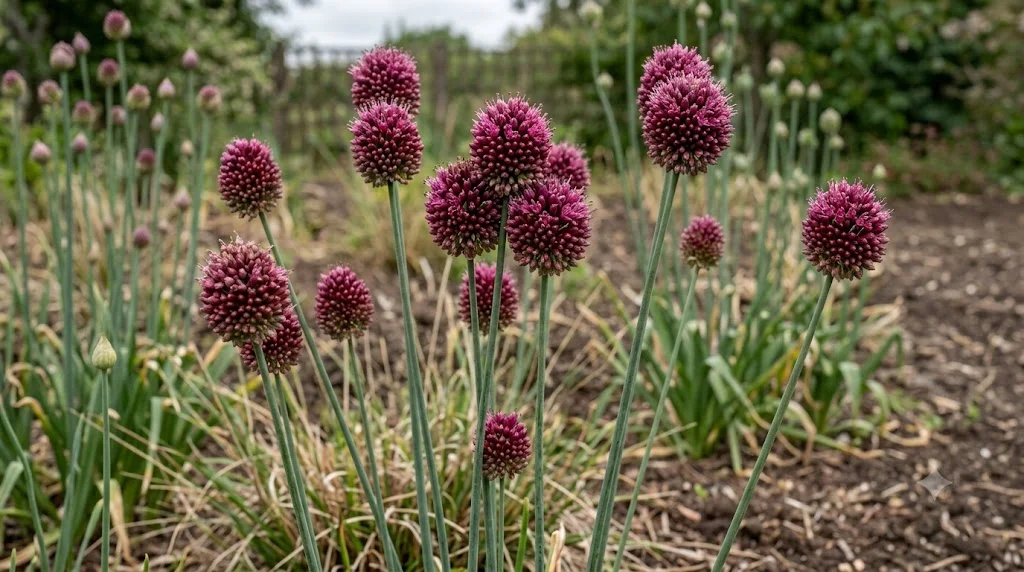

Planting drumstick allium correctly gives the bulbs the stable conditions they need to establish strong roots before flowering. The species is forgiving, but depth, spacing, drainage, and planting time all influence long-term performance. Propagation is possible through offsets or seed, although the two methods differ greatly in speed and reliability. Careful handling during planting prevents damage and reduces the likelihood of losses during wet weather.
Selecting and preparing healthy bulbs
Choose firm, dry bulbs without soft patches, deep cuts, mould, or an unpleasant smell. Healthy bulbs may have loose outer skins, but the internal tissue should feel solid when gently pressed. Larger bulbs generally possess more stored energy and are more likely to flower in the next growing season. Small offsets are still useful, although they may need additional time to mature.
Store purchased bulbs in a cool, dry, well-ventilated place until planting. Avoid sealing them in plastic because trapped moisture encourages fungal growth. Bulbs should not be exposed to strong heat or direct sunlight for extended periods. Plant them as soon as practical to prevent excessive dehydration.
Before planting, inspect the basal plate where roots will emerge. This area should be intact and free from decay. Minor loose skin can be removed, but healthy protective scales should remain in place. Discard bulbs that are soft throughout, since they are unlikely to recover.
Prepare the planting area before opening large bulb packages. Loosen the soil deeply enough to prevent compaction beneath the bulbs. Remove perennial weed roots, stones that obstruct planting, and any decomposing plant debris. Good preparation allows rapid root establishment and reduces disturbance later.
More articles on this topic
Planting time, depth, and spacing
Autumn is generally the best planting season because cool soil encourages root development before winter. Planting can usually take place from early autumn until the ground becomes frozen or waterlogged. Earlier planting is useful in colder regions, while later planting may be suitable in mild climates. Spring planting is possible, but flowering may be delayed or less impressive during the first year.
Place each bulb at a depth approximately three times its own height. For most drumstick allium bulbs, this means positioning the base around 8 to 12 centimetres below the soil surface. Deeper planting provides stability and protects bulbs from rapid temperature changes. Very shallow bulbs may become exposed, dry out, or produce weaker stems.
Space bulbs about 8 to 15 centimetres apart, depending on the desired effect. Close planting produces an immediate, concentrated display but may require earlier division. Wider spacing allows each bulb more room to multiply. Naturalistic groups usually look more attractive than straight lines.
Position the pointed end upward and the flat basal plate downward. If the shape is difficult to identify, place the bulb on its side rather than forcing an uncertain orientation. The shoot will naturally curve upward as growth begins. Backfill gently and avoid compacting the soil heavily over the bulbs.
More articles on this topic
Propagating through bulb offsets
Offset division is the quickest and most dependable propagation method. Mature bulbs gradually produce smaller bulbs around their base. These offsets share the characteristics of the parent plant and usually flower sooner than seedlings. They are best separated when the plant is dormant.
Lift established clumps after the foliage has fully yellowed. Use a fork rather than a spade where possible because it causes less direct cutting damage. Shake or brush away loose soil so individual bulbs can be inspected. Work carefully because newly formed offsets may detach easily.
Separate offsets gently by hand, preserving as much of each basal plate as possible. Large offsets can be replanted directly into their permanent positions. Very small bulbs benefit from a nursery bed with loose, well-drained soil. They may require one or more growing seasons before producing full-sized flower heads.
Replant divided bulbs without unnecessary delay. If temporary storage is unavoidable, keep them dry, shaded, and well ventilated. Label nursery rows so the young bulbs are not accidentally disturbed. Maintain moderate moisture during active growth but avoid saturating the soil.
Growing drumstick allium from seed
Seed propagation is slower but useful for producing large numbers of plants. Fresh seed can be collected when mature flower heads dry and the capsules begin to open. Harvest on a dry day to reduce the risk of mould during storage. Clean away excessive chaff before sowing.
Seeds often benefit from a period of cool conditions before germination. They may be sown outdoors in autumn so winter naturally provides the necessary temperature changes. Use trays, pots, or a prepared nursery bed filled with free-draining compost. Cover the seeds lightly because excessive burial can hinder emergence.
Germination may be uneven and can continue over an extended period. Keep the compost lightly moist but never waterlogged. Young seedlings resemble fine grass and are easily mistaken for weeds. Clear labelling and careful hand weeding are therefore essential.
Seedlings should remain undisturbed until their tiny bulbs have developed sufficient size. Feed lightly during active growth and allow the foliage to die back naturally each year. Transplanting is safest while the bulbs are dormant. Flowering may take three to five years, so patience is an important part of this method.