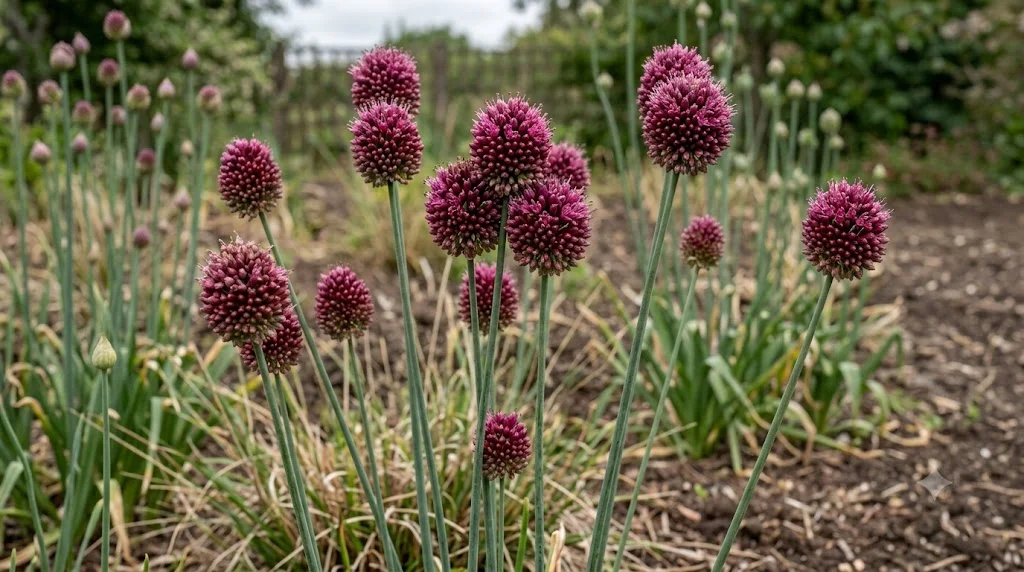

Drumstick allium is a distinctive ornamental bulb valued for its slender stems and dense, egg-shaped flower heads that gradually change from green to rich burgundy-purple. This graceful plant brings height, movement, and architectural interest to sunny borders without overwhelming neighboring perennials. Although it is generally easy to maintain, thoughtful soil preparation and well-timed seasonal care greatly improve flowering performance. Understanding its natural growth cycle helps you keep the bulbs healthy and productive for many years.
Understanding the plant and its seasonal cycle
Drumstick allium, botanically known as Allium sphaerocephalon, is a summer-flowering bulb belonging to the onion family. It produces narrow, grass-like leaves in spring before sending up tall, wiry flower stalks in early or midsummer. The compact flower heads begin green and gradually become purple from the top downward, creating a striking two-tone effect. Mature plants usually reach between 60 and 90 centimetres, depending on soil quality, moisture, and light conditions.
Unlike many spring-flowering ornamental onions, drumstick allium blooms relatively late in the season. Its flowering period often coincides with ornamental grasses, lavender, catmint, yarrow, and summer-flowering salvias. This timing makes it especially useful for maintaining colour after early bulbs and spring perennials have faded. The upright stems remain attractive even after flowering, particularly when left to dry naturally among softer foliage.
The plant grows from a compact bulb that stores nutrients during the growing season. After flowering, the leaves continue photosynthesising until they turn yellow and collapse. This period is essential because it allows the bulb to replenish the energy required for the following year. Removing healthy leaves too early weakens the bulb and may reduce flower production.
Drumstick allium is naturally adapted to relatively dry summer conditions and well-drained ground. It dislikes prolonged saturation, especially while dormant, because wet soil encourages bulb rot. Established clumps can tolerate short dry periods once the foliage begins to fade. Their overall resilience makes them suitable for gravel gardens, prairie-style planting, cottage borders, and naturalistic schemes.
More articles on this topic
Choosing the best position in the garden
A sunny position is the most reliable choice for drumstick allium. The plant performs best where it receives at least six hours of direct sunlight on most days during the growing season. Strong light supports sturdy stems, dense flower heads, and intense purple colouring. Plants grown in excessive shade tend to lean, stretch, or produce fewer blooms.
Good air movement around the foliage is also beneficial. An open planting position helps leaves dry quickly after rain and reduces the risk of fungal problems. Avoid crowding the bulbs beneath dense shrubs or among overly vigorous ground-cover plants. Competition for light, moisture, and nutrients can gradually weaken the clump.
Because the stems are tall and slender, the plant looks most natural when woven through other perennials rather than isolated in a rigid row. Groups of at least seven to fifteen bulbs create a stronger visual effect than individual specimens. Repeated clusters can guide the eye through a border and create rhythm without appearing formal. The narrow foliage allows drumstick allium to emerge easily between established plants.
Wind exposure is not usually a serious problem because the flower stems are flexible rather than brittle. However, extremely exposed sites may cause the stems to lean if the soil is loose or overly fertile. Planting among supportive perennials can provide subtle protection without the need for staking. Suitable companions also help conceal the ageing leaves as the bulbs approach dormancy.
More articles on this topic
Preparing suitable soil
Well-drained soil is fundamental to long-term success. Drumstick allium tolerates sandy, chalky, loamy, and moderately stony ground, provided excess water can escape freely. Heavy clay should be improved before planting because compacted, waterlogged soil restricts root development and increases the risk of bulb decay. Incorporating grit and mature compost can improve both structure and drainage.
The ideal soil reaction is neutral to mildly alkaline, although the plant can adapt to slightly acidic conditions. Extremely acidic soil may limit nutrient availability and reduce vigour over time. A simple soil test can help identify whether lime or another amendment is necessary. Adjustments should be gradual rather than excessive, since ornamental onions do not require highly manipulated soil.
Organic matter should be added with restraint. Well-rotted compost improves soil structure and supports biological activity, but large quantities of rich manure can create soft, weak growth. Fresh manure should never come into direct contact with the bulbs because it may scorch roots and encourage fungal damage. A modest layer of mature compost is usually sufficient in average garden soil.
Raised beds and sloping borders are especially suitable where winter rainfall is high. Elevating the root zone prevents water from collecting around dormant bulbs. In containers, a free-draining mixture containing horticultural grit or coarse mineral material is essential. Drainage holes must remain unobstructed throughout the year.
Watering without encouraging rot
Newly planted bulbs need enough moisture to initiate root growth. After autumn planting, natural rainfall is often sufficient, but unusually dry conditions may require occasional watering. The soil should become evenly moist without remaining saturated. Frequent shallow watering is less useful than a thorough but infrequent application.
During active spring growth, water becomes more important if rainfall is limited. Dry soil at this stage can reduce stem height and flower size. Check moisture several centimetres below the surface rather than judging only by the appearance of the topsoil. Water when the root zone feels dry, then allow excess moisture to drain away.
Once flowering begins, moderate watering can help extend the display during hot weather. However, established plants should not be kept constantly wet. Drumstick allium is more tolerant of brief dryness than of prolonged saturation. Mulch can conserve moisture, but it should not be piled directly over the bulb necks.
Watering should be reduced as the leaves yellow naturally. When the plant enters dormancy, the bulb requires comparatively dry conditions. Container-grown bulbs are particularly vulnerable if pots remain exposed to repeated summer or winter downpours. Moving containers beneath partial shelter can prevent unnecessary moisture accumulation.
Feeding for balanced development
Drumstick allium is not a heavy feeder in reasonably fertile soil. A light application of balanced, slow-release fertiliser in early spring can support leaf and flower development. Avoid products dominated by nitrogen because they promote excessive foliage at the expense of strong flowering. A fertiliser designed for bulbs or flowering plants is usually appropriate.
Potassium supports flower formation and helps strengthen plant tissues. Where soil is poor, a potassium-rich feed can be applied as stems begin to develop. Follow the manufacturer’s recommended rate, since concentrated fertiliser can damage roots. Applying feed to moist soil reduces the risk of scorching.
Phosphorus is important for roots, but routine high-phosphorus feeding is rarely necessary in established garden beds. Excess phosphorus can interfere with the availability of certain micronutrients. Soil testing is more reliable than applying strong fertilisers without evidence of deficiency. Healthy foliage and consistent flowering generally indicate that the nutrient balance is adequate.
Feeding should stop as the leaves begin to die back. Fertiliser applied during dormancy offers little benefit and may wash into surrounding soil. Container-grown plants usually require more regular feeding because nutrients are gradually lost through drainage. Even in pots, light and timely applications are safer than frequent heavy doses.
Managing foliage and spent flowers
The leaves often begin to yellow while the flowers are still attractive. This is a natural part of the plant’s cycle rather than a sign of disease. Positioning drumstick allium among low, leafy perennials helps disguise declining foliage. Avoid cutting green leaves simply to improve the appearance of the border.
Spent flower heads may be removed if you want a tidier display or wish to prevent self-seeding. Cut the stalk near its base only after flowering has finished. The seed heads can also be left standing because their structure remains decorative for several weeks. Dried stems provide texture and may catch frost beautifully in colder gardens.
Self-seeding is usually modest but can become noticeable in favourable soil. Seedlings take several years to reach flowering size, so they are not an immediate replacement for mature bulbs. Remove unwanted young plants while they are small and easy to lift. Allowing a limited number to remain can create a natural, gradually expanding colony.
Leaves should be removed only when they have turned completely yellow or brown and detach easily. At that point, they are no longer supplying the bulb with meaningful energy. Gently pulling away dry foliage is often sufficient. Clean tools should be used if cutting is necessary.
Long-term maintenance and division
Drumstick allium can remain undisturbed for several years. Over time, the original bulb may produce offsets that form a denser clump. Flowering can decline when bulbs become overcrowded or when surrounding plants compete heavily for resources. Division restores space and allows the healthiest bulbs to develop properly.
The best time to lift and divide a congested clump is after the foliage has died back. Mark the position before all visible growth disappears, since dormant bulbs can otherwise be difficult to locate. Lift them carefully with a garden fork, working beyond the edge of the clump. Avoid slicing through the bulbs or bruising their basal plates.
Separate healthy offsets by hand and discard any soft, damaged, or mouldy material. Replant the strongest bulbs promptly at an appropriate depth in refreshed soil. Smaller offsets can be placed in a nursery bed until they reach flowering size. Water lightly after replanting to settle the soil around the roots.
A thin organic mulch can be applied in autumn to improve soil condition and moderate temperature fluctuations. Keep dense, moisture-retentive materials away from the bulb crowns. Regularly remove aggressive weeds before they establish deep roots among the bulbs. With good drainage and minimal disturbance, drumstick allium can provide a reliable display for many seasons.