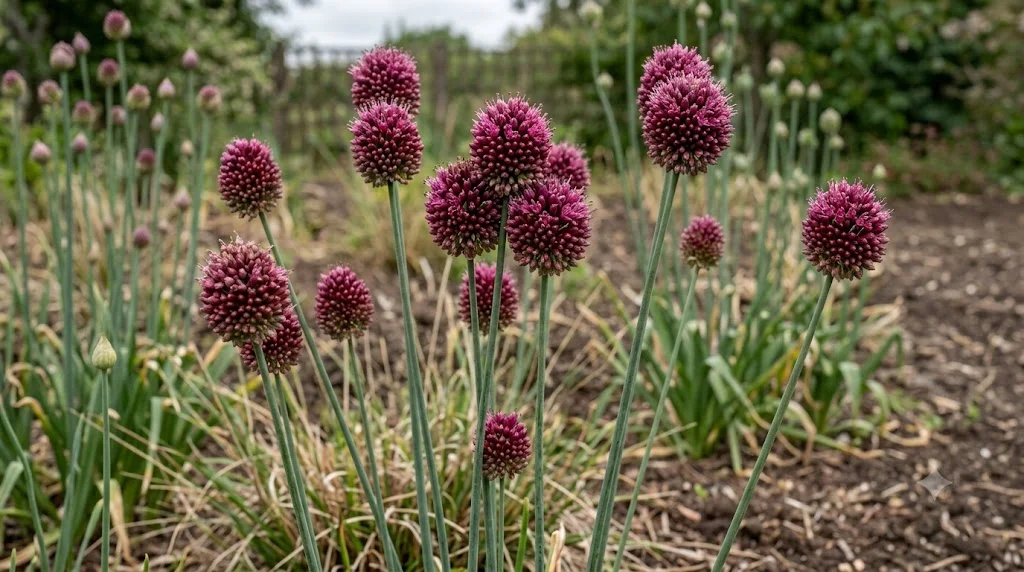

Drumstick allium is generally resilient, but bulbs and foliage can still be affected by fungal diseases, soil-borne rots, sap-feeding insects, and underground pests. Most serious problems develop when drainage is poor, air circulation is limited, or infected planting material is introduced. Early recognition allows you to remove affected tissue before damage spreads through a clump. Preventive cultivation is usually more effective than repeated chemical treatment.
Bulb rots and soil-borne diseases
Bulb rot is among the most damaging problems affecting ornamental onions. Infected bulbs become soft, discoloured, and sometimes covered with fungal growth. A sour or unpleasant smell may develop as tissue decomposes. Severely affected bulbs cannot be restored and should be discarded.
Waterlogged soil is a major cause of rot. Saturated conditions deprive roots and basal tissues of oxygen, weakening natural defences. Improve drainage by incorporating coarse mineral material or relocating the bulbs to a raised bed. Avoid planting in depressions where rainwater naturally collects.
Fusarium and related fungi can survive in contaminated soil or infected bulbs. Symptoms may include basal decay, poor emergence, yellow foliage, and stunted growth. Lift suspicious plants carefully and inspect the bulb base. Do not compost diseased material because pathogens may survive the process.
Crop hygiene reduces reinfection. Clean tools after working in affected areas and avoid moving contaminated soil to healthy beds. Choose firm, unblemished bulbs from reputable suppliers. Where disease has been severe, plant unrelated ornamentals in the area for several seasons.
More articles on this topic
Fungal problems affecting leaves and stems
Leaf spots may appear as brown, grey, or yellowish lesions during damp weather. Closely planted foliage dries slowly, creating favourable conditions for fungal development. Minor spotting usually causes limited harm, but widespread infection can reduce photosynthesis. Remove severely affected leaves only if enough healthy foliage remains to nourish the bulb.
Downy mildew can cause pale patches, distorted growth, and greyish fungal development under humid conditions. It spreads more readily when leaves remain wet for long periods. Water at soil level and avoid overhead irrigation late in the day. Improve spacing if surrounding plants restrict airflow.
Rust may produce orange or brown pustules on the foliage. These spores can spread by wind and splashing water. Remove heavily infected debris after the leaves die back. Do not leave diseased material lying around the planting area.
Fungicides are rarely necessary in a well-managed ornamental border. Cultural control should be the first response because it addresses the conditions encouraging disease. If treatment is considered, use only a product approved for ornamental onions in your region. Follow label directions precisely and avoid unnecessary applications.
More articles on this topic
Onion flies, leaf miners, and thrips
Onion flies and related insects may lay eggs near the plant base. Their larvae can enter bulbs or roots, causing wilting, decay, and poor growth. Infested bulbs may contain tunnels or cream-coloured larvae. Remove and destroy affected plants promptly.
Allium leaf miners create visible tracks or distorted areas within leaves. Larvae feed inside the tissue and may move toward the bulb. Fine insect mesh can protect valuable plantings during periods of adult activity. Removing infested foliage early may reduce the local population.
Thrips are tiny sap-feeding insects that cause pale streaks, silvery patches, or distorted leaves. They thrive in warm, dry, sheltered conditions. Strong water sprays can dislodge some insects, although the soil should not be saturated. Encouraging predatory insects helps maintain natural control.
Avoid broad-spectrum insecticides whenever possible. These products can harm pollinators and beneficial predators that contribute to garden balance. Drumstick allium flowers are particularly attractive to bees, so treatments during flowering require great caution. Targeted action should be based on a confirmed pest rather than general suspicion.
Slugs, snails, and underground damage
Slugs and snails sometimes feed on emerging shoots, especially in damp spring weather. Damage appears as irregular holes, shredded leaf edges, or missing young growth. Mature foliage is usually less attractive to them than tender shoots. Regular evening inspections can reveal whether they are responsible.
Reduce hiding places by clearing decaying debris and dense weeds around the bulbs. Water in the morning so the soil surface is less inviting overnight. Barriers and traps can be useful in small areas. Choose control methods that minimise risks to wildlife and pets.
Rodents may occasionally dig up newly planted bulbs. Firm soil and adequate planting depth reduce access. Wire mesh placed above or around vulnerable planting areas can provide physical protection. Ensure the mesh openings are wide enough for shoots to emerge.
Bulb mites are microscopic pests associated with damaged or decaying bulbs. They often worsen existing rot rather than attacking healthy tissue first. Handle bulbs gently and reject any that are already soft or wounded. Dry, clean storage conditions reduce the likelihood of infestation.
Integrated prevention and recovery
Inspect plants regularly from emergence until dormancy. Changes in colour, growth rate, stem strength, or flowering can reveal developing problems. Compare affected plants with healthy specimens nearby. Early diagnosis prevents unnecessary treatment.
Maintain generous spacing and control aggressive weeds. Crowded conditions increase humidity and make inspection difficult. Thin or relocate neighboring perennials if they completely cover the allium foliage. Balanced planting supports both appearance and plant health.
Sanitation is particularly important after a disease outbreak. Remove infected plant material, fallen leaves, and decaying bulbs. Disinfect cutting tools before using them elsewhere. Replace contaminated potting compost rather than reusing it.
After a mild problem, support recovery with appropriate watering and good light rather than heavy feeding. Damaged roots cannot absorb concentrated fertiliser efficiently. Allow the plant to complete its natural cycle if healthy foliage remains. Severely weakened bulbs may need to be lifted, examined, and replanted in improved conditions.