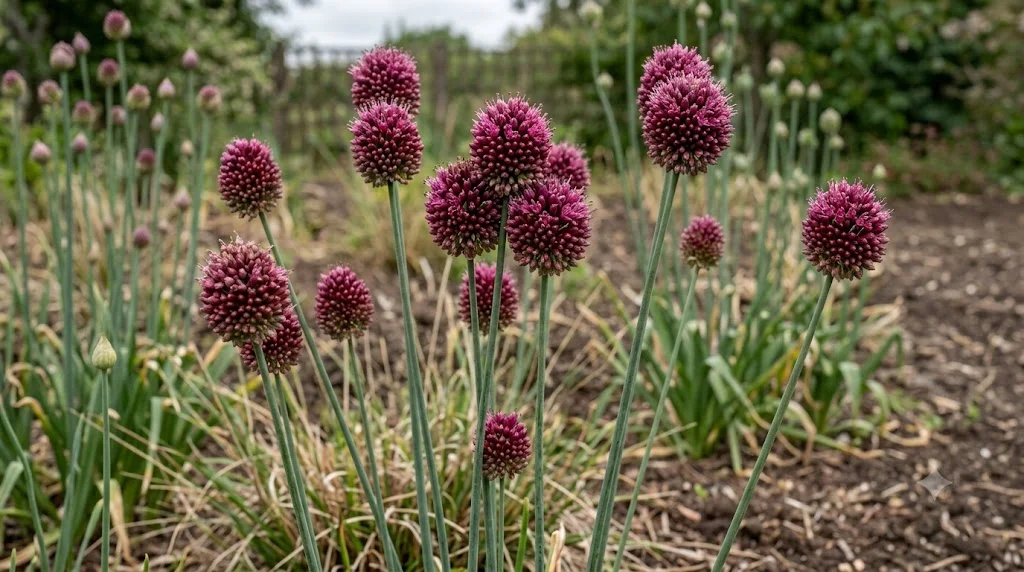

Drumstick allium performs best when moisture and nutrients are supplied in harmony with its natural growth cycle. The bulbs need dependable moisture while producing roots, leaves, and flowers, yet they strongly dislike persistently wet soil. Fertiliser can improve performance in poor ground, but excessive feeding often causes more harm than benefit. A restrained, seasonally adjusted approach encourages strong stems and long-lived bulbs.
Water needs during establishment
Freshly planted bulbs require moisture around their base to begin root production. Autumn rain usually provides enough water in temperate regions, but dry soil should be watered after planting. Apply enough water to moisten the full planting depth rather than wetting only the surface. Allow the area to drain before watering again.
New roots are vulnerable to both drought and oxygen-poor, saturated soil. Check drainage after prolonged rain, especially in clay or compacted ground. Water should not remain pooled above the planting area for many hours. If saturation persists, the bulbs may need to be moved to a raised or better-drained position.
Spring-planted bulbs generally require closer attention because rising temperatures increase evaporation. Keep the root zone moderately moist while shoots emerge. Sudden severe dryness can interrupt early growth and reduce the first season’s performance. A light mineral mulch can help stabilise moisture without trapping excessive water.
Container-grown bulbs dry faster than those in the ground. Check pots regularly, particularly during windy weather. Water thoroughly until liquid escapes through the drainage holes, then empty any saucer beneath the container. Never allow the base of the pot to stand continuously in water.
More articles on this topic
Watering during leaf and stem development
Spring leaf growth marks a period of active demand. The bulbs are using stored energy while also absorbing water and nutrients through newly developed roots. If rainfall is limited, deep watering every several days is more effective than daily surface sprinkling. The exact interval should be adjusted according to soil type and temperature.
Sandy soil loses moisture quickly and may need more frequent irrigation. Clay retains water longer, so watering should be less frequent and more carefully monitored. Loam usually provides the most forgiving balance between retention and drainage. Always inspect the soil below the dry surface before adding more water.
Water near the soil rather than spraying the leaves repeatedly. Directing water to the root zone reduces evaporation and helps limit fungal spotting. Early morning is generally the most suitable time because foliage dries quickly afterward. Evening irrigation is acceptable in dry climates if leaves remain largely untouched.
Consistent moisture supports full-height stems and well-developed flower heads. However, constantly wet conditions can make stems soft and increase the risk of root disease. The aim is to avoid severe fluctuations rather than maintain saturation. A slightly dry interval between thorough waterings is normally beneficial.
More articles on this topic
Adjusting moisture after flowering
Flowering plants may need supplementary water during prolonged heat. Adequate moisture helps the leaves remain functional while the bulbs replenish their reserves. Water stress immediately after flowering can shorten the period of photosynthesis. This may lead to smaller bulbs and weaker growth the following year.
As the leaves begin to yellow, gradually reduce irrigation. Natural senescence indicates that the plant is moving toward dormancy. Continued heavy watering at this stage does not keep the foliage healthy and may expose the bulb to rot. Allow the soil to become increasingly dry.
Dormant bulbs in open ground usually need no artificial irrigation. Rainfall is sufficient unless the climate is exceptionally arid. Avoid directing lawn sprinklers onto dormant planting areas throughout summer. Repeated moisture can be particularly damaging in warm soil.
Containers require more deliberate management because they can receive water from surrounding irrigation systems or heavy rain. Move dormant pots to a sheltered location if necessary. The compost should not become permanently wet, but complete desiccation for many months should also be avoided. Occasional inspection prevents both extremes.
Choosing and applying fertiliser
A balanced, slow-release fertiliser can be applied when new shoots appear. Choose a product with moderate nitrogen and adequate potassium. Nitrogen supports leaf growth, while potassium contributes to flower formation and tissue strength. Excessive nitrogen may produce lush leaves and weak stems.
Apply granular fertiliser evenly around the plants rather than directly against emerging shoots. Gently work it into the surface soil if roots will not be disturbed. Water afterward to begin nutrient release. Never exceed the recommended quantity in an attempt to accelerate growth.
Liquid fertiliser is useful for container plants or bulbs growing in very poor soil. A diluted flowering-plant feed can be given at intervals during active growth. Stop feeding once the foliage begins to yellow. Late applications can encourage untimely growth or leave unused salts in the compost.
Organic options include mature compost, well-rotted leaf mould, and carefully selected natural fertilisers. These materials improve soil structure while releasing nutrients gradually. Avoid thick layers of rich manure over the planting area. Strong organic material can retain too much moisture and stimulate unbalanced growth.
Recognising nutrient problems and correcting them
Pale leaves can indicate nutrient deficiency, but they may also result from waterlogging, root damage, or natural ageing. Consider the timing and overall condition of the plant before applying fertiliser. Yellowing that begins after flowering is usually normal. Premature, widespread chlorosis during active growth deserves closer investigation.
Weak flowering may occur when bulbs are overcrowded or shaded, even if nutrients are adequate. Feeding alone will not correct poor light or saturated soil. Lift and divide congested clumps if flower production has declined over several seasons. Improve the growing conditions before increasing fertiliser.
Leaf tips scorched after feeding may indicate excessive soluble salts. Flush containers thoroughly with clean water and suspend fertilisation. In garden soil, irrigate deeply if drainage is good. Future applications should be reduced and spread over a wider area.
Routine soil testing is helpful in intensively managed gardens. It reveals pH and major nutrient levels, preventing unnecessary treatment. Correct only confirmed deficiencies and make changes gradually. Drumstick allium usually flowers well with modest feeding when drainage, sunlight, and seasonal moisture are appropriate.