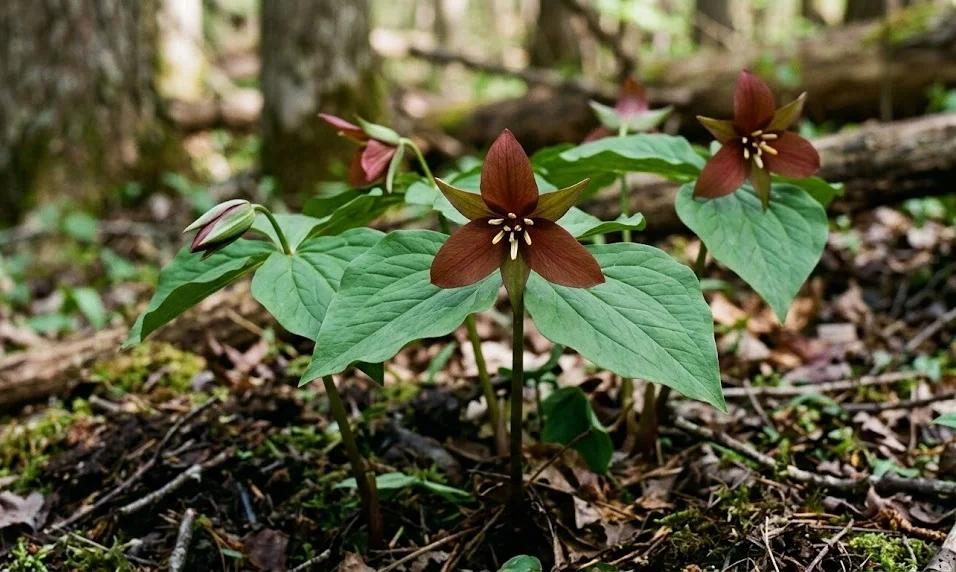

Red trillium is naturally adapted to cold winters and normally survives outdoors without elaborate protection. Its foliage disappears after the growing season, while the living rhizome remains dormant beneath the soil. Winter success depends less on warmth than on stable temperatures, good drainage, and protection from repeated disturbance. Excessive covering or indoor storage can be more harmful than ordinary seasonal cold.
Allowing natural dormancy to develop
The foliage should be permitted to yellow and decline naturally. During this period, nutrients move from the leaves back into the underground rhizome. Cutting green stems prematurely reduces the energy available for spring growth. Wait until the foliage is completely dry before removing it.
Dormancy may begin in summer or early autumn depending on climate, rainfall, and site conditions. Early disappearance does not necessarily indicate winter damage. Red trillium is an ephemeral woodland plant with a naturally limited visible season. Marking the position prevents unnecessary concern and accidental digging.
Once the plant is dormant, reduce watering. The soil should remain moderately moist but not continually saturated. Natural autumn rainfall is usually sufficient in garden beds. Continue checking containers because their smaller soil volume behaves differently from open ground.
Do not attempt to force new growth during winter. Bringing a dormant plant into a heated room disrupts the cold period required for its normal cycle. The rhizome benefits from seasonal chilling. Stable outdoor conditions are preferable to fluctuating indoor temperatures.
More articles on this topic
Protecting rhizomes in garden soil
A light layer of fallen leaves provides natural insulation. It moderates rapid temperature changes and protects the soil surface from erosion. Use dry, healthy leaves rather than dense, wet piles. Shredding large leaves helps prevent them from forming an airless mat.
Snow is generally beneficial because it insulates dormant rhizomes from extreme cold. Avoid compacting snow over the planting area by walking on it. Repeated pressure can compress the soil and damage shallow structures. Let snow melt naturally whenever possible.
The greatest winter risk is often waterlogging rather than freezing. Clear blocked drainage channels and prevent runoff from collecting in the bed. Heavy clay sites may require permanent structural improvement. A temporary cover is rarely sufficient if the underlying soil remains saturated.
Frost heave can expose recently planted rhizomes in loose soil. Inspect the bed during mild periods and gently firm any lifted soil. Replace displaced mulch without burying the crown deeply. Established plants are generally less vulnerable because their roots anchor them securely.
More articles on this topic
Overwintering container-grown plants
Containers expose rhizomes to greater temperature fluctuations than garden soil. Use a large, frost-resistant pot with reliable drainage. Small containers freeze and thaw rapidly, which can injure roots. Grouping pots in a sheltered position reduces exposure.
Move containers away from strong winter wind and persistent rain. A cold frame, unheated greenhouse, or sheltered wall can provide protection. The location must remain cold enough to maintain dormancy. Heated indoor rooms are unsuitable.
Insulate the outside of the pot with horticultural fleece, straw, or another breathable material in very cold climates. Do not block drainage holes while wrapping the container. Raise the pot slightly above the ground so excess water can escape. Remove saturated saucers after rainfall.
Check the compost occasionally throughout winter. It should never become completely dry, but frequent watering is unnecessary. Apply a small amount only when the root zone is losing all moisture. Resume more regular watering when spring growth begins.
Preparing for spring emergence
Begin inspecting the site as winter temperatures moderate. Gently loosen any compacted leaf layer above the crown. Do not rake deeply because new shoots may already be close to the surface. Remove only debris that is wet, diseased, or excessively dense.
Protect emerging growth from late frost when severe cold is forecast. A loose layer of horticultural fleece can provide temporary protection overnight. Support the material so it does not crush tender stems. Remove it once the temperature rises.
Spring is also the time to renew a thin organic mulch. Apply it around, rather than directly over, visible shoots. Avoid deep cultivation when incorporating amendments. Soil organisms will gradually draw organic matter downward.
Monitor slugs as soon as new growth appears. Winter protection materials can sometimes provide hiding places for them. Remove unnecessary coverings and inspect sheltered corners. Early control prevents serious damage to the season’s only set of shoots.