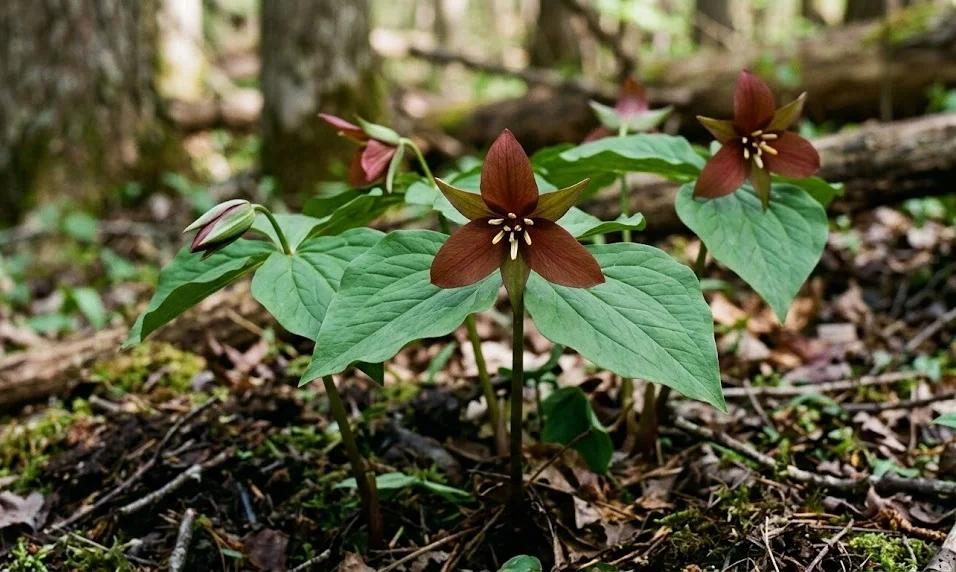

Red trillium needs a seasonal pattern of light rather than constant deep shade. In early spring, it benefits from the brighter conditions beneath leafless deciduous trees. As the canopy develops, filtered shade protects the foliage from heat and moisture loss. Reproducing this changing woodland environment encourages strong leaves, reliable flowering, and long-term rhizome health.
Providing spring light and summer shade
Early spring light supports rapid photosynthesis when the plant first emerges. A completely dark position can produce weak stems and reduced flowering. The ideal site receives bright, indirect light or gentle morning sunshine. Overhead deciduous branches create naturally suitable conditions.
As spring advances, the developing tree canopy reduces light intensity. This transition protects trillium leaves from increasingly powerful sun. The plant can then continue storing energy without severe heat stress. A woodland edge often provides this balance better than dense evergreen shade.
Morning sun is usually safer than afternoon sun. Early light is cooler and soil moisture remains relatively high. Strong western exposure can scorch broad leaves and dry the root zone. In warm regions, protection after late morning is especially important.
A site receiving dappled light throughout the day can also be successful. Moving patches of sunshine provide energy without prolonged exposure. Observe the area across several hours before planting. Light conditions can differ greatly between early spring and midsummer.
More articles on this topic
Recognising unsuitable light levels
Excessive sun often causes pale patches, brown margins, or dry leaf tips. The soil may also lose moisture faster than the roots can replace it. Flowers can fade quickly under intense light. Severe exposure may force the plant into early dormancy.
Too much shade produces different symptoms. Stems may become elongated, weak, or inclined toward the nearest light source. Leaves can remain unusually small and flowering may decline. A plant surviving in deep shade is not necessarily growing at its full potential.
Light stress can be confused with nutrient or watering problems. Check soil moisture and drainage before changing the planting position. A sun-exposed plant in dry soil may improve through better shade and mulching. A pale plant in waterlogged shade requires drainage correction rather than additional light alone.
Seasonal observation is essential. A site that appears shaded in summer may receive full sun before trees leaf out. Conversely, a position may become much darker as shrubs mature. Evaluate conditions during the entire visible growth period.
More articles on this topic
Adjusting shade without disturbing the plant
Temporary shade cloth can protect newly planted specimens in exposed gardens. Position it so air continues to move freely around the foliage. The material should soften intense light rather than create total darkness. Remove it when nearby vegetation provides sufficient cover.
Planting suitable deciduous shrubs nearby can create long-term protection. Choose species with non-aggressive roots and an open branching structure. Allow adequate distance so the trillium does not face severe competition. Natural overhead shade is usually more attractive and stable than permanent artificial screening.
Companion plants can shade the soil and reduce reflected heat. Ferns, woodland sedges, and modest clump-forming perennials work well. Keep them far enough away to avoid smothering emerging shoots. Remove invasive ground covers before they become entangled with the rhizome.
Avoid transplanting an established trillium solely because the light is slightly imperfect. Modify the surrounding canopy first when possible. Selective pruning of nearby shrubs may increase spring brightness, while additional planting can reduce afternoon exposure. Gradual adjustment is less stressful than moving the entire plant.