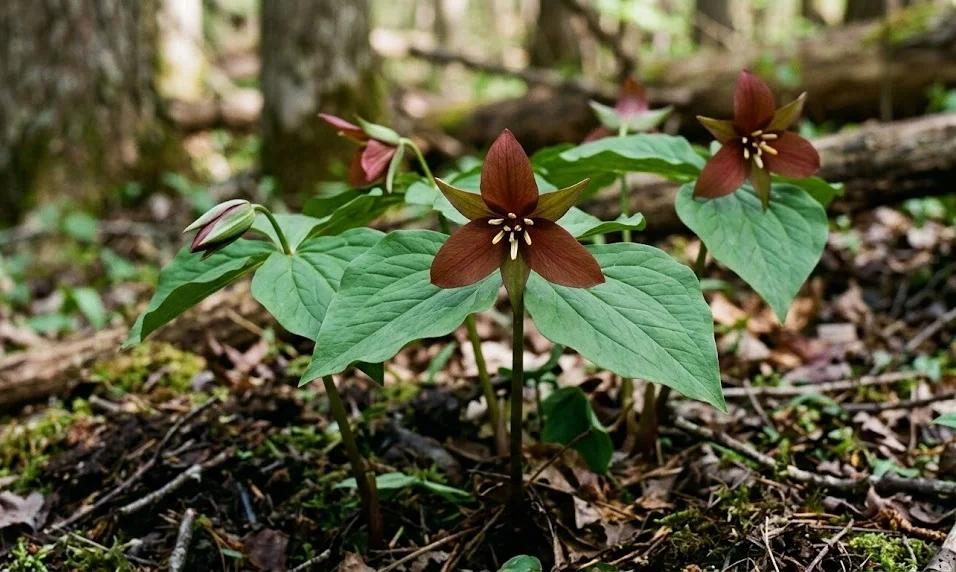

Red trillium is generally resilient when grown in cool, well-drained woodland soil, but stressed plants can become vulnerable to pests and disease. Slugs and snails are the most obvious threats to young shoots, while saturated soil can lead to serious rhizome decay. Leaf spots and moulds occasionally occur during prolonged wet weather or where air circulation is poor. Preventive cultivation is usually more effective than relying on repeated chemical treatments.
Slugs, snails, and early-season feeding
Tender emerging shoots are highly attractive to slugs and snails. Damage can occur before the leaves have fully unfolded, leaving distorted stems or missing growth. A severely eaten shoot cannot simply produce a replacement during the same season. Protecting early emergence is therefore particularly important.
Inspect the bed at dusk or after rain when these pests are active. Hand removal can substantially reduce small populations. Check beneath stones, pots, boards, and dense debris where they hide during daylight. Maintaining a tidy but naturally mulched bed removes unnecessary shelter without stripping the soil bare.
Physical barriers can help around individual plants. Copper rings, rough mineral materials, or other garden barriers may reduce access when used correctly. Their effectiveness declines if leaves or neighbouring stems create bridges over them. Inspect barriers regularly throughout the vulnerable period.
Biological controls can be useful where populations are persistent. Products based on appropriate parasitic nematodes work best when soil temperatures and moisture levels are suitable. Wildlife-friendly slug pellets may also be considered according to local regulations. Avoid treatments that threaten birds, amphibians, pets, or beneficial invertebrates.
More articles on this topic
Browsing animals and underground disturbance
Deer may browse trillium foliage and flowers, especially in gardens near woodland. Repeated removal of leaves weakens the rhizome because the plant loses its ability to photosynthesise. Young colonies can decline rapidly under sustained pressure. Fencing is the most reliable protection in heavily affected areas.
Rabbits may also eat emerging shoots or tender leaves. Low barriers can provide effective protection where rabbit pressure is moderate. Ensure that the base of the barrier sits securely against the ground. Gaps beneath fencing allow animals to reach the planting area.
Rodents can disturb seeds, rhizomes, and newly planted divisions. Protect seed pots with wire mesh while maintaining ventilation. Firm loose soil after planting so animals are less likely to investigate freshly disturbed ground. Avoid leaving edible waste or bird food close to valuable woodland beds.
Domestic animals can damage trilliums by digging, running, or lying on the planting site. A low decorative fence or strategically placed logs can guide movement away from the clump. Do not rely on markers alone where pets are highly active. Physical protection is especially useful while shoots are emerging.
More articles on this topic
Rhizome rot and waterlogging
Rhizome rot is one of the most serious cultivation problems. It usually develops where soil remains saturated and oxygen cannot reach the roots. Affected plants may emerge weakly, collapse suddenly, or fail to appear. Excavated tissue often looks brown, soft, and unpleasantly odorous.
Prevention begins with proper drainage. Improve heavy soil before planting rather than attempting emergency correction after symptoms appear. Raised beds can be useful where the natural ground remains wet for long periods. Never plant trillium in a low depression that collects winter rainfall.
Overwatering can create the same symptoms as poor natural drainage. Irrigation should be adjusted according to actual soil moisture, not a fixed calendar. Mulch should retain moisture without forming a thick, airless layer. Containers must always have unobstructed drainage holes.
Once rot is advanced, recovery is uncertain. Lift the plant carefully and remove all soft, discoloured tissue with a sterile knife. Retain only firm sections with healthy buds and roots. Replant in fresh, well-drained soil, although severely affected rhizomes may need to be discarded.
Leaf spots, moulds, and stem problems
Fungal leaf spots may appear as brown, grey, or black lesions. Minor spotting late in the season is often cosmetic and does not require treatment. Extensive early damage can reduce photosynthesis and weaken the plant. Persistent problems usually indicate overly wet foliage, poor airflow, or stressed roots.
Remove badly affected material only when it is clearly diseased. Use clean scissors and avoid damaging healthy stems. Do not place infected debris in a cool home compost pile where spores may survive. Dispose of it according to appropriate local gardening practices.
Grey mould can develop during cool, damp weather. Flowers and damaged leaves may become covered with fuzzy grey growth. Improve air circulation by thinning aggressive companion plants rather than disturbing the trillium itself. Water the soil directly and avoid frequent overhead irrigation.
Stem collapse can also result from frost, slugs, mechanical damage, or rhizome decay. Examine the entire plant before diagnosing a fungal disease. A damaged stem base with feeding marks suggests pest activity. Soft tissue extending below soil level is more consistent with rot.
Integrated prevention and responsible treatment
Healthy plants are naturally more resistant to many pests and diseases. Provide suitable shade, stable moisture, humus-rich soil, and adequate drainage. Avoid excessive nitrogen, which creates soft and vulnerable foliage. Minimise transplantation and root disturbance.
Sanitation should be careful rather than excessive. Remove diseased material, but retain clean fallen leaves as a valuable source of humus. Sterilise cutting tools between affected plants. Wash soil from tools before using them elsewhere in the garden.
Chemical treatments should be considered only after the problem has been identified accurately. A fungicide cannot correct waterlogged soil, and an insecticide will not repair frost injury. Broad-spectrum products may harm pollinators and beneficial predators. Select the least disruptive effective method and follow the label precisely.
Keep records when problems recur. Note weather conditions, watering practices, the location of symptoms, and the timing of damage. Photographs can help distinguish annual patterns from isolated incidents. Long-term observation often reveals that environmental stress is the true underlying cause.