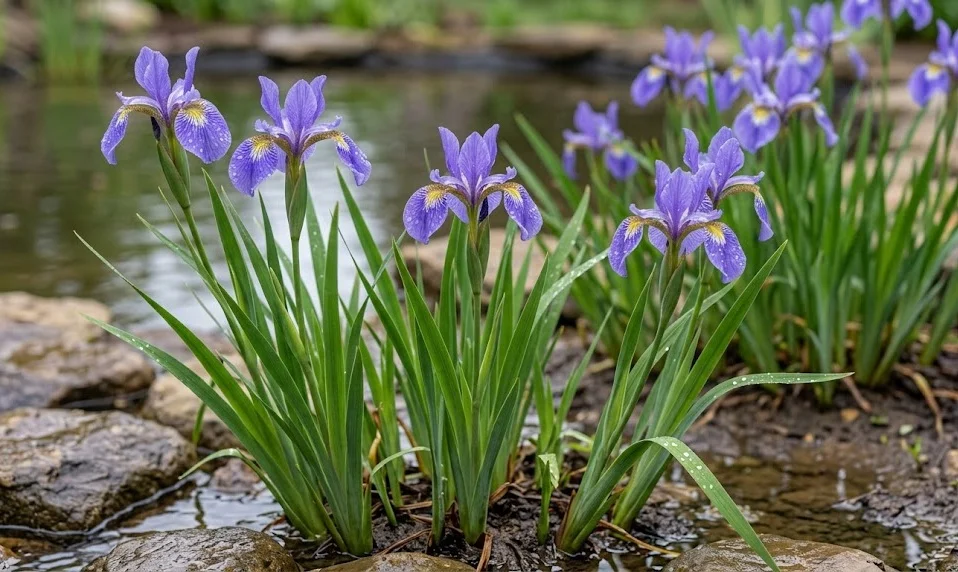

Virginia iris flowers and grows best when it receives strong light in a consistently moist setting. Full sun is usually the most reliable exposure for abundant bloom, especially in cooler or moderate climates. In hotter regions, some light shade can help reduce stress if it does not become dense enough to suppress flowering. The key is to combine generous light with the wet soil conditions that this iris naturally prefers. plants.ces.ncsu.edu+1
Light directly affects the plant’s energy budget. The upright leaves capture sunlight and convert it into stored reserves within the rhizomes. Those reserves support flowering, new fan development, and winter survival. When light is insufficient, the plant may remain alive but bloom poorly.
The best exposure is often full sun with moist soil. In a pond margin or rain garden, sunlight and water work together to produce sturdy growth. Dry full sun, however, can become stressful because the plant is not adapted to prolonged drought. Sun should therefore be evaluated together with soil moisture, not separately.
Partial shade can be useful in warm climates or exposed gardens. Afternoon shade may reduce leaf scorch and water loss during high heat. Morning sun with light afternoon protection is often a good compromise. Deep shade under trees, fences, or dense shrubs is much less suitable.
Full sun performance
In full sun, Virginia iris usually produces its strongest flower display. Flower stems are better supported when the plant receives enough energy. Leaves tend to stand more firmly and develop a cleaner vertical habit. This is why open wetland edges are such a good model for garden placement.
More articles on this topic
Full sun is especially valuable during spring. This is when new leaves expand rapidly and buds develop. A bright site supports both immediate flowering and rhizome replenishment after bloom. Shading during this period can have a noticeable effect on the season’s performance.
Moisture must match the exposure. A full-sun site that dries hard in summer is not ideal. In such a place, the plant may show browning leaf tips, reduced vigor, or smaller clumps. If full sun is available only in a dry bed, improve irrigation or choose a wetter planting zone.
Open rain gardens often provide excellent light. They collect water during storms while remaining sunny enough for strong flowering. Virginia iris can be placed where the soil stays damp but the foliage is not buried by taller companions. This gives the plant both ecological function and ornamental clarity.
Partial shade and regional adjustment
Partial shade is not automatically a problem. In warm regions, light shade during the hottest part of the day may help keep foliage fresher. North Carolina Extension notes tolerance of light shade in warmer parts of the plant’s range. This makes regional adjustment important when choosing exposure. plants.ces.ncsu.edu
More articles on this topic
The quality of shade matters. High, open shade from widely spaced trees is different from dense shade under evergreen shrubs. Bright filtered light may still allow acceptable flowering. Heavy shade usually produces weaker fans and fewer blooms.
Observe stem strength as well as flower number. If leaves lean strongly toward light, the plant is probably shaded too much. If flowering declines over several seasons while the clump remains otherwise healthy, increasing light may help. Removing competing vegetation can sometimes restore performance without moving the iris.
Partial shade also interacts with moisture. Shaded soil dries more slowly, which can be beneficial in hot weather. However, shaded wet soil can stay cool and stagnant, especially where air movement is poor. A lightly shaded, airy, moist site is preferable to a dark, still, wet corner.
Designing with light in mind
Place Virginia iris where taller plants will not overtop it during the flowering period. Later-season companions can rise after the iris has bloomed, but spring competition should be limited. This allows the plant to capture light when it matters most. Careful layering prevents the iris from disappearing in a dense planting.
In pond-edge designs, position the clumps on the sunny side of the water feature when possible. Reflected light from water can enhance brightness and improve visibility of the flowers. The vertical foliage also looks striking against the horizontal surface of water. This is both a horticultural and design advantage.
In rain gardens, avoid placing Virginia iris behind tall shrubs or dense grasses. It should occupy a zone where light reaches the leaf fans clearly. Companion plants should share moisture needs without shading the crown too heavily. Good combinations create diversity without sacrificing bloom.
If a plant is already established in too much shade, moving or dividing it can restore vigor. Transplant after flowering or in early fall when conditions are mild. Replant divisions into brighter, moist soil and water them well. Better light often leads to stronger flowering once the plant has re-established.