
Eastern red cedar is one of the most resilient evergreen conifers used in gardens, shelterbelts, wildlife plantings, and low-maintenance landscapes. Although it is commonly called a cedar, it is botanically a juniper, and that distinction matters when caring for it. The plant tolerates drought, wind, poor soil, heat, and winter cold better than many ornamental evergreens. Good care is less about pampering it and more about giving it the right site, avoiding overwatering, and managing its natural growth with restraint.
Understanding its natural growth habit
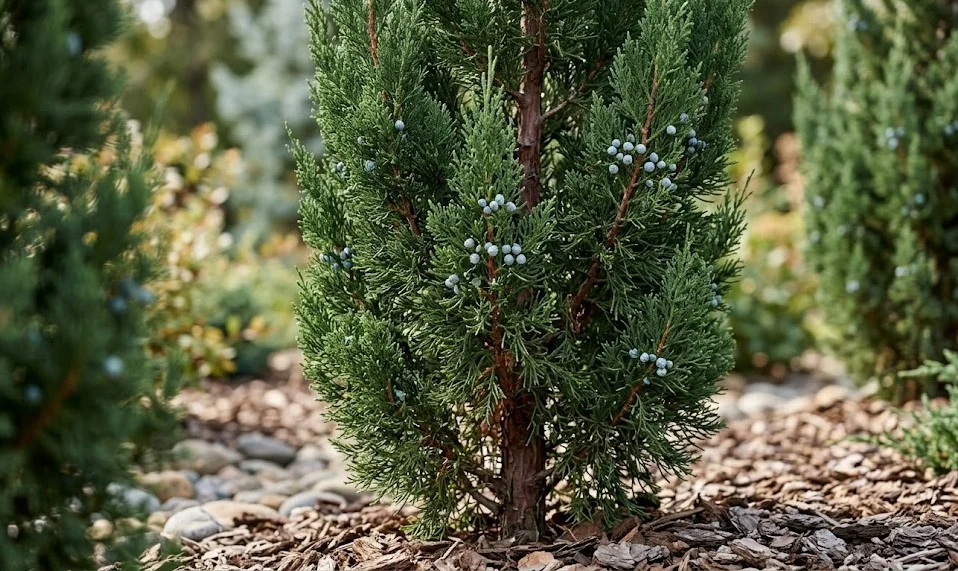
Eastern red cedar usually grows with a dense, upright, pyramidal to columnar form when young. As it matures, the crown may become broader, more irregular, and more characterful, especially in open landscapes. Its foliage can range from medium green to bluish green, depending on the cultivar, age, and growing conditions. Mature bark develops attractive reddish brown tones and peels in narrow strips, adding winter interest.
This species is naturally adapted to open fields, rocky slopes, dry woodland edges, and exposed rural sites. That background explains why it performs best where air circulation is good and the soil is not constantly wet. It is not a plant that enjoys heavy irrigation or dense shade. In many gardens, problems begin when it is treated like a moisture-loving ornamental shrub rather than a tough conifer.
Growth rate is usually moderate, although young plants may establish slowly during the first years after planting. Once the root system settles, annual growth becomes more reliable and visible. In favorable conditions, the tree can eventually become quite large, so spacing should be considered from the beginning. A small nursery plant may look manageable, but a mature specimen needs room for both roots and canopy.
Gardeners should also recognize the difference between seed-grown plants and selected cultivars. Seed-grown Eastern red cedar can vary widely in shape, color, berry production, and density. Named cultivars are often chosen for narrow form, stronger color, or compact growth. Matching the plant type to the garden purpose is one of the most important care decisions.
More articles on this topic
Choosing the right site
Eastern red cedar performs best in full sun, where it develops dense foliage and strong branch structure. A site with at least six hours of direct light per day is ideal for most landscape uses. In partial shade, the plant may survive, but the crown often becomes thinner and less symmetrical. Deep shade is unsuitable because it encourages sparse growth and weak lower branches.
Soil drainage is more important than soil fertility for this evergreen. It tolerates sandy, rocky, loamy, and even moderately clayey soils if excess water can move away from the root zone. Permanently wet or compacted sites should be avoided because they increase the risk of root decline. Raised planting areas can help where the soil is heavy but the species is otherwise desired.
Wind exposure is generally not a serious issue for established Eastern red cedar. In fact, it is frequently used in windbreaks and screening plantings because it handles open conditions well. Young plants, however, may need temporary protection if planted on very windy sites with dry soil. Mulch and proper watering during establishment are usually more useful than physical staking.
Urban planting requires some judgment. Eastern red cedar can tolerate heat, reflected light, and relatively poor soil, but it does not thrive in tiny, sealed planting pits. It needs enough rooting space to support long-term growth. Avoid placing it too close to walls, sidewalks, driveways, or overhead wires unless a compact cultivar has been selected.
More articles on this topic
Soil preparation and planting depth
Soil preparation should focus on structure, drainage, and root contact rather than heavy fertilization. Before planting, loosen the surrounding soil over a wide area so new roots can move outward. The planting hole should be wider than the root ball but no deeper than the root system. Planting too deep is a common mistake and can lead to long-term stress.
The root flare should remain visible at or slightly above the finished soil level. If the plant arrives in a container, remove it carefully and inspect the root system. Circling roots should be loosened or pruned so they do not continue to spiral after planting. A few minutes of root correction at planting can prevent serious structural problems later.
Backfill with the native soil rather than replacing the entire planting hole with rich compost. A small amount of well-finished organic matter may be blended into poor soil, but the goal is not to create a soft pocket that holds excess moisture. Consistent soil texture around the root ball encourages roots to grow outward. Over-amended planting holes can behave like bowls in heavy soil.
After planting, water deeply to settle the soil around the roots. Lightly firm the backfill with hands or gentle foot pressure, but avoid compacting it aggressively. Add mulch over the root zone while keeping it away from the trunk. A mulch ring helps moderate soil temperature, conserve moisture, and reduce competition from turf.
Watering through establishment
Newly planted Eastern red cedar needs regular watering until its roots expand into the surrounding soil. During the first growing season, deep watering is more valuable than frequent light sprinkling. The soil should be moistened thoroughly and then allowed to dry moderately before watering again. Constantly wet soil is more dangerous than brief surface dryness.
Container-grown plants often dry out faster immediately after planting because the root ball may have a different texture from the surrounding soil. For this reason, gardeners should check moisture both in the root ball and nearby native soil. A root ball that has dried completely can repel water, especially if it was peat-heavy. Slow watering or repeated gentle applications may be needed to rehydrate it properly.
In hot summer weather, young plants may need water once or twice per week depending on soil type and rainfall. Sandy soils dry quickly and require closer attention. Heavy soils hold water longer and should be checked before irrigation is repeated. The plant’s foliage can show stress only after the root zone has already become too dry or too wet.
Once established, Eastern red cedar is highly drought tolerant. Mature plants usually need supplemental watering only during extended droughts, especially on shallow or rocky soils. Overwatering established trees can weaken them and invite disease. The best long-term approach is deep, occasional watering during serious drought rather than routine irrigation.
Feeding and nutrient management
Eastern red cedar is not a heavy feeder. In average garden soil, it often grows well without annual fertilization. Excess nitrogen can produce overly soft growth that is less compact and potentially more vulnerable to environmental stress. A restrained feeding program is usually better than aggressive fertilization.
If growth is poor, first investigate light, drainage, planting depth, and root competition before adding fertilizer. Nutrient deficiency is not always the cause of pale foliage or weak growth. Compacted soil, waterlogged roots, or shade can create similar symptoms. Fertilizer cannot correct a badly chosen site.
Where soil is genuinely poor, a slow-release evergreen fertilizer may be applied in spring. The product should be used at the recommended rate or below, especially around young plants. Fertilizer should be spread over the root zone rather than piled near the trunk. Watering after application helps move nutrients into the active soil layer.
Organic mulch contributes gradually to soil improvement as it decomposes. Wood chips, shredded bark, or leaf mold can all support soil biology and moisture balance. Mulch should not be stacked against the trunk because that can keep bark too moist. A wide, shallow mulch ring is more beneficial than a deep mound.
Pruning and shaping
Eastern red cedar responds best to light, selective pruning. It should not be sheared heavily into bare old wood because dormant buds are limited on older interior branches. Cutting into leafless wood often leaves permanent gaps. The safest rule is to prune only where green foliage remains below the cut.
The best time for routine pruning is late winter or early spring before new growth begins. Light corrective trimming can also be done in early summer after the first flush of growth has hardened slightly. Avoid heavy pruning in late summer because it may stimulate tender growth before winter. Dead, broken, or diseased branches can be removed whenever they are noticed.
Young trees benefit from early structural training if they develop competing leaders or awkward branch angles. Removing one of two codominant leaders can help maintain a stronger form. Lower branches should usually be retained if a dense screen or wildlife cover is desired. If clearance is needed, remove lower branches gradually over several years.
Formal hedging is possible with selected dense cultivars, but it requires consistency. Shearing should be light and should follow the plant’s natural taper, leaving the base slightly wider than the top. This shape allows sunlight to reach lower foliage and prevents the bottom from thinning. Severe cutting after years of neglect rarely restores a high-quality hedge.
Long-term health and landscape value
A healthy Eastern red cedar is usually low-maintenance once established. It can live for decades and provides year-round structure in mixed borders, naturalistic plantings, and rural landscapes. Female plants may produce bluish berry-like cones that are valuable to birds. Dense foliage also offers nesting cover and winter shelter.
Monitoring is still worthwhile because stress can invite pests and diseases. Bagworms, scale insects, spider mites, and fungal issues may appear under certain conditions. Early detection makes control far easier than waiting until large sections turn brown. Good spacing, sunlight, and air movement are some of the most effective preventive measures.
This plant can also interact with nearby fruit plantings, especially apples and related species. It is one of the hosts involved in cedar-apple rust disease cycles. The disease is often more damaging to apples than to the juniper itself. Gardeners with orchards should consider spacing, resistant apple cultivars, and local disease pressure before planting many Eastern red cedars nearby.
In the right place, Eastern red cedar offers an excellent balance of toughness, beauty, and ecological value. It asks for sun, drainage, sensible watering during establishment, and minimal interference afterward. Its care is straightforward when its natural preferences are respected. The most successful specimens are usually those planted well, mulched properly, and allowed to grow with their natural character.