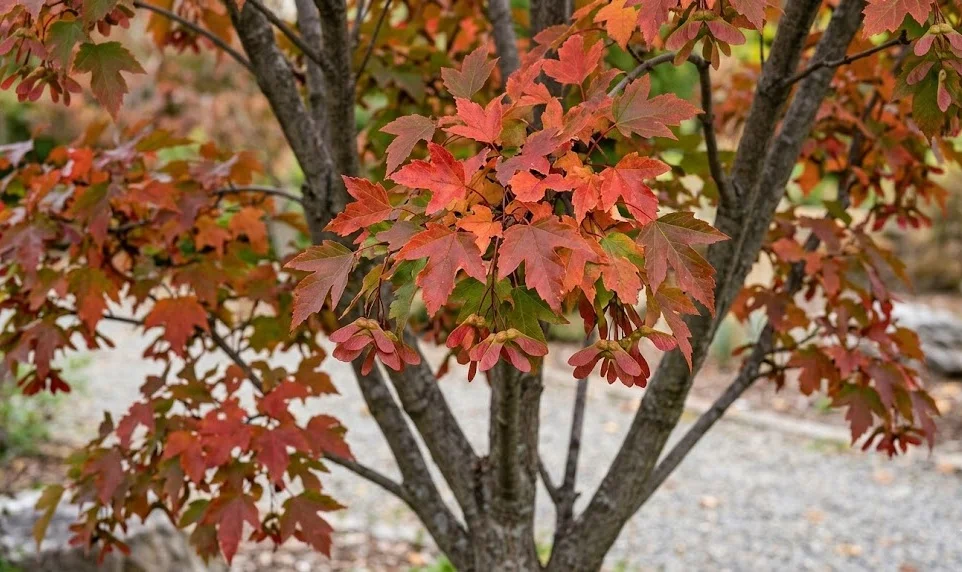

Amur maple is known for good cold tolerance, but successful overwintering still depends on proper establishment, mature wood, and protection from avoidable stress. Young plants, container specimens, and trees exposed to drying winter winds need more attention than established plants growing in open ground. Winter preparation should begin before freezing weather arrives, because strong roots and well-ripened shoots are formed during the previous growing season. With sensible autumn care, the plant usually passes through winter without difficulty.
Preparing the plant in autumn
Autumn preparation begins with moisture management. The plant should enter winter with soil that is neither dry nor waterlogged. If autumn is unusually dry, deep watering before the ground freezes can reduce winter desiccation. This is especially important for young plants and specimens in exposed locations.
Fertilising should be avoided late in the season. Late nitrogen encourages soft growth that may not harden properly before frost. Instead, the gardener should allow shoots to mature naturally as days shorten and temperatures fall. Firm, ripened wood is much more resistant to winter injury.
Mulch should be checked and renewed if necessary. A moderate organic mulch layer helps stabilise soil temperature and protects shallow roots from rapid freeze-thaw cycles. It should remain away from the trunk to prevent bark moisture problems. A neat, wide mulch ring is better than a thick mound.
Autumn pruning should be limited. Removing dead or broken branches is acceptable, but heavy pruning can stimulate unwanted late growth or expose tissues to winter damage. Structural pruning is usually better saved for late winter or early spring. The plant benefits from entering winter with as little disturbance as possible.
More articles on this topic
Protecting young plants
Young Amur maples are more vulnerable because their bark and root systems are still developing. A newly planted tree has not yet anchored fully into the surrounding soil. Wind can loosen roots and dry stems during winter. Staking may be useful if the plant is unstable, but ties must not be tight.
Trunk protection can prevent damage from animals and temperature fluctuations. Guards may help protect against rabbits, rodents, and deer rubbing. They should allow air movement and should not trap moisture against the bark. The guard should be checked regularly so it does not restrict growth.
In cold, sunny climates, young trunks may suffer from frost cracks or sunscald. This occurs when bark warms during the day and then freezes rapidly at night. A light-coloured tree wrap can reduce temperature swings on vulnerable trunks. It should usually be removed in spring to prevent pests and moisture buildup.
The root zone should remain insulated but not smothered. Mulch helps prevent sudden freezing and thawing near the surface. However, piling leaves or mulch directly around the stem can attract rodents. A clean gap around the trunk is a small detail with major protective value.
More articles on this topic
Container-grown plants in winter
Amur maple grown in containers needs more winter care than plants in the ground. Roots in pots are exposed to colder temperatures because they lack the insulation of surrounding soil. A container that freezes solid and thaws repeatedly can damage fine roots. This risk is greatest in windy, elevated, or sunny positions.
The container should be moved to a sheltered place before severe cold arrives. A location near an unheated wall, cold frame, or protected courtyard can reduce exposure. The pot may be wrapped with insulating material to protect the root ball. The goal is to keep the roots cold but not exposed to extreme temperature swings.
Watering should not be forgotten during winter. Container soil can dry out even when the plant is dormant, especially under a roof or in windy conditions. The soil should be checked during mild periods and watered lightly if it is dry. Overwatering must still be avoided because saturated frozen soil damages roots.
Drainage holes must remain open. A pot standing in water before a freeze can suffer severe root injury. Raising the container slightly on feet can help excess water escape. Good winter drainage is just as important as cold protection.
Spring recovery after winter
Spring inspection should be done patiently. Some branches may appear lifeless before buds begin to swell. It is better to wait until growth clearly starts before deciding what is dead. Premature cutting can remove living wood unnecessarily.
Winter-damaged shoots should be pruned back to healthy buds or branch junctions. Clean cuts help the plant close wounds efficiently. If damage is extensive, pruning should be staged rather than severe all at once. The plant needs remaining healthy foliage to rebuild energy.
Watering should resume as the soil warms and new growth begins. Dry spring weather can stress plants that already lost moisture over winter. Mulch can be refreshed once the soil surface is workable. This supports root recovery and reduces competition from early weeds.
Fertiliser should be used cautiously after winter injury. A stressed plant does not benefit from being forced into rapid growth. Compost and moderate moisture are usually better first steps. Once the plant shows stable new growth, light feeding may be considered if the soil is poor.